
ALBUM REVIEW
ANAGNORISIS – Caregriever
Grief-driven black metal with industrial experimentation.

At a point in life when each day seems a little shorter than the last, loss gradually leaves us more isolated, until we eventually face death and find ourselves thinking, as we do with every death, that it was “too soon.” On “Caregriever,” the fourth full-length album from US band ANAGNORISIS, death is not confined to the moment of loss itself. Five years spent watching a loved one’s condition deteriorate, the physical and emotional toll of caring for them, the anger that grows alongside love, and the guilt left behind all shape the album’s narrative. The fact that the material began as a personal solo project by vocalist Zachary Kerr while he was accompanying his father-in-law through his final days, before eventually becoming the band’s fourth album, also helps explain its musical character. Following a decade of silence after 2016’s “Peripeteia,” ANAGNORISIS have largely left behind the symphonic expansiveness of their earlier work in favor of a more direct, abrasive, and experimental sound. The darkness on this record goes beyond an abstract image of evil, drawing instead on moments when people are forced to confront their own emotions.
The opening track, ‘Choke’, is a sufficient example of how this approach reaches the listener. Beginning with reverberant snare hits, the song gradually builds tension through Kerr’s muffled, battered vocals. As the guitars enter, that sense of anticipation gives way to a more animated structure driven by forceful rhythmic accents and tremolo-picked riffs. The track’s impact does not come from its acceleration alone. Rather than relying on the familiar intensity of blast beats and double-kick patterns, Cody McCoy continually reshapes the composition’s tension through rhythmic shifts, fills, and sudden accents. Moving from minimalist beats to punk-inflected bursts of speed, this approach brings the unsettling harmonic backdrop created by the guitars into sharper focus. Zachary Kerr and Zak Denham’s interwoven guitar parts sometimes develop into expansive melodic lines, while at other moments they emphasize a sense of dissonance. When the instruments converge in the latter part of the song, the accumulated tension gives way to a sudden release.

This approach to arrangement also defines the album’s relationship with black metal tradition. Tremolo-picked guitars, harsh vocals, and high-intensity drumming remain fundamental elements, but the compositions do not depend on pushing these ingredients to maximum intensity at all times. While ‘Nothing Left To Give’ advances with more direct aggression, the expansive structure of ‘Choke’ demonstrates ANAGNORISIS’s ability to create different forms of tension within the same album. The difference between the two tracks is not simply a matter of tempo or intensity. The former gives suppressed anger room to erupt uncontrollably, while the latter allows that anger to accumulate and gradually change shape. Kerr’s vocals reinforce this distinction. His raw, throat-driven screams are articulated clearly enough to convey the anger in the lyrics. The accusation repeated toward the end of ‘Choke’ is particularly telling: as the anger is directed at another person, it also seems to turn back on the narrator himself.
One of the ways “Caregriever” distinguishes itself from ANAGNORISIS’s earlier recordings is through the more prominent role industrial music and punk play in its songwriting. ‘Death Of Man’, which opens with samples and develops around a mechanical rhythmic feel, marks one of the album’s most pronounced shifts in direction. The stasis created by its repeating motifs is not a shortcoming; it is what sustains the track’s unsettling character. Rather than displacing black metal’s guitar-driven intensity, the industrial textures give it a different sense of movement. Niels Riethorst’s vocals also depart from conventional black metal delivery here, taking on a different kind of ferocity. The approach recalls industrial acts such as Nine Inch Nails and Skinny Puppy, demonstrating that ANAGNORISIS use transitions between genres for more than superficial variety.
‘Death Of Men’, meanwhile, brings the same subject matter closer to a more traditional black metal intensity. Darker guitar lines and increasingly pronounced drum patterns create a different kind of tension from the mechanical weight of the preceding track. The lyrics’ themes of loss and helplessness now center on the disintegration of the human body and the irreversible passage of time. Even the slight difference between the two titles suggests two sides of the same narrative: one emphasizes a person’s reckoning with their own mortality, while the other foregrounds the impact of death and loss on those left behind. The album’s lyrics do not reduce this emotional territory to a generalized account of grief. The exhaustion caused by the responsibility of caregiving, shame directed at oneself, and guilt over feeling anger toward someone one loves give the narrative its unsettling honesty.
The musical expression of this emotional complexity lies in the fact that not every track operates at the same level of intensity. With its clean vocals and brighter guitar melodies, ‘A Living Grave’ establishes one of the album’s most pronounced contrasts. Its melodic expansion does not offer relief from the darkness; it simply allows the narrator a brief moment to breathe. The song’s post-metal character, with occasional post-punk elements, puts melody to work alongside the aggression rather than in opposition to it. A similar approach emerges in ‘Monuments In Ash’, through punk-derived momentum and more direct guitar accents. The tension between rhythm and riffs turns the song’s progression into a constantly shifting relationship between pressure and release. These passages show that ANAGNORISIS’s move away from the symphonic scope of their earlier albums has opened up new possibilities for arrangement rather than narrowing their musical vision.
That said, moving between genres does not mean every transition is equally effective. The sense of continuity between ‘Monuments In Ash’ and the closing track, ‘Death Of Me’, suggests that the album’s experimental variety occasionally converges on similar emotional and rhythmic territory. The extended atmospheric passages in the middle of the album may also weigh down its flow for some listeners. However, these choices never become major flaws that undermine the coherence of “Caregriever.” On the contrary, the fact that the tracks explore different stages of the same emotional experience rather than simply repeating one another supports the album’s narrative. The contrast between the tension-building structure of ‘Nothing Left To Take’ and the mechanical textures of ‘Death Of Man’ is one of the clearest examples of this approach at its best.
The production also plays an important role in keeping this variety intelligible. The drums and vocals occupy prominent positions in the mix, while the guitars, bass, and electronic textures move around them at varying levels of intensity. This approach heightens the physical impact of the rhythm section, although the simultaneous prominence of multiple instruments occasionally limits the bass guitar’s audibility. Josh Mumford’s bass gives the low end added body when it can be heard, but it does not always cut through the density of the guitars and drums with equal clarity. Rather than a production flaw that disrupts the album’s overall balance, this is more a matter of priorities shaped by the intensity of the arrangements. When Zak Denham and Zachary Kerr’s guitars and McCoy’s drums take center stage, the music becomes more abrasive; in the atmospheric passages, the melodies are allowed to spread out across a wider sonic space.
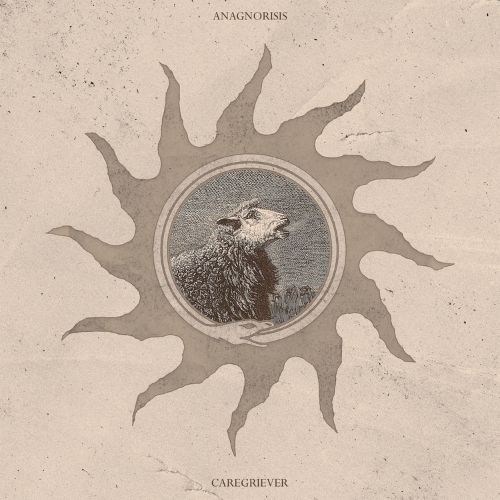
The cover art, August Friedrich Schenck’s 1878 painting Anguish, is also part of this aesthetic coherence. Centered on grief and helplessness, the image reflects the emotional conflicts found in the album’s lyrics. Rather than drawing on the supernatural or occult imagery frequently associated with black metal, its visual identity focuses on human vulnerability in the face of loss. The music follows the same path. Aggression emerges not merely as an attack directed outward, but as a destructive response turned against one’s own thoughts, decisions, and feelings.
The closing track, ‘Death Of Me’, revisits this internal conflict through the inability to forgive and anger directed at the wrong target. Its structure retains the atmospheric black metal and post-metal elements heard earlier, while occasionally approaching a more kinetic post-punk character, establishing a different connection with the aggression of the album’s opening. The stark, desperate expression at the end makes it clear that the narrative has reached no resolution. This is where the emotional force of “Caregriever” lies: it offers no easy conclusion in which grief ends and everything falls into place, pain becomes a meaningful experience, or loss necessarily makes a person wiser.
After a decade away, ANAGNORISIS have created a more personal and musically freer space for expression without abandoning the experience they have accumulated within the genre. Industrial textures, punk’s directness, and post-metal’s melodic expansiveness reshape the band’s black metal foundations under the influence of different emotions without destabilizing them. The occasionally overextended atmospheric passages and the limited audibility of the bass guitar create minor rough edges, but the variety of the compositions, the strength of the performances, and the unsettling candor of the lyrics outweigh these shortcomings. “Caregriever” translates an experience in which love and exhaustion, anger and guilt coexist into music without turning darkness into an aesthetic spectacle. That is precisely what makes ANAGNORISIS’s return meaningful: they preserve the genre’s ferocity while transforming it into an expression of genuine human contradiction.
