
ALBUM REVIEW
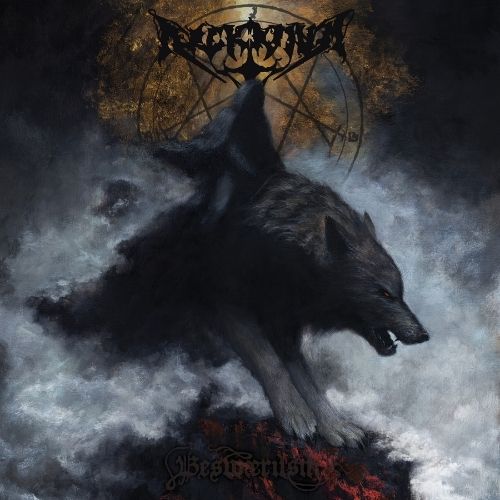
ARCKANUM – Beswærilsin
Raw black metal meets ritualistic melodic grandeur.
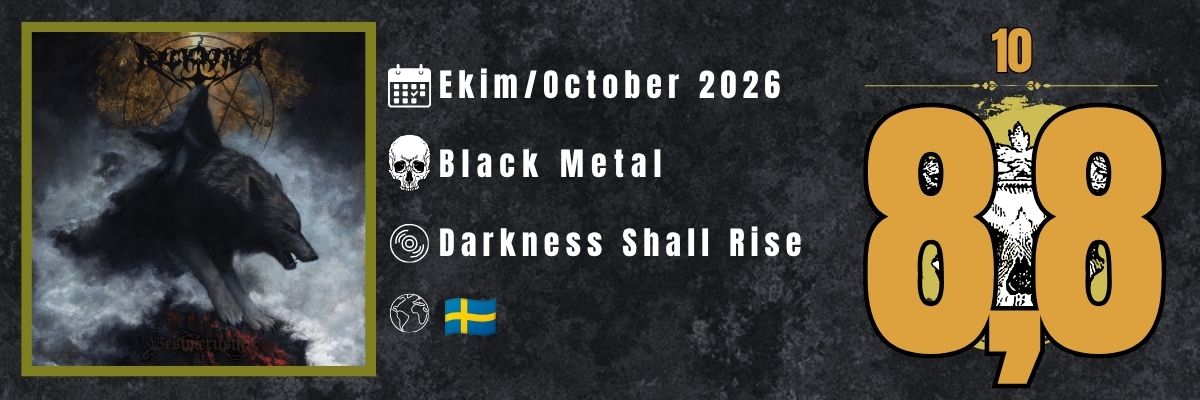
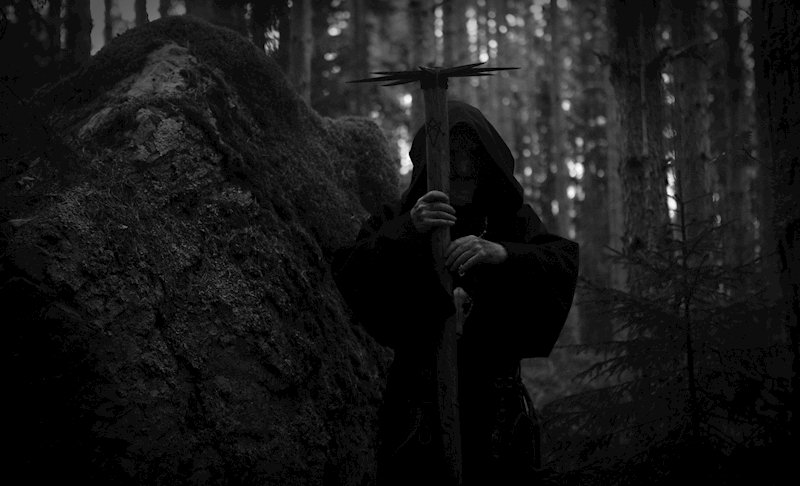
Before examining the tenth studio album by Swedish black metal veterans ARCKANUM, one important aspect must be kept in mind: the relationship between Shamaatae’s occult philosophy and his music. Active as a one-man project since 1992, ARCKANUM returns with this eleven-track release after an extended period of silence. Shamaatae continues to create with unwavering determination. The lyrics, written in Old Swedish (fornsvenska), the narratives rooted in Norse mythology, and the aesthetic shaped by Thursian thought form the album’s artistic framework. These elements find expression in the music itself, informing the character of the compositions, their rhythmic flow, and their atmosphere.
One of the first things that stands out on “Beswærilsin” is the way ARCKANUM combines the raw traditions of black metal with melodic expression. Although the guitars often rely on tremolo passages and recurring riffs, the result never settles into a monotonous sonic pattern. Riffs reappear at different speeds, melodic responses emerge throughout the compositions, and atmospheric passages between sections create a sense of movement within the music itself. The unpolished production preserves the guitars’ sharpness while reinforcing the more primitive side of the songwriting. Rather than technical showmanship, the emphasis falls on the relationship between riffs and rhythm, as well as the effect that repetition has on the listener.
Opening track ‘Mz Fianda Raþi’ establishes this approach with a fast-paced, energetic start. Driven by brisk guitar lines and blast beats, the song gradually gives way to a more ceremonial atmosphere. Changes in the vocal delivery and the expansion of the instrumental passages demonstrate that the composition is built on more than speed alone. ‘Utgarþzeþer’, meanwhile, represents the album’s more grandiose side, with surging riffs, powerful drum transitions, and melodic accents. Folk-tinged textures, including acoustic guitars and mandolin, bring a different colour to black metal’s traditionally dark atmosphere. Rather than diminishing the music’s ferocity, these passages reinforce the ancient, ceremonial character of its Scandinavian narratives.
Rhythmic variety also plays an important role in Shamaatae’s songwriting. The faster passages carry the album’s aggressive edge, while mid-tempo transitions, heavy grooves, and slower-moving riffs lend the music a different kind of weight. ‘Wilianz Kniwer’ is a strong example of this diversity, opening with a direct, energetic approach that recalls the more immediate character of thrash metal. The prominent bass lines support the rhythmic foundation without overshadowing the guitars, giving the music a more tangible sense of heft. This choice shows that ARCKANUM does not neglect the physical impact of its instruments while building atmosphere.
Tracks such as ‘Rymz Rand’ and ‘Eldstenz Frø’ demonstrate how heavier, more forceful riffs bring the album’s darker side into sharper focus. On ‘Eldstenz Frø’ in particular, the guitars take on an added edge through the drumming, while the slowdowns that follow the faster passages make them all the more effective. These shifts do more than establish dynamics through changes in speed; they allow the tension generated by the music to be felt in different ways. The bass also becomes more prominent at times, ensuring that rhythmic movement does not disappear beneath the dense guitar work.
The album’s melodic side finds one of its strongest expressions on ‘Skæpna Ær Krigh’. The extended tremolo melodies that emerge as the song progresses combine the dark harmonies of black metal with a more epic sense of storytelling. The guitars’ complementary movements turn melody into more than a succession of rapidly played notes, making it a defining element of the song’s emotional character. The interplay between guitar and bass is equally noteworthy: while sharing the same rhythmic foundation, the instruments lend the music a distinct depth. This is precisely one of the points at which ARCKANUM makes effective use of the traditional black metal vocabulary.
The vocal performance is another key element in shaping the album’s identity. Shamaatae’s harsh, rasping delivery, which occasionally takes on a more narratorial quality, creates a clear contrast with the melodic guitars. At certain points, the vocals move to the forefront, reinforcing the ceremonial nature of the lyrics. This approach is particularly effective on tracks where the Old Swedish lyrics and mythological references carry greater weight. The voice is not merely a means of intensifying the aggression; it forms a separate layer that carries the music’s narrative dimension, at times evoking the feeling of an invocation or supplication.
‘Anskoti’, with its heavier pace, gives the dark and grandiose character of the riffs room to unfold. Slow, steady drum patterns and recurring guitar motifs lend the song a deliberate sense of weight. ‘Trulmoþir’, meanwhile, reveals another side of the album through its more atmospheric approach and ceremonial rhythms. In these tracks, ARCKANUM’s music moves beyond aggressive black metal expression and becomes a space in which mythological narratives are conveyed through sound. Lyrics associated with concepts from Norse mythology, including the Thursar, Ginnungagap, and Ragnarök, expand the album’s world, while the musical arrangements reinforce the mysterious, primitive character of these narratives.
In this respect, the occult dimension of “Beswærilsin” never feels like a separate concept layered on top of the music. In Shamaatae’s artistic vision, lyrics, sound, and visual aesthetics are treated as components of the same intellectual framework. The use of Old Swedish and an approach to storytelling rooted in traditional Scandinavian poetry further define the album’s place within the genre. ARCKANUM avoids the clean, detailed production associated with modern black metal without abandoning melodic expression. As a result, rawness becomes more than a nostalgic choice; it serves as an aesthetic tool that reinforces the music’s ritualistic and archaic character.
The album’s extended runtime, with its varied tempos, atmospheric interludes, and recurring riff structures, allows the individual tracks to establish their own identities. The prominent guitar solos and forceful riffs on ‘Wiþirskapit’ provide one of the clearest moments in which melodic creativity takes a more direct form. Such passages demonstrate that the album is not confined to a single atmosphere; when needed, it also draws on the sharper, more energetic aspects of traditional black metal. The sounds of nature heard in the background and the unusual instrumental textures further expand the world of the music. Their purpose is less to introduce something new at every turn than to give meaning to transitions between sections and atmospheric pauses.
“Beswærilsin” does not seek innovation by abandoning the genre’s fundamental vocabulary. Tremolo riffs, harsh vocals, blast beats, and mid-tempo passages are all familiar elements of black metal, yet their integration with melodic and ritualistic storytelling rooted in Norse mythology gives the album a distinct identity. The songwriting occasionally relies on extended instrumental passages and repetition, demanding patience from the listener; in return, it leaves ample room to immerse oneself in the atmosphere. Shamaatae’s one-man approach helps maintain the album’s cohesion, bringing all its artistic choices together under a single vision.
“Beswærilsin” is a successful return that brings ARCKANUM’s established black metal approach together with melodic richness, a ceremonial atmosphere, and mythological storytelling. The album’s greatest strength lies in how it embeds its musical substance in darkly evocative riff structures, rhythmic shifts, and the narrative character of the vocals. Although it draws on familiar genre conventions, it brings them together coherently within a clearly defined intellectual framework. For listeners seeking the primitive energy of raw black metal alongside melodic depth and grandiose expression, “Beswærilsin” is a noteworthy addition to ARCKANUM’s discography.
