
ALBUM REVIEW
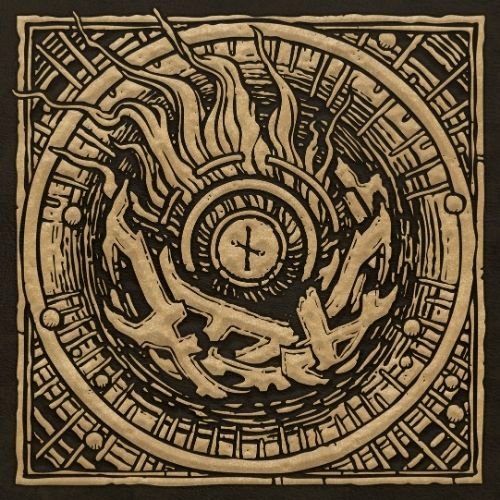
VELNIAS – Substrate Haruspex
Atmospheric heaviness with progressive melodic development
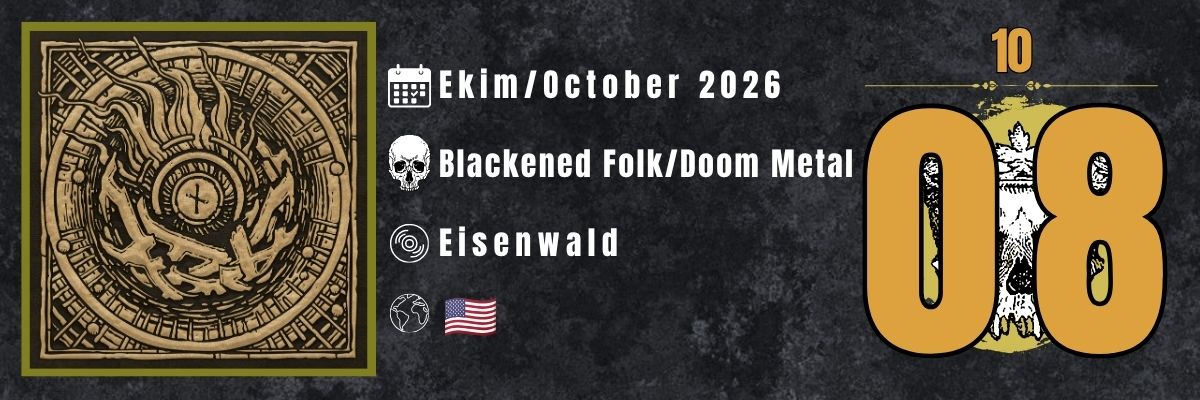
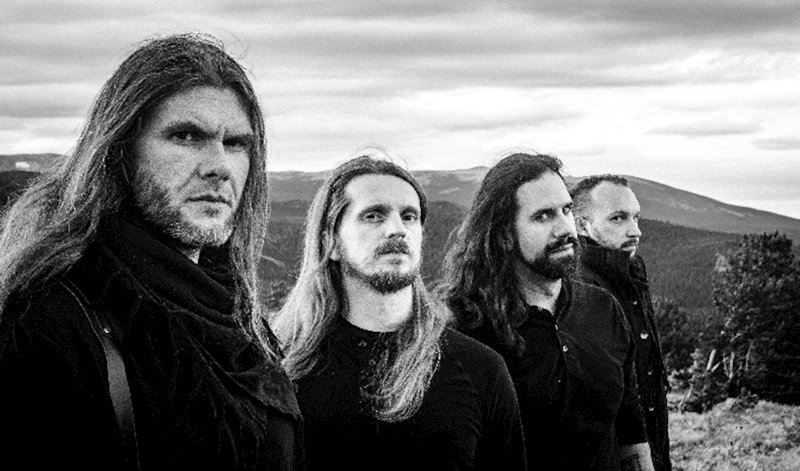
VELNIAS, rooted in the town of Nederland, Colorado, continues to explore the intersections of folk, black metal and doom metal on its fourth studio album, "Substrate Haruspex". Following "Scion Of Aether", the new record further defines the band's musical language, which resists being neatly confined to conventional genre boundaries. Its eight tracks are arranged around four extended compositions, linked by shorter interludes. This structure prevents the music from revolving solely around heavy riffs, allowing different levels of intensity and melodic ideas to develop within the same composition.
'Impetus Arcanum' opens the album with a measured progression and a dark melodic texture, while the following 'Divination of Simulacra' brings the weight of the guitars further to the fore. Layered riffs and the bass guitar, making its presence felt beneath them, form the backbone of the track. The emotional intensity of the harsh vocals contributes to the composition without being overshadowed by the instrumental density. VELNIAS, however, rarely expresses black metal's aggression through sustained high tempos. When doom metal's deliberate pacing meets melodic guitar lines and folk-derived textures, the result is music that is both heavy and unhurried, finding its own rhythm without forcing the pace.
'Resonance of the Concentric' is particularly revealing of the band's compositional approach. As the track unfolds through increasingly expansive melodic guitar passages, it retains its sense of weight. The relationship between technical detail and atmosphere makes it difficult to pin the music down to a single genre. The way the composition builds towards its finale demonstrates how extended tracks can derive their significance not simply from their duration but from their musical development. With the support of the rhythm section, guitars and bass establish a constantly evolving structure, while the melodic ideas remain discernible within the density. The contrasts within VELNIAS's music become especially apparent here: despite the weight and gloom of the compositions, they never become trapped in rigid rhythmic discipline. Their fluidity allows them to develop with an unexpectedly relaxed momentum at times.
'Mantra for the Seeker' and 'Nihil Equilibrium' serve as short transitional pieces between the longer compositions, helping to shape the album's overall structure. On the former in particular, the guitar textures take on a more spatial character, allowing the listener to move into a different sonic environment between the denser compositions. Although these interludes prevent the tracks from feeling like a disconnected collection, they are not solely responsible for the album's cohesion. What matters more is the ability of the longer pieces to bring together different melodic and rhythmic ideas within their own structures.
At around ten minutes, 'Corporeal Anathema' is one of the most comprehensive expressions of this approach. The melodic themes that emerge throughout the track connect within a dense arrangement in which the guitars retain their dominant position. Rhythmic movement introduces new directions without diminishing the composition's weight. VELNIAS's doom metal side, therefore, extends beyond slowness and heaviness, with progressive tendencies also contributing to the development of the material. Nevertheless, the ideas stretched across these extended compositions are not equally effective in every passage. At certain transitions, the music moves towards a new idea before the tension has fully developed, leaving the expectations established by the composition waiting for a payoff. Interestingly, the album's longest track manages to overcome this problem: the diversity of its melodic material prevents its length from working against it.
'Rending of Dyadic Convolution' brings the album's harsher, more unsettled side to the forefront, while 'Forsaken Equipoise' guides the closing stretch towards a more measured approach. Rather than replicating the intensity of the preceding compositions, the final track brings the music's tension to a different kind of resolution. The album's dark character thus emerges not from uninterrupted aggression but from the interplay between weight and restraint. Melody is an important part of this contrast. Rather than producing instantly memorable hooks, the melodic passages surface and evolve within the extended compositions, contributing to the atmosphere of the whole.
The production plays an important role in keeping this musical structure intelligible. The density of the guitars and the pronounced bass presence prevent the instruments from completely obscuring one another, while the organic character of the sound reinforces the music's aesthetic associations with nature and a sense of expansive space. The harsh vocals sit relatively far back in the mix, becoming part of the overall texture rather than remaining a constant focal point. Clean vocals and synthesizers further expand that texture. The more modern tone of the drums, however, does not entirely fit the organic sonic landscape established by the other instruments. Although this contrast is not pronounced enough to disrupt the album's overall atmosphere, it remains a questionable choice in terms of production cohesion.
Assessing "Substrate Haruspex" solely under the banner of blackened folk doom is insufficient to explain VELNIAS's musical identity. The album shares common ground with atmospheric folk metal acts such as AGALLOCH and THE FLIGHT OF SLEIPNIR, yet the extended development of its guitar work, its rhythmic intricacies and its occasional progressive tendencies take it somewhere different. The compositional approach, which at times recalls INTRONAUT and early MASTODON, is also relevant here. The resemblance lies less in any direct imitation of riffs or vocal styles than in the way the music expands the possibilities of heaviness without remaining bound to established conventions. Even so, this freedom does not always leave a distinct melodic impression. The tracks offer considerable detail while playing, but once the final notes have faded, the absence of a memorable motif can become apparent. This does not diminish the album's immediate impact, but it does limit its staying power.
The narrative associated with the band's abstract, cosmic themes fits the open-ended nature of the music. Yet the real value of "Substrate Haruspex" lies less in constructing a musical narrative that explicitly explains these themes than in refusing to impose a single interpretation on the listener. The compositions develop without resorting to easy resolutions, asking the listener not to grasp everything immediately but to discover the relationships between their details over time. This approach gives the album a distinct character, though it also brings the occasional problem of passages that extend beyond their natural limits.
With "Substrate Haruspex", VELNIAS maintains its distinctive approach to bringing black metal's harshness together with doom metal's deliberate pacing and the melodic heritage of folk. Not every composition reaches the same level of success, but 'Resonance of the Concentric' and 'Corporeal Anathema' in particular demonstrate the band's ability to turn extended forms into meaningful musical development. Those looking for immediately accessible songs or melodies that make an instant impression may find the album somewhat distant. For everyone else, it represents a compositional approach that rewards repeated listening and gradually reveals its details. VELNIAS's place within the genre is defined by its ability to bring different traditions together on its own terms, and "Substrate Haruspex" demonstrates how convincingly that approach can work, even when it occasionally loses focus.
