
ALBUM REVIEW
SIDUS – Lotus
Atmospheric post-metal shaped by inner conflict.
Berlin-based SIDUS, whose roots lie in Athens, turns the relationship between heavy riffs and expansive atmospheric passages into a narrative about confronting the dark, unexplored corners of the human psyche on their October 16 release, "Lotus". On their debut full-length, the band brings together the musical approach developed across their earlier work in a more expansive framework. The seven-track album traces a dramatic arc from fear of the unknown to learning to live with inner conflict. This transformation is not about eliminating darkness but, rather, accepting it as an inherent part of being human.
Across its roughly 42 minutes, "Lotus" weaves together the intensity of its guitars, the movement of its rhythm section and its atmospheric transitions into a cohesive narrative language. SIDUS never rush to reach the heavier passages; guitar layers gradually accumulate, melodies build upon one another, and the tension carried by the music grows increasingly taut. Opening track 'Origins Beneath' is a defining example of this approach. Measured riffs and deep bass tones lay the foundations for an increasingly expansive structure, while the growing density of the guitars continually postpones the expected eruption. The track draws its power not merely from shifts in volume but from making the listener wait for the crescendo. 'Chasmal', which follows, releases that accumulated tension through a harsher, more dissonant and more direct expression. Placing these two tracks back to back does more than establish the album's dynamic sensibility; it also lays the dramatic groundwork on which the subsequent tracks will build.
SIDUS's guitar work strongly reflects post-metal's expansive, layered approach to sound. Heavy riffs reminiscent of Russian Circles and Cult of Luna open into passages whose breadth occasionally approaches The Ocean's atmospheric sensibility. Post-black metal influences also come through, particularly when dissonance and harsher guitar tones move to the forefront. Any affinity with Deafheaven emerges less from shifts between genres than from passages where melodic atmosphere clashes with abrasive guitars. While these reference points help put the album's musical language into perspective, judging SIDUS solely through familiar names would mean overlooking how the compositions work on their own terms. What matters is not how recognizable these influences are, but how they serve the tracks' dramatic progression.
'Embrace The Void' introduces another dimension of weight by bringing in the harsh vocals of Sarp Keski. The Bipolar Architecture member's extended, angry vocal outbursts, which occasionally convey a sense of desperation, do not overpower the instrumental passages or turn the music into a conventional vocal-driven song. Instead, the voice functions as an additional expressive layer within the framework established by the guitars and drums. The limited use of vocals is crucial here, too: in an album that spends long stretches without words, the arrival of the human voice feels like a dramatic rupture rather than an ordinary arrangement choice. This decision also demonstrates that SIDUS's instrumental identity is not a limitation. The band can step outside it when necessary without compromising the music's cohesion.
'Awaken' expands the album's breathing room with a brief interlude following the weight accumulated across the first three tracks. Ambient textures and softer guitar tones do not abruptly erase the pressure of the preceding songs; instead, they shift it into a different perceptual register. This calm takes on another function with 'Soul Gazing'. The guitars retain their heavy, dark character, while the bass and drums keep the track in motion. Noah See's drumming, in particular, prevents the album from relying solely on the scale of its guitar layers. Rhythmic accents and mobile drum patterns stop the heavier passages from becoming static masses of sound, while the quieter sections retain a living pulse. Atmosphere and physical weight therefore remain inseparable. The introspective character of 'Soul Gazing' gains meaning through this contrast: even as the music settles, it never becomes entirely still.
'Divine Paradox' continues the album's dramatic trajectory, gradually transforming its initially heavy, bleak tones into a more animated structure. As the groove becomes more pronounced, the aggression waiting beneath the softer passages comes back into focus. This shift points to an important aspect of SIDUS's compositional approach. The tracks do not simply place slow sections alongside faster or heavier ones; they use the mood established in one passage to strengthen the impact of the next. As a result, the dynamic shifts go beyond repeating post-metal's familiar pattern of build-up and explosion. At least in the album's strongest moments, how tension accumulates and where it is released matters as much as the riffs themselves.
The production plays a significant role in making this compositional approach effective. The production handled by Enrico Tiberi is complemented by Joe Clayton's mixing and mastering. The guitars occupy a broad, dense space when needed, while the gaps within the music remain intact during quieter passages. The bass adds depth without disappearing beneath the heavy riffs, and the drums lend the music physical weight, particularly as the arrangements intensify. The balance between sheer scale and audible detail is one of the key elements supporting the album's atmosphere. Reverb and a sense of spaciousness create distance between the different instrumental layers rather than dissolving everything into an indistinct wash of sound. As a result, the quieter passages become just as meaningful as the dense riffs. The expansive walls of sound commonly found in post-metal are not used here merely as a display of force; they serve as a means of defining the tension and scale of each track.
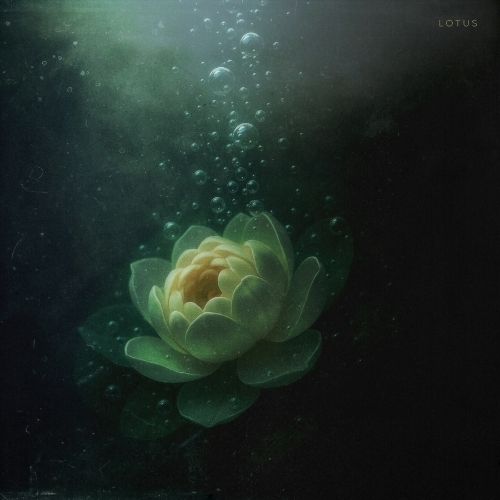
The album's conceptual framework largely aligns with these musical choices. SIDUS constructs a narrative exploring the dark recesses of the subconscious, human fears and the aspects of ourselves we avoid confronting. Images of the ocean's depths and geological pressure provide the visual and conceptual foundations for this idea. The concept, associated with Heraclitus's and Nietzsche's reflections on the depths of the human psyche and confronting the abyss, is not treated as a simple journey from darkness into light. The descent that begins with 'Origins Beneath' progresses through the confrontation of 'Chasmal' and the more balanced state of mind found in 'Soul Gazing', before reaching its conclusion with 'Lotus'. Saving the title track for last gives musical form to the lotus at the heart of the narrative. Like a flower growing in muddy waters, transformation here means not erasing the darkness of the past but emerging from it in a different form.
The closing track 'Lotus', which runs for more than eight minutes, brings this approach to a conclusion without reaching for an easy sense of triumph. Cold, heavy guitars unfold alongside fragile atmospheric details, bringing together the tension, expansiveness and aggression heard throughout the preceding tracks. The return of Sarp Keski's vocals at this point also provides a meaningful response to the largely wordless narrative. The finale's impact does not come from presenting every conflict as though it has been resolved. On the contrary, the album refuses to equate transformation with leaving past experiences behind. This approach ties the conceptual dimension directly to the progression of the compositions, rather than leaving it as an explanation external to the music.
The music SIDUS presents on "Lotus" does not establish an entirely new post-metal vocabulary. Elements that invite comparisons with Russian Circles, Cult of Luna, The Ocean and Deafheaven clearly situate the album within the genre. Nevertheless, rather than presenting these influences as a list of references, the band shapes them into a cohesive whole, carefully structuring its dynamics and balancing atmosphere with weight. At times, the album comes close to the genre's familiar dramatic crescendos, which may limit its originality. At the same time, the way the compositions connect, the preservation of an instrumental narrative and the selective use of vocals clarify SIDUS's own aesthetic priorities.
With "Lotus", SIDUS delivers a first major statement not as a band still searching for a direction on its debut full-length, but as one testing its developing musical language within a broader compositional framework. The album's value lies in much more than its fluency in post-metal's familiar vocabulary; it lies in its ability to make that vocabulary part of a patient dramatic structure. The main opportunity ahead for SIDUS is to deepen its command of atmosphere and controlled intensity through more individual compositional decisions. For now, "Lotus" offers a promising beginning from a band worth following in its own right and, by extension, within the European post-metal scene, thanks to its treatment of darkness not as a temporary obstacle to overcome but as an inseparable part of understanding oneself.
