SPLIT ALBUM REVIEW
NEKUS / BLOODSOAKED NECROVOID – Funerary Rites of Ancient Doom
Contrasting death metal approaches build tension
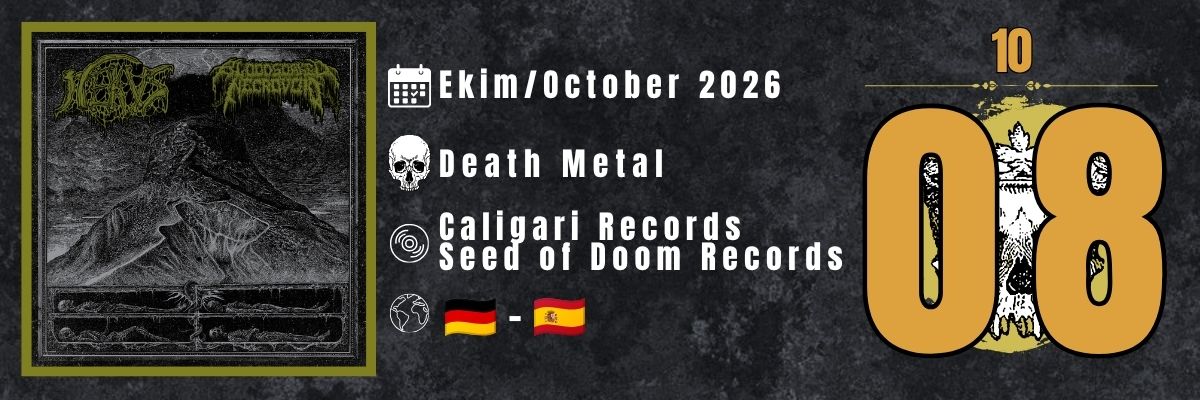
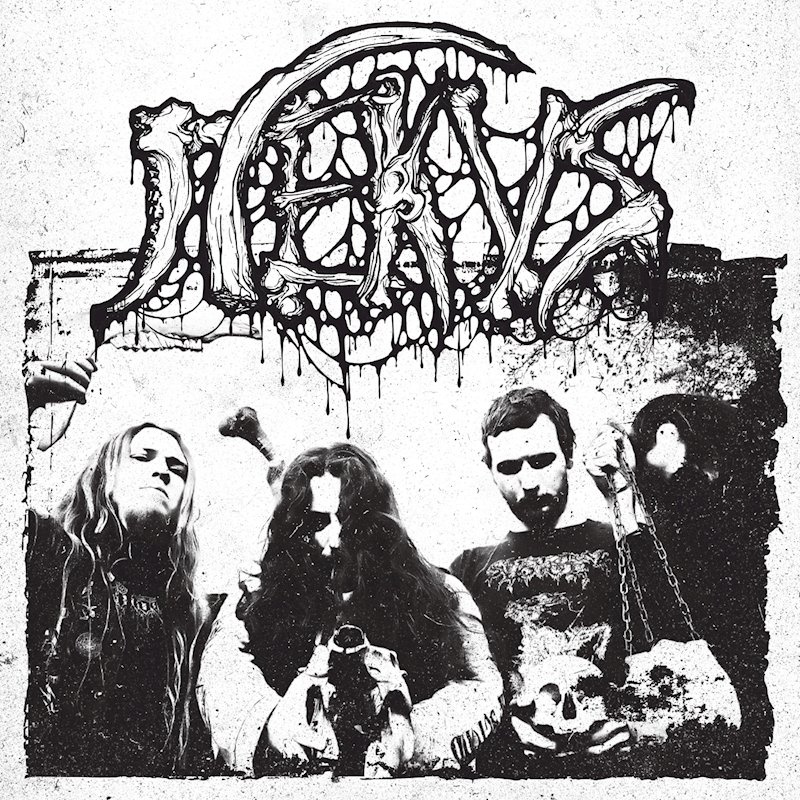
Bringing together NEKUS and BLOODSOAKED NECROVOID, "Funerary Rites of Ancient Doom" offers an opportunity to compare how two bands drawing from the same dark aesthetic approach it from different angles. Hailing from Marburg, Germany, NEKUS contribute a single track running approximately 19 minutes, while BLOODSOAKED NECROVOID, originally from Costa Rica and now based in Spain, make their mark with three tracks of their own. Their common ground lies not only in their interest in the outer limits of death metal, but also in a musical approach that steers clear of conventional song structures. Despite these shared tendencies, the two bands construct their respective forms of darkness in distinctly different ways.
NEKUS' "Dakhma" develops the musical approach heard on their 2024 album "Death Apophenia" into a more expansive composition. Rather than stringing together disconnected ideas, its approximately 19-minute runtime allows a limited collection of riffs and motifs to undergo continuous transformation. The feral character of blackened death metal collides with the lumbering pace of death/doom as the successive sections grow increasingly slow and disorienting. This shift involves more than simply lowering the tempo; it also changes how the music is perceived. Ideas that initially convey a clear sense of movement gradually become more alien through repetition and structural shifts.
The vocal arrangements play an important role in this transformation. Sounds reminiscent of monastic chants, snarling vocals and a deep growl that takes center stage do not feel like separate elements layered over the instrumentation. Instead, they create an expressive dimension that connects the composition's different phases. NEKUS' real compositional achievement lies in their ability to extract an expansive range of expression from relatively limited riff material. As the motifs recur, they acquire new meanings in different contexts rather than retaining the same function. The track's length thus becomes more than a statement of sheer duration. Its structural uncertainty and gradual descent into slower territory allow familiar ideas to return with a different weight each time.
This approach sets NEKUS apart from a conventional extended death metal composition. Rather than relying on traditional songwriting built around memorable choruses or clearly defined climaxes, "Dakhma" derives its momentum from the transformations taking place within the piece itself. That said, this does not mean every moment is equally effective. In a composition of this length, the listener's points of reference depend on the recurrence of motifs and the significance of the changes between sections. "Dakhma" largely keeps this risk in check, demonstrating that NEKUS can shape seemingly chaotic material according to a coherent compositional logic.
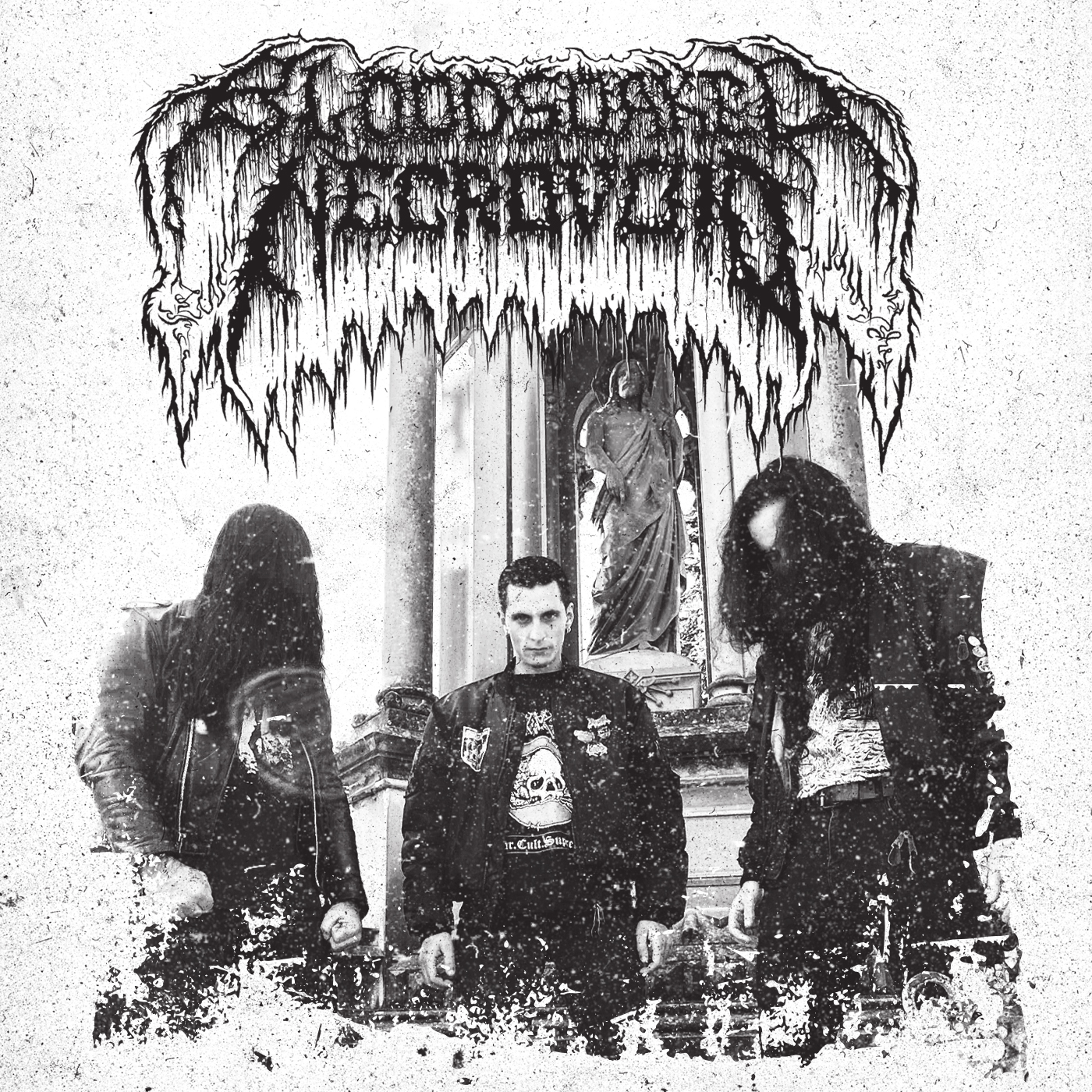
BLOODSOAKED NECROVOID take a different approach. Their death/doom-based sound revolves around the physical weight of the riffs and a deliberate restriction of rhythmic movement. The label's description of their style as slow-motion grind makes sense in this context: the music brings together the plodding pace of traditional death/doom and grindcore's punishing character. The result is more than death metal played at a slower speed; sudden bursts of velocity and unstable rhythmic accents intensify the tension accumulated during the heavier passages rather than disrupting it.
'The Unreachable Exaltation of Consumption' offers the clearest example of this relationship. The track moves through slow, unsteady beats as echoing guitars answer one another. The resulting rhythmic motion feels less like a groove constantly pushing forward than an unstable structure struggling to remain upright. A brief, ferocious burst of speed shortly after the three-minute mark suddenly shifts the accumulated tension into another gear. Though the eruption is short-lived, its impact stems from the anticipation created by the preceding sluggishness. BLOODSOAKED NECROVOID exploit not speed itself, but the distance between speed and weight.
'A Respite From the Swallowing of Existence' brings the band's doom metal side into sharper focus. Rather than using riffs to propel the song into successive sections, the band allows them to stretch out and exist on their own terms, sustained by their own weight. This choice gives the composition a different rhythmic character. The sudden movements of the preceding track give way to a more static flow in which guitar ideas are left hanging in the air. The filthy, suffocating sound that underpins the atmosphere remains intact, while the riffs themselves are given more room to breathe. BLOODSOAKED NECROVOID thus demonstrate that their music can remain effective without constantly seeking to raise the intensity through another eruption.
The connection to the band's 2020 debut, "Expelled Into the Unknown Depths of the Unfathomable", is also significant here. The dark sound design and riff-centered approach that defined that record remain evident throughout "Funerary Rites of Ancient Doom". At the same time, the greater prominence given to riffs and rhythmic details here shows that the band's ability to create atmosphere need not come at the expense of composition. Considered alongside assessments of their April 2026 rehearsal-recorded EP, which leaned more heavily on atmosphere and tension, the material on this split also points to possibilities the band can explore through weighty rhythmic structures.
The pairing of these two bands therefore offers more than a straightforward meeting of similar genres. NEKUS build tension by transforming motifs across an extended composition and obscuring the direction of its successive sections. BLOODSOAKED NECROVOID, meanwhile, rely on the weight of their riffs, rhythmic instability and brief eruptions of violence. One side derives its impact from the changes a composition undergoes over time; the other emphasizes the physical effect of individual musical ideas. This distinction prevents the two bands from sounding like extensions of one another, despite their shared aesthetic territory.
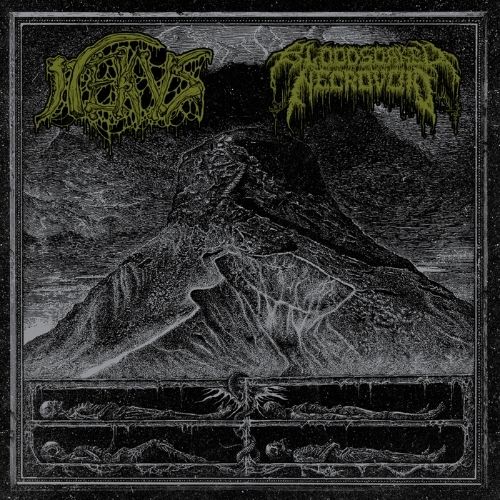
The cover artwork by MFAXII, featured on the split released through CALIGARI RECORDS and SEED OF DOOM RECORDS, provides a visual counterpart to this dark framework. The record's cohesion, however, comes less from shared imagery or themes than from the two bands' commitment to preserving their individual musical identities. NEKUS' single extended composition will appeal to listeners drawn to long-form structural development, while BLOODSOAKED NECROVOID demonstrate how differently heavy riffs and controlled rhythmic disruptions can shape a piece of music.
"Funerary Rites of Ancient Doom" largely avoids one of the split format's most common pitfalls: one band's contribution overshadowing the other's. NEKUS expand the possibilities of their long-form songwriting, while BLOODSOAKED NECROVOID push their lethal heaviness beyond an approach built on atmosphere alone. Unconcerned with technical showmanship or easily digestible song structures, this release offers a compelling meeting point for listeners who look to extreme metal for its capacity to generate tension, whether through the transformation of a riff or the impact of a single rhythmic shift. What unites these bands is not their similarity, but their equal refusal to compromise as they pursue different paths along the outer limits of death metal.
