
DEMO REVIEW
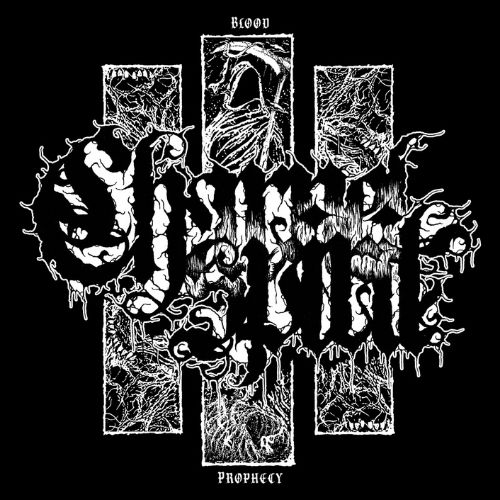
CHARNEL SPIRIT - Blood Prophecy
Dark, doom-infused black metal with atmosphere.
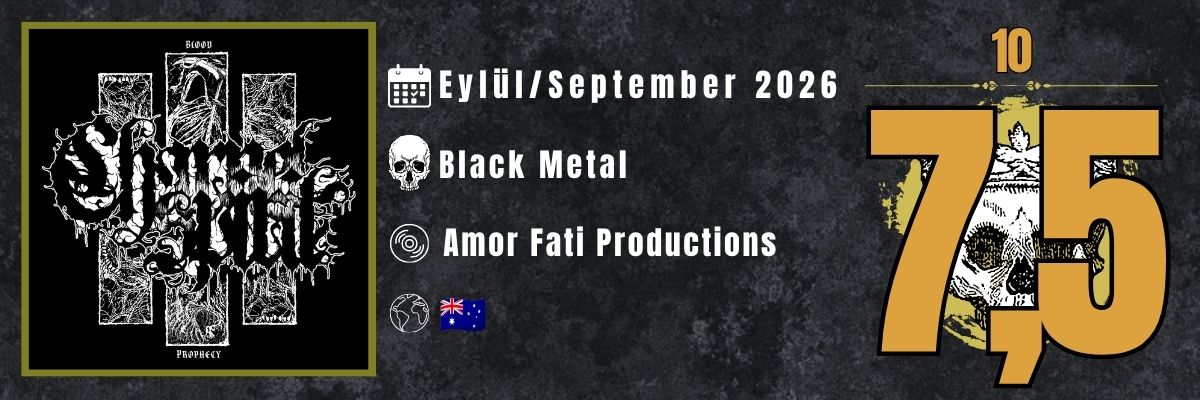
CHARNEL SPIRIT, the one-man project of Desolate, a familiar name in the Australian extreme metal scene, steps into the extreme metal scene with its first demo recording, “Blood Prophecy.” This three-track debut recording is built primarily around slow riff structures, menacing melodic lines, and doom-influenced transitions, with the music’s central tension arising not from black metal’s aggressive side, but from an approach to atmosphere that uses different methods to weigh down the darkness and stretch it across time. This first recording is not yet a comprehensive aesthetic manifesto; however, it makes the kind of black metal style the project has adopted quite clear.
The opening track, “Poisoned Absolution,” establishes the main contours of CHARNEL SPIRIT’s sonic world. The slow-moving guitars do not use the low tempo merely as a rhythmic choice; they also turn the spaces between riffs into part of the tension. This approach deliberately departs from the sense of constant forward motion found in classic black metal. The dark character carried by the guitars expands unexpectedly through melodic lead sections. The use of melodic guitars within black metal is certainly nothing new, but here the leads serve less to make the track more accessible than to add a second layer over the ominous atmosphere created by the main riffs. As a result, the heavy metal influence seeps into the composition without taking over the center of the music.
The vocals work in much the same way, operating through a sense of wear rather than aggression. The raspy, dry vocal delivery approaches a tone reminiscent of Hoest during the Taake era. However, the resemblance never turns into a feeling of direct imitation; the vocal’s position in the mix creates a separate dramatic layer above the dense texture formed by the guitars. Here, CHARNEL SPIRIT uses the vocals not so much as a narrator, but as another component of the music’s dark texture.
“Aperature Through Eradication” is the clearest example of the demo’s compositional approach. Running for more than eight minutes, the track brings doom metal’s conception of time into a black metal framework, particularly through its heavy and slow sections. The slowdown here is not simply a matter of reducing the tempo; it shifts the center of gravity of the riffs. When longer-held guitar ideas replace fast tremolo movements, the sense of menace in the music also changes form. In this way, the track moves toward something more ritualistic and weighty without completely abandoning black metal’s sharpness.
This is where one of CHARNEL SPIRIT’s strongest qualities emerges: the doom influence does not overshadow its black metal identity. While the guitars remain rooted in the genre’s cold and cutting harmonic language, the choices in tempo and arrangement allow the tracks to breathe more heavily. The keyboard touches serve a similar function. Rather than sounding like atmospheric effects added onto the music afterward, they work as secondary elements that broaden the overall sonic field. Even so, this experimental approach has its limits; it would be difficult to argue that the keyboards alter the direction of the composition or clearly distinguish CHARNEL SPIRIT from contemporary black metal bands. For now, they remain tools that support the basic riff and atmospheric architecture.
The closing track, “Fossilised Sepulchre,” shifts to a higher tempo, changing the balance established across the demo. Faster drumming and rapid guitar movements bring more traditional black metal instincts to the forefront after the heavy progression of the previous two tracks. Even so, the heavy metal tendency heard in some of the track’s riffs shows that CHARNEL SPIRIT is not interested solely in atmospheric black metal formulas. Sections where the melodic guitars become more prominent strengthen the melodic memory of the riffs while preserving the music’s sharpness. Consequently, despite being the fastest track on the demo, “Fossilised Sepulchre” does not represent a change of direction so much as another facet of the aesthetic framework established earlier.
The drum work is one of the recording’s most contentious points. Although the overall mix is above demo standards and preserves the character of the guitars and vocals quite clearly, the drum tone is excessively clean and controlled, which diminishes the sense of a natural performance, particularly in the faster sections. While this choice is understandable given the project’s one-man structure, the result moves away from black metal’s raw and physical drum aesthetic. The issue is not that the production is technically poor; on the contrary, the recording is clean enough. The problem is that this cleanliness does not always align with the music’s dark and underground character to the same degree.
CHARNEL SPIRIT’s production approach is therefore particularly noteworthy. Despite being a demo, “Blood Prophecy” does not lean on a lo-fi aesthetic. The details in the guitars are not lost, the melodic lines remain audible, and the atmosphere is not derived solely from recording imperfections. This is an example of an increasingly common tendency in contemporary black metal: bringing the genre’s old aesthetic traits together with modern recording standards. CHARNEL SPIRIT’s advantage, however, is that it does not turn clean production into a sterile sound. Aside from the sense of artificiality in the drum tone, the recording largely preserves the music’s menacing character.
This is also where the real issue with “Blood Prophecy” lies. Rather than transforming the genre’s familiar building blocks, CHARNEL SPIRIT is, for now, rearranging them around a particular atmosphere. Black metal’s cold guitar language, melodic leads rooted in heavy metal, doom-influenced slow sections, and dark keyboard layers meet within the same framework. Yet none of these elements currently establishes a defining aesthetic identity above the others. The value of the experimental side lies less in any claim to innovation than in the compositional space it creates for future expansion.
The three-track structure is both an advantage and a limitation in this respect. Its short length prevents CHARNEL SPIRIT from exhausting its ideas unnecessarily, but it also does not provide enough scope to assess the project’s distinctive compositional instincts with certainty. “Blood Prophecy” is more of a statement of direction. In particular, the doom-heavy approach of “Aperature Through Eradication” and the faster, more melodic approach of “Fossilised Sepulchre” leave two different possibilities for which side might become central in the future.
Ultimately, “Blood Prophecy” is a first step from a new name emerging from the Australian underground black metal scene, one that uses the genre’s existing language carefully but has not yet pushed it far enough to redefine it. For now, CHARNEL SPIRIT’s most convincing asset is not technical showmanship, but its ability to construct a dark sonic space through the use of tempo, space, and atmosphere within its riffs. The key question going forward is whether the heavy metal melodies, doom weight, and atmospheric layers will remain complementary elements orbiting around black metal, or whether they will fuse together to form the project’s own compositional language. “Blood Prophecy” does not answer that question, but it draws a clear enough initial framework to make the question meaningful.

amor-fati-productions.de
amorfatiproductions.bandcamp.com
facebook.com/amorfatiprod