Album Review
DEATHWARDS – Realms Of Sin
Raw, intricate and unpredictable Death/Thrash.
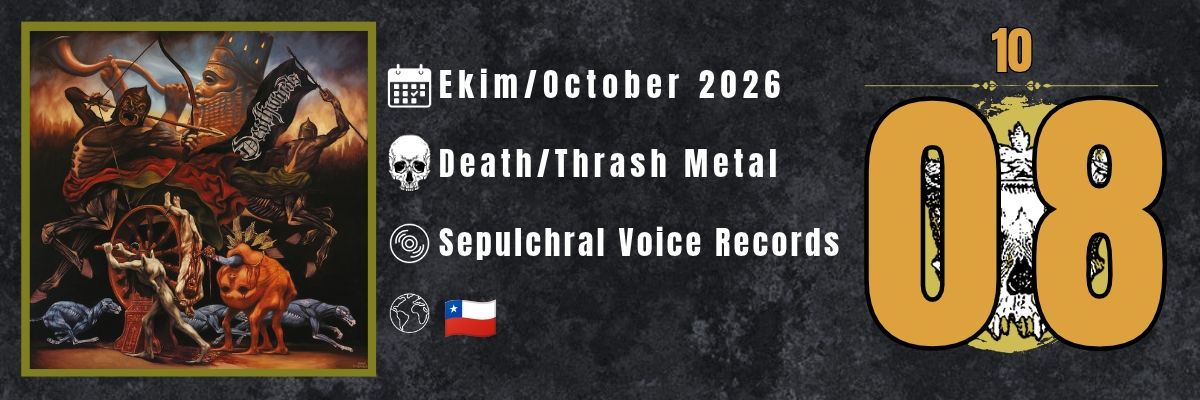
One of the more notable bands to emerge from Chile’s underground metal scene in recent years, DEATHWARDS are opening a new chapter in their discography with “Realms Of Sin”, their first full-length album following two demo recordings released between 2017 and 2019. Released through Sepulchral Voice Records, the album reaches back to the second half of the 1980s, when Thrash Metal and Death Metal had yet to fully separate into distinct styles. It is hardly surprising that the sound pioneered by bands such as SLAYER, POSSESSED, DARK ANGEL and SADUS still resonates today. What matters is how deeply you have absorbed the musical language of that era and how far you can make it your own.
The first thing that stands out in DEATHWARDS’ music is the constantly shifting character of its riffs. The guitars do more than recycle high-speed Thrash Metal patterns, moving between tremolo runs, sharp power-chord sequences, palm-muted passages and unexpected rhythmic breaks. As one riff gives way to the next, the direction of the songs keeps changing. ‘Supplicium (Lust)’ and ‘Sting Of Guilt (Limbo)’ are particularly good examples of this restless approach. In the former, transitions that disrupt the rhythmic balance and sudden bursts of speed give the music a hard-to-control character, while the opener brings a more technical guitar approach and some striking melodic touches into play. It has to be said, however, that the sheer frequency of these shifts can sometimes put the songs’ cohesion under strain. On first listen, it is not easy to follow how the different sections connect. With repeated listens, though, a clear compositional order begins to emerge beneath that initial impression of disorder.
The first half of the album is dominated by brief, concentrated bursts of aggression. The main riff in ‘From Bread To Stone (Gluttony)’ has a distinctly classic-era KREATOR feel. Its mid-paced section shows that the album does not have to rely on constant acceleration, although the rest of the song struggles to sustain the same impact. Similarly, ‘Gold In The Abyss (Greed)’ contains functional riffs and transitions but has difficulty leaving a lasting melodic impression. Both tracks demonstrate that the album’s relentless flow of ideas does not always translate into equally strong songwriting.
‘Sullen Blood (Wrath)’, on the other hand, stands apart in this respect. Opening at a more controlled pace, its guitar lines, rhythmic weight and increasingly expansive solo sections reveal a different side of the band. Speed is no longer an end in itself; the interplay between the guitars and the rhythmic shifts shape the song’s tension far more effectively. ‘Unbound From Divine Omnipotence (Heresy)’ combines Thrash Metal’s traditional approach to speed and riffing with a melodic interlude. The vocals adapt to this shift as well, helping the track develop a distinct flow of its own. There is a sense that DEATHWARDS venture into greater compositional detail during the album’s second half. ‘The Sore Weight Of Repentance (Violence)’ ranks among its most ferocious moments, with razor-sharp guitars that make the SLAYER influence particularly apparent and brief bursts that edge towards Death Metal.
The rhythm section plays an important role in keeping the movement generated by the guitars from losing its focus. The drumming is not limited to blast beats and fast double-bass work; tom fills, skank beats and unexpected accents also help shape the connections between the different sections. The snare drum’s punchy, pronounced character makes rhythmic details easy to pick out in the mix. The bass, meanwhile, is more than a supporting instrument simply following the guitars. At times, independent bass lines add further depth to the music’s rhythmic structure. The bass passages in ‘From Bread To Stone (Gluttony)’ and the more prominent runs towards the end of ‘The Sore Weight Of Repentance (Violence)’ are notable examples.
The Magus’ vocals are among the album’s more debatable choices. Rather than the deep growls associated with classic Death Metal, he opts for a high-pitched, aggressive delivery closer to the styles of Tom Araya and Martin van Drunen. Supported by reverb in places, this vocal approach fits comfortably with the album’s 1980s Thrash Metal roots. However, maintaining a largely unchanged vocal range throughout the record means that the voice occasionally falls behind the instrumentation. When the guitars are constantly introducing new ideas, a broader range of vocal expression could have strengthened the character of the songs.
The production choices are also important in understanding DEATHWARDS’ musical identity. Recorded at Equinox Studio and completed with mastering by Patrick Engel at Temple of Disharmony, the album preserves the raw character of old-school Death/Thrash Metal while keeping the instrumental details audible. The drums’ natural, powerful tone in particular prevents the guitars from merging into an indistinct wall of sound. The fact that some sources have also noted the audible imperfections in the performance helps explain why the album feels far removed from a sterile studio product. Rather than pursuing technical perfection, the sound is built around preserving the sense of musicians playing together. The reverb used on the guitar solos adds another dimension to this character. At times, the atmosphere that spreads around the instruments creates an interesting contrast with the album’s otherwise dry, abrasive attack.
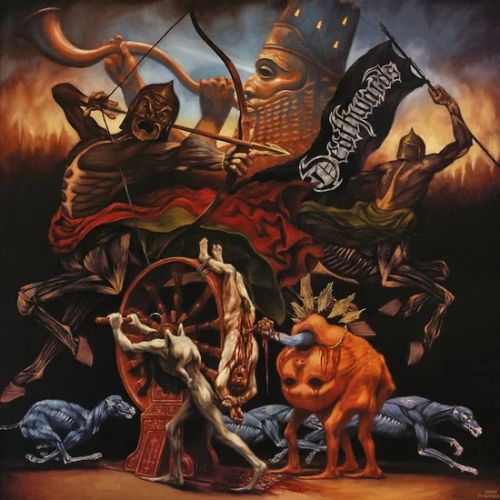
Thematically, “Realms Of Sin” is built around the nine circles of Hell and Dante’s Inferno, and this framework is directly connected to the album’s musical progression. Concepts such as guilt, lust, gluttony, greed, wrath, heresy, violence, fraud and treachery are reflected in the song titles, while the track sequence creates a sense of an increasingly profound descent. The album begins with shorter, more direct compositions before gradually making room for broader arrangements and different rhythmic approaches. The concept therefore extends beyond a framework confined to the song titles and lyrics. Jorge Olavarria’s hand-painted oil artwork completes this cohesion visually. Filled with distorted bodies, creatures, images of torture and depictions of Hell, it expands the album’s dark world without taking it beyond the boundaries of its music.
The balance DEATHWARDS strike here lies in their commitment to the Death/Thrash Metal of the 1980s without treating that era’s musical boundaries as little more than an opportunity for nostalgic repetition. Certain passages approach VOIVOD’s unconventional rhythmic movements, the guitar arrangements recall the technical intensity of SADUS, and the aggression of the South American Thrash Metal tradition provides another point of reference. These influences do not always produce equally original results, but the songs never sound like mere recreations of specific albums from the past. The rhythmic breaks, unexpected melodic shifts and constant transformations within the songs themselves reveal DEATHWARDS’ efforts to turn this musical language into a personal form of expression.
“Realms Of Sin” is not a flawless record. The tendency of some compositions to cram in more ideas than they can comfortably accommodate, the limited vocal variation and the failure of a few tracks to leave a lasting melodic impression despite their strong moments occasionally diminish its impact. Even so, it stands apart from the many releases in today’s extreme metal scene that reduce the sound of the past to little more than a production choice. DEATHWARDS place the rawness and unpredictability of old-school metal at the heart of their musical identity without sacrificing technical detail or compositional movement. A worthwhile discovery, particularly for listeners drawn to the late-1980s intersection of Death and Thrash Metal, “Realms Of Sin” is a characterful debut, flaws and all, that shows how the legendary Death/Thrash sound of the past can still serve as a productive musical language.

https://www.facebook.com/SepulchralVoiceRecords
https://www.instagram.com/sepulchral.voice.records
https://sepulchralvoicerecords.bandcamp.com
https://www.facebook.com/Deathwards
https://www.instagram.com/deathwards.official