ALBUM REVIEW
HERZOG – Mugwort
Dissonant Black Metal shaped by melancholy.
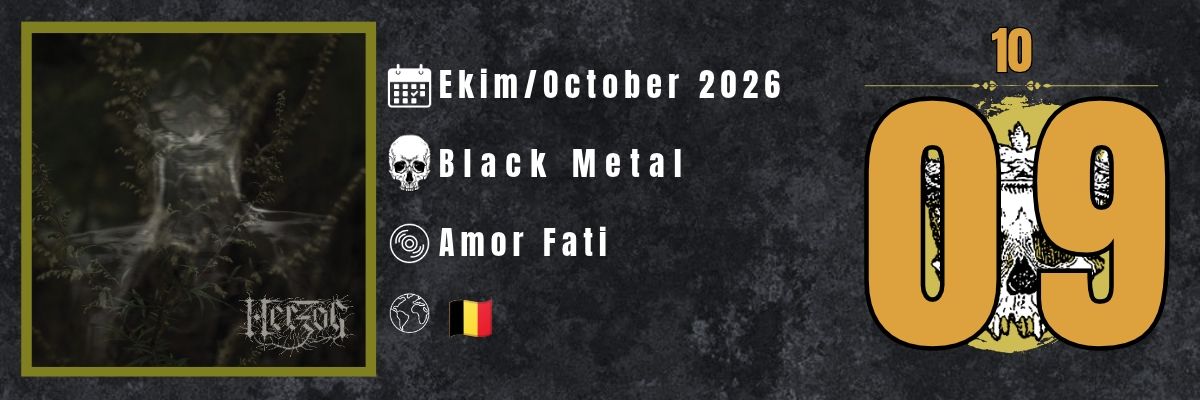
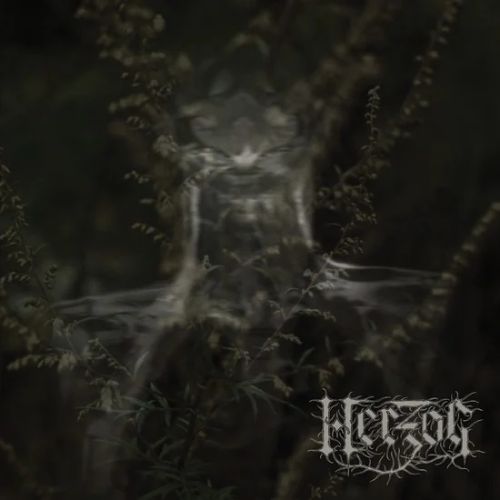
HERZOG’s 2023 debut album, "Furnace", established an uncompromising approach to Black Metal built around dissonance and suffocating atmospheres. Its second album, "Mugwort", occupies a different place in the band’s discography, not only as its final release but also as the last artistic work that project founder Asgeir Amort fought so hard to complete. Following Amort’s death from aggressive kidney cancer in 2025, his wife, Isa Myling, took over the remaining vocal parts. As a result, this six-track record becomes a deeply personal narrative passed from one voice to another.
Musically, "Mugwort" retains the harsh, occasionally atonal Black Metal character established on the debut. However, the compositions move at a faster pace, accompanied by a more restless rhythmic approach. Particularly in the blast beat-driven passages, the guitars’ tremolo-picked lines combine with sharp, dissonant melodies, deliberately obscuring familiar melodic reference points. The guitars do more than provide aggressive riffs; their melodic passages also become an essential part of the tension running through the compositions. Consequently, the music’s ferocity and its occasional melancholic character are never mutually exclusive.
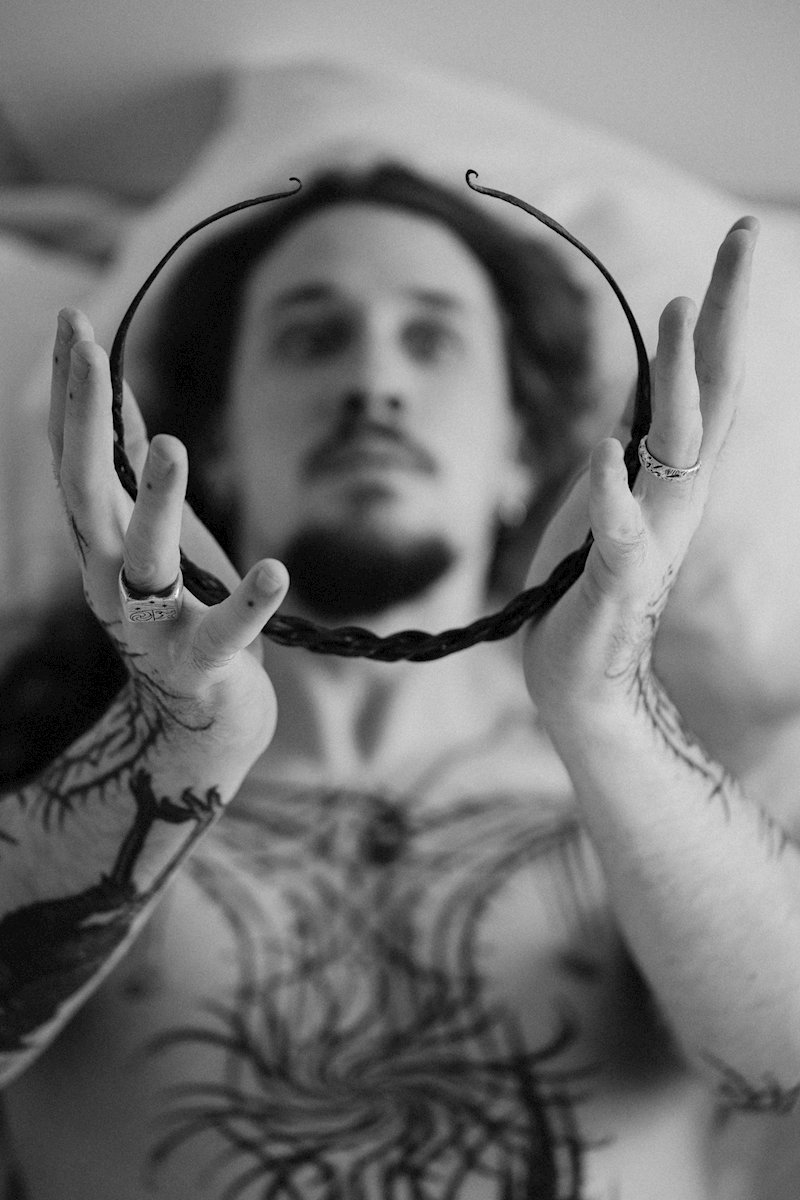
'Region of the Nest' is a good example of this approach, opening with high-speed drumming before shifting its rhythmic direction as the track progresses. The heavier mid-tempo passages that replace the relentless blast beats take the atmosphere somewhere different. What makes HERZOG’s approach particularly interesting here is that these tempo changes serve a purpose beyond creating dynamic contrast. The guitars’ restless melodic movements and the intensity of the vocals ensure that the tension remains intact even when the pace slows down. 'Dawn of the Prosper', meanwhile, is a composition in which riffs and dark melodic solos take on greater prominence. Rather than disappearing into the intensity of the instrumentation, Asgeir Amort’s harsh, seemingly unrestrained screams convey the emotional weight of the lyrics.
Running for more than seven minutes, 'Trauma' marks an important turning point in the album’s narrative, as it is the final track completed with Amort’s own voice. Its extended structure allows the band to explore its aggressive Black Metal approach within a broader musical framework. The track’s intensity does not rely solely on its faster passages; melodic and heavier sections also contribute to its dramatic character. Amort’s vocal performance further strengthens the connection between the lyrics and the music.
The album takes on another dimension in its second half, as Isa Myling assumes responsibility for carrying the vocal narrative forward. 'Chaosphonia' preserves HERZOG’s harsh and chaotic musical identity while making Myling’s voice an integral part of that sound. The change goes beyond a difference in vocal timbre. The continuation of a narrative that Amort could no longer physically complete, now carried by another voice, has a direct impact on the album’s compositional unity. Myling’s contribution cannot be regarded as a conventional guest vocal performance; it is one of the defining elements of the second half’s artistic identity.
As this section progresses through 'Saudade' and the closing track 'Post-Truth', the more prominent placement of the vocals in the mix also becomes noticeable. Compared to the raw, dense sound of the first half, the vocals seem more clearly foregrounded in the latter part of the album. This difference distinguishes the two sections without disrupting their musical continuity. The title 'Saudade', with its associations of profound longing and absence, establishes a particularly meaningful connection with the personal circumstances surrounding the record. Here, melancholy does not soften the music’s aggressive character; instead, it emerges as a separate emotional layer, finding its place amid the dissonant guitars and punishing rhythms.
The raw, occasionally murky character of the production also complements HERZOG’s musical choices. Even when the instruments blend heavily into one another, the guitars’ unsettling melodic lines and the underlying rhythmic movements remain discernible. The decision to position the vocals at a similar level of intensity to the instrumentation in the first half contributes to the music’s cohesive and abrasive sound. The more prominent vocal presentation in the second half, meanwhile, reinforces the narrative distinction between the two sections. The production makes no attempt to pursue a polished or accessible sound, which proves to be an appropriate choice for music in which dissonance and irregular rhythmic movements play such an important role.
Nevertheless, it would be wrong to assess the value of "Mugwort" solely through the lens of Asgeir Amort’s illness and his struggle to complete the album. Such circumstances inevitably influence the listening experience, but personal tragedy alone does not constitute musical achievement. HERZOG’s compositions possess artistic weight independently of the circumstances surrounding their creation. Isa Myling’s role in carrying the narrative through the second half is particularly significant, expanding the album’s emotional scope without compromising its musical harshness. The fact that a record dealing with death, loss and acceptance does not surrender to despair is also an important part of its artistic coherence.
Dissonance, raw production and atmospheric tension have become familiar elements of contemporary Black Metal, appearing in various forms across the scene. HERZOG’s approach does not seek to establish an entirely new musical language; rather, it brings these elements together in the service of a personal narrative. This is precisely where "Mugwort" succeeds. The album offers no easy melodic rewards, demanding instead that listeners engage with the compositions’ restless structures, sharp guitar work and uncompromising vocal delivery. Yet beneath all this harshness, it also preserves traces of love and the connection to life.
HERZOG’s final album is more than the last recording left behind by a musician; it is a powerful work demonstrating that artistic creation can continue even when circumstances become unbearably difficult. The continuation of the narrative begun in Asgeir Amort’s own voice by Isa Myling sets "Mugwort" apart from an ordinary farewell album. The emotional weight of this story is undeniable, but what matters even more is that the music left behind can stand on its own. Beyond serving as the final chapter in HERZOG’s brief discography, "Mugwort" stands as a lasting recording that brings together the band’s Black Metal vision and the creative bond between two people.

facebook.com/p/Herzog-61558581568781
amor-fati-productions.de
amorfatiproductions.bandcamp.com
facebook.com/amorfatiprod