ALBUM REVIEW
ENSLAVED – Mið
Organic progressive black metal with ritualistic textures.
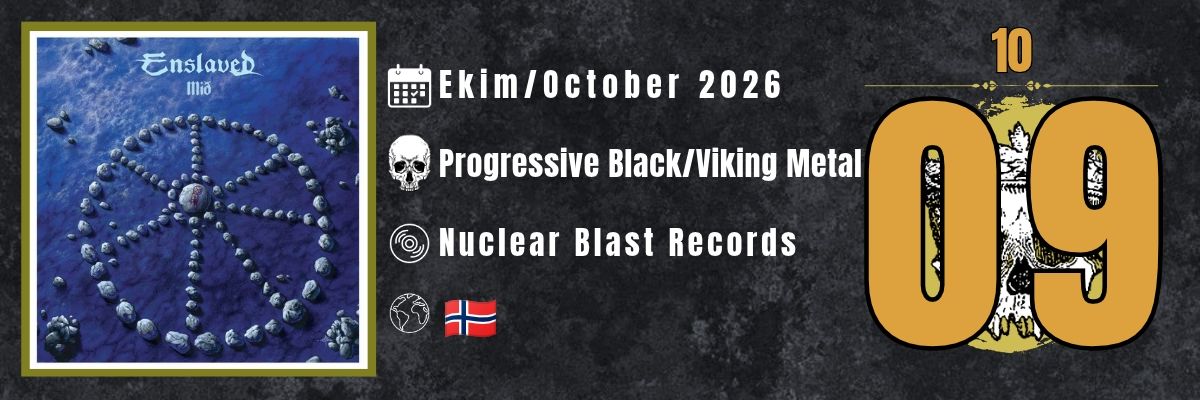
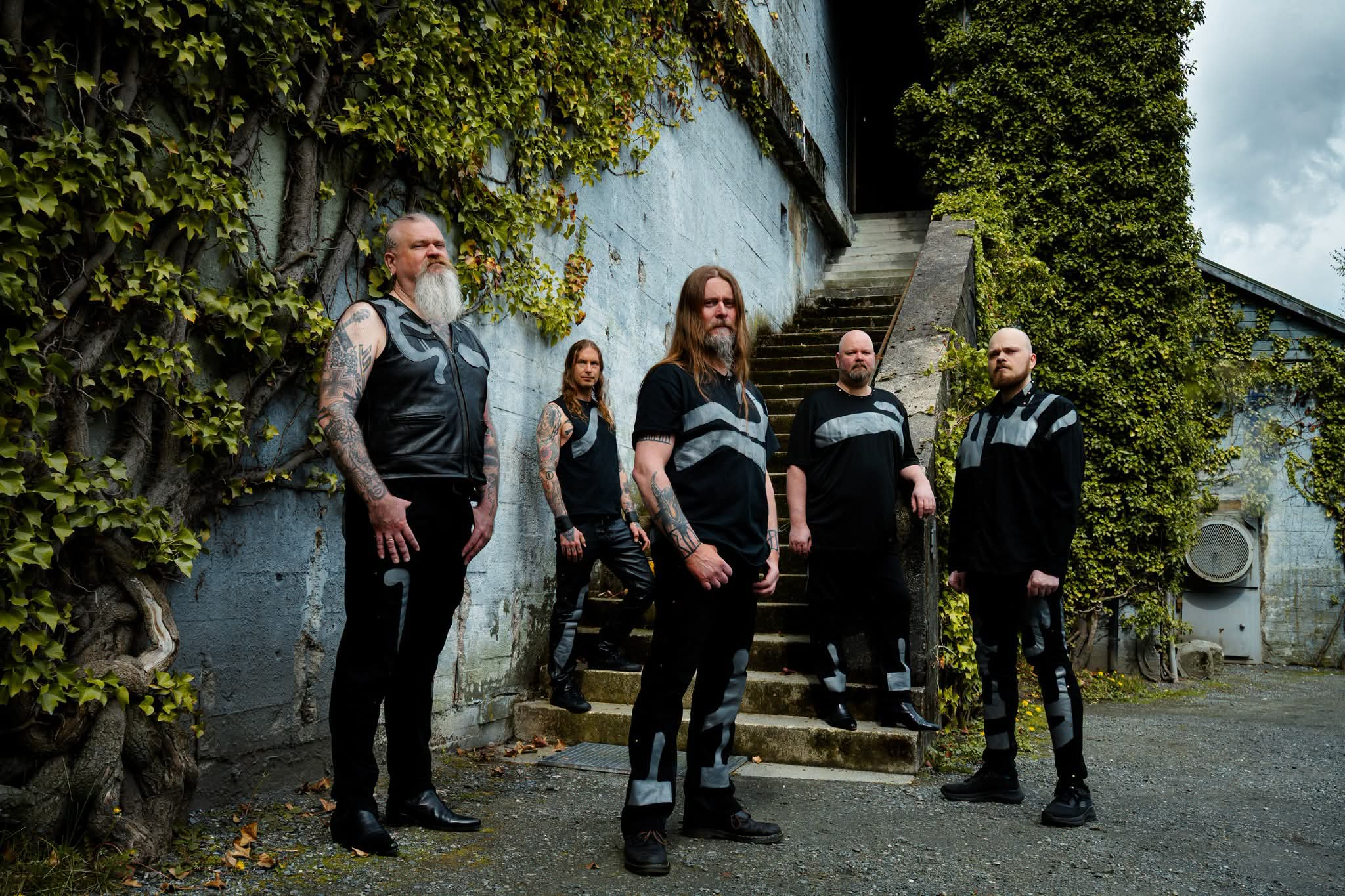
ENSLAVED have spent 35 years continually evolving, from their roots in the second wave of the Norwegian black metal scene to the present day. With their seventeenth studio album, "Mið", they bring different periods of their discography together on common musical ground. Following albums such as "Heimdal" and "Utgard", which placed greater emphasis on expansive compositions, intricate transitions and experimental arrangements, this is a more direct approach to songwriting. The relatively concise track lengths allow individual ideas to retain their character for longer, while the rhythmic and harmonic explorations that define the band's progressive black metal identity remain firmly in place. The result is an album that, unlike the density of its predecessors, feels more organic, occasionally meditative and rhythmically more pronounced.
The instrumental opener 'Non-Being' welcomes the listener with a tranquil atmosphere shaped by acoustic guitars and cold ambient textures. 'I Am Ice', which follows, brings together Johan Sara Jr.'s vocal contribution, rooted in the Sami musical tradition, with ENSLAVED's punishing riffs and ritualistic arrangements. Grutle Kjellson's characteristic shifts between harsh and clean vocals prevent the track's different cultural elements from becoming mere decorative touches. Particularly when the rhythmic accents come to the fore, this combination creates a natural link between the band's black metal roots and the progressive approach it has developed over the years. The synth solo towards the end adds another shade to the arrangement.
Following 'I Am Ice', 'Solar Will' represents the album's more energetic and aggressive side. Sharp guitar riffs, rapid drum fills and Kjellson's harsh vocals are set against Iver Sandøy's clean singing. This contrast is particularly effective in the choruses. The moments when the guitars open up melodically do not soften the track's aggressive character; instead, they bring a different sense of dynamism to the composition. At the same time, the more clearly defined rhythmic structure ENSLAVED opt for here makes the song easier to follow than the band's earlier, longer compositions, which were constantly shifting direction. 'Tales of Trees' continues along similar lines, with fast riffs and syncopated rhythms. After its forceful opening, the track moves towards melodic guitar passages with a shoegaze influence. This preserves the contrast between heaviness and melody that the band have employed for years, while giving clean vocals a stronger role in the composition.
At this point, it is also worth saying a few words about the video released for the track two months ago. At a time when music videos have increasingly been reduced to a few-second visual snippets designed merely to grab attention, the care still taken by bands that came of age in the '80s and '90s to conceive and produce their videos is particularly valuable. In this respect, ENSLAVED have released a video for 'Solar Will' that has the potential to stand as part of their legacy. Produced by Kolibri Media, it is well worth watching, complementing the song's narrative, shaped around sun worship, mythological conflicts and opposing forces within human consciousness, with a compelling visual atmosphere. The shifts between light and shadow, images interwoven with performance footage and mystical allusions reinforce the track's ritualistic character. The visual narrative follows the tension between the music's melodic passages and punishing riffs, leaving room for interpretation rather than spelling out the story. The result is a restrained yet effective visual companion that complements the song's cosmic and ancient references.
The album's musical direction shifts noticeably in its middle section. 'Mountain' opens with gentle guitar chords and clean vocals, moving away from the energetic approach of the previous two tracks. Sandøy's vocal performance supports the melancholic atmosphere of the first half, while the heavy guitars and staccato rhythmic accents that emerge in the second half shift the composition's centre of gravity. The guitar tone, deepened by octave effects, and the stop-start rhythmic arrangements give the song a mechanical heaviness reminiscent of MESHUGGAH, quite distinct from ENSLAVED's more familiar brand of progressive songwriting. Its turn towards doom metal heaviness is another defining feature. Although the transitions between the different musical ideas work well, the final section feels as though it could have been developed further.
'Spirit Helper' is one of the most distinctive pieces on "Mið". A vocal recording taken from a morning prayer to the spirits by Kevin Kicking Woman, an elder of the Blackfeet community, shapes the entire arrangement. Rather than placing ENSLAVED's traditional guitar work at the forefront, the band opt for a structure built around electronic textures, repeated vocal passages and instrumentation that gradually grows heavier. The initial calm gives way to denser guitars as the track progresses, developing into a ceremonial musical expression. What matters here is that a different cultural tradition is not simply used as an exotic embellishment. The relationship between Kicking Woman's vocals and the music's progression is the key element holding the piece together. Although it initially seems set apart from the rest of the album, it takes on considerably greater meaning when considered within the context of the whole.
At over eight minutes, 'Parting' is one of the album's most expansive compositions. Its opening, built around piano, choir-like synth layers and acoustic guitars, evokes the epic atmosphere of BATHORY's Viking-era material. The musical kinship with works such as 'Odens Ride Over Nordland' and 'Twilight of the Gods' goes beyond historical reference; it can also be felt in the progression of the melodies and the track's dramatic structure. The tranquillity of the opening gradually gives way to a darker expression as the guitars grow heavier. The interplay between Kjellson and Sandøy strengthens the transitions between harsh passages and clean vocals, while Ice Dale's expansive guitar solo adds another dimension to the composition. In the second half, the momentum generated by the sixteenth-note kick drum patterns combines with the guitars' chord changes to intensify the track. The return to the melodic world of the opening in the finale brings the long composition full circle. The lyrical themes of Ragnarök, destruction and rebirth also establish a meaningful connection between these two contrasting musical identities.
'Tales of Trees' brings the album back to its more energetic side, standing out rhythmically through the interplay between its syncopated guitars and drums. The melodic passages built around recurring riffs, together with the clean vocals, make the track particularly memorable. Its lyrical narrative, drawing on tree roots, branches and the traces left behind by ancient civilisations, fits the album's broader thematic framework, which explores the relationship between nature and humanity. The closing track, 'I Miðju', meanwhile, turns towards ENSLAVED's more familiar epic side, with more pronounced progressive metal arrangements, tempo changes and instrumental transitions. However, its rhythmic structure and slower-moving passages fail to deliver a result as compelling as 'Mountain' and 'Parting' in the album's middle section. Despite its musical merits, the closer does not quite live up to the expectations raised by the two tracks that precede it.
In terms of production, "Mið" has a balanced sound that brings the band's instrumental details clearly into focus. Jens Bogren's mixing and mastering work gives particular prominence to the bass guitar. Grutle Kjellson's bass lines occupy a powerful position in the lower frequencies, while the guitars, keyboards and drums each retain their individual character within the overall mix. Iver Sandøy's drum fills, Håkon Vinje's keyboard arrangements and the distinct qualities of the three vocalists are all easy to discern. This clarity allows the album's quieter, more atmospheric passages to be just as effective as its heavier moments. Another important aspect of the production is its ability to bring every detail of the music into focus without sacrificing its organic feel.
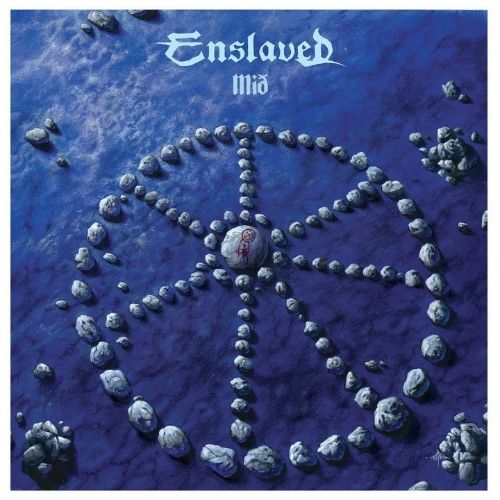
The stone monuments, stone circles, ancient communities and connections between different cultures reflected in the lyrics and visual aesthetic provide "Mið" with its thematic cohesion. It is also worth noting that the band's more collaborative approach to songwriting is reflected in the album's musical character. 'Spirit Helper' and 'I Am Ice' in particular demonstrate how different cultural traditions can be incorporated into ENSLAVED's music, while 'Parting' explores the relationship between destruction and rebirth through a more expansive composition. References to Ragnarök and imagery centred on humanity's relationship with nature take the album beyond a work drawing solely on mythological sources, opening up a more universal narrative space.
After 35 years, it is hardly surprising that ENSLAVED continue to uphold their established progressive black metal approach. What is truly noteworthy is their continued openness to different compositional directions despite such an extensive discography. "Mið" is neither the band's most complex nor their most aggressive release; instead, it establishes its own identity through more measured compositions, rhythmic diversity and its engagement with cultural textures. The need for further development in certain sections and the closing track's failure to match the strength of the album's middle section can be counted among its minor shortcomings. Even so, pieces such as 'Spirit Helper' and 'Parting' serve as a reminder of why ENSLAVED occupy such a distinctive position within progressive black metal. "Mið" secures a special place in the band's career as a mature and creative work, demonstrating that a musical identity shaped over 35 years can still forge new connections.
