ALBUM REVIEW
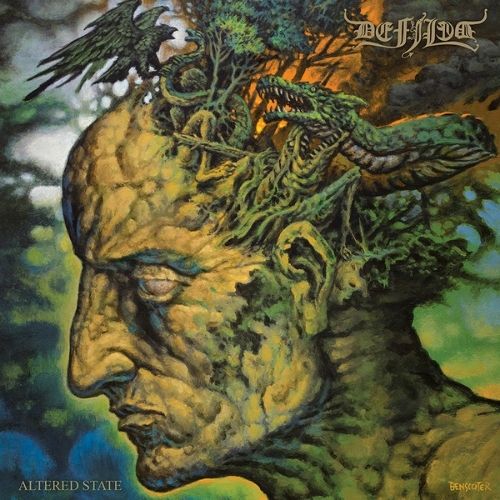
Defiled – Altered State
Technical Death Metal and Progressive Structure
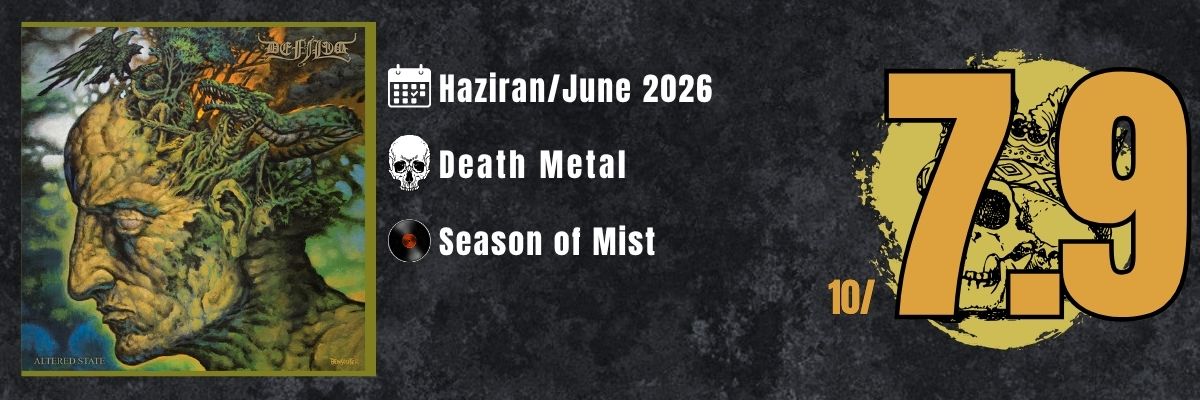
Tokyo-based DEFILED have positioned themselves as one of the rare names that have been consistently advancing along the technical-aggression axis of Death Metal since the early ’90s. Altered State, the band’s ninth album, revisits this long-standing trajectory with a more controlled yet equally fragmented compositional approach. While retaining the genre’s classic ferocity, the album proposes a more complex structure shaped by rhythmic ruptures and technical density.
Altered State greets the listener not with a conventional Death Metal opener but with a riff architecture that deliberately erodes rhythmic stability from the outset. The guitars do not entirely abandon traditional tremolo-driven aggression, yet their defining character emerges from constantly shifting riff cells. These cells rarely settle around a single groove; instead, they fracture into short loops and are relocated across different layers of tempo. This approach is particularly evident on the opening track “Portal,” where classic death/thrash riffs are deconstructed through sudden accelerations and pauses, consciously sabotaging any sense of linear progression.
Behind this structure lies not merely a technical display, but a broader compositional strategy. According to Sumita, the album attempts to merge Death Metal with the rhythmic logic of technical thrash and progressive rock; in practice, this translates into a continuous rewriting of metric flow. The drum performance plays a decisive role here. Blast beats are not used solely as a speed device, but also function as a metronome-like force governing groove transitions. On tracks such as “Obsession” and “Necro-Force,” the fractured drumming becomes the central framework that holds together the irregular blocks of guitar riffs. In this sense, the drumming operates less as a vehicle for technical intensity and more as a structural coordination mechanism.
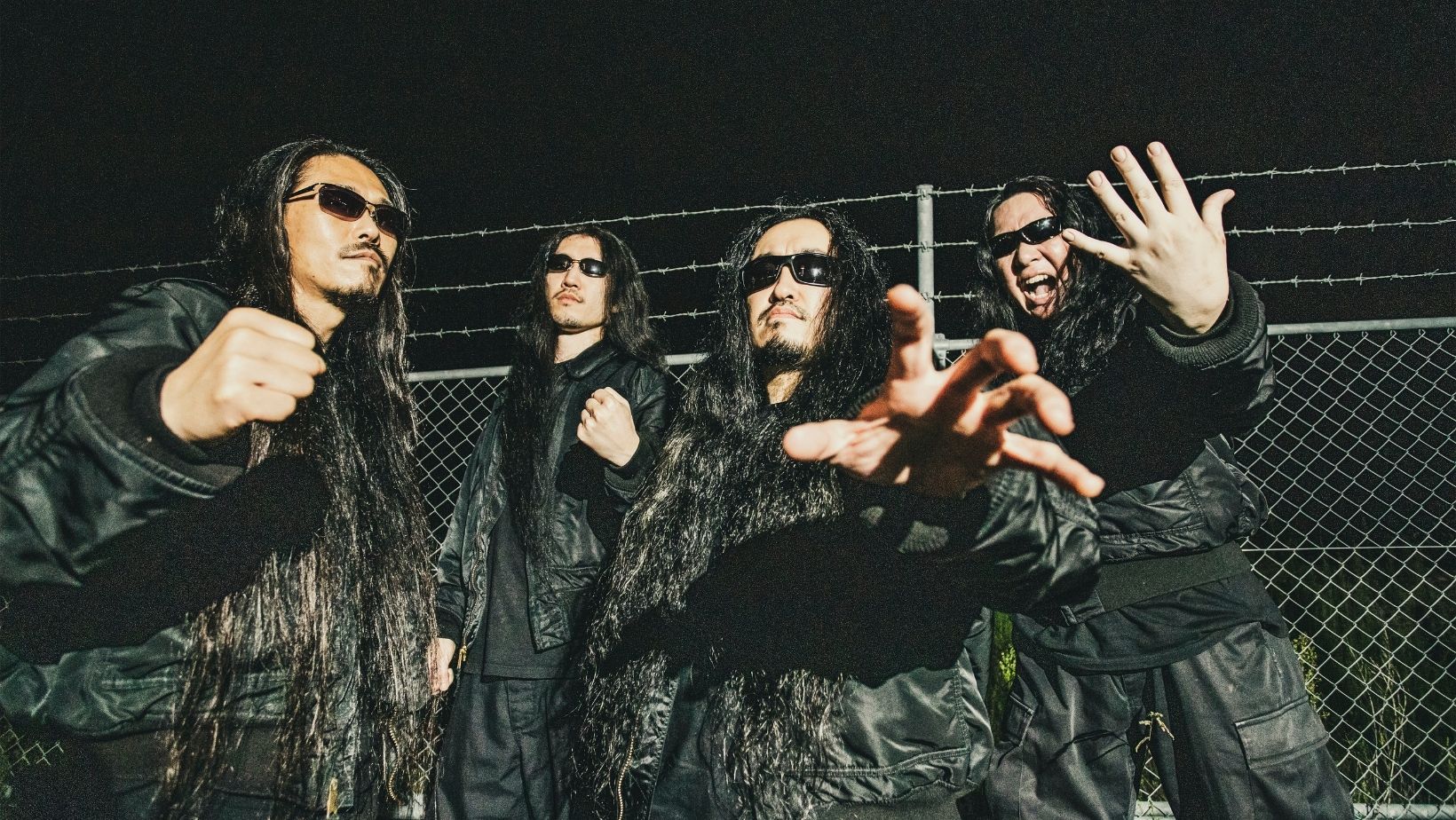
On the guitar front, Defiled’s characteristic language is built on a hybrid structure that fuses the early aggression of Cryptopsy with the rhythmic ruptures associated with Atheist and Sepultura. However, these references are not directly imitative; they are instead perceived through a shared approach to rhythmic behavior. The groove structures that emerge on tracks like “Obsession” form not a fixed riff identity but a constantly reshaping field of rhythmic tension. Here, riffs cease to function as “themes” and instead generate “states,” offering the listener not melodic stability but a continuously shifting foundation.
One of the album’s most notable aspects is its attempt to balance this technical density with occasional hook-like structures. However, these hooks are not traditional, memorable choruses; rather, they function as brief stabilizing points within the riff cycles. The more rock-leaning riff approach in the opening of “Portal,” or the more “walking” groove segments that appear in certain passages, serve as moments of structural breathing space. Yet these moments never establish long-term formal stability; instead, they quickly revert to a compositional logic that fragments them once again.
The album’s production both supports and limits this framework. The recording aesthetic overseen by Sumita sits in a “clean yet non-sterile” balance. Instrument separation is clear, with a pronounced emphasis on the midrange of the guitars, allowing technical details to remain audible. However, the same production choice occasionally tempers the raw aggression of the material, introducing a certain uniformity—particularly in the faster sections. At this level, the production appears less concerned with amplifying chaos than with rendering it legible.
The bass guitar, while not prominently foregrounded as is often the case in extreme metal production, functions as a continuous layer of low-frequency support and directional weight. On tracks such as “Zombified,” its groove-driving presence contrasts with the sharper, more fragmented guitar riffs. This contrast adds further layers to the album’s rhythmic complexity; however, the bass never evolves into an independent narrative voice, remaining instead one of the structural pillars of the rhythmic architecture.
Vocals are positioned within the traditional death growl aesthetic and are deliberately placed in the background of the mix. This mix decision shifts the album’s narrative center away from lyrical content and toward instrumental structure. References to Orwell’s 1984 and its dystopian framework are therefore conveyed less through vocal delivery and more through the rhythmic density of the compositions. As a result, the concept is less a textual reading and more an atmospheric framing device.
The album’s progressive rock influence becomes most apparent in its temporal shifts. However, this progression occurs on a micro level rather than through expansive formal development. Instead of constructing long, episodic transitions, Defiled continuously reorganize the tracks through brief tempo and meter shifts. This approach sits close to what might be described as a Stravinsky-like logic of rhythmic displacement, although it rarely develops into full thematic expansion, remaining instead at the level of abrupt ruptures.
At this point, the album’s central tension becomes clear: despite its technically dense and constantly shifting rhythmic structure, certain passages struggle to generate long-term dramatic development. While this fragmented structure creates dynamic energy in the first half, a sense of repetitive technical density becomes more pronounced as the album progresses. The fatigue some listeners may experience after “Necro-Force” is, in fact, a natural outcome of the compositional strategy itself: continuous variation eventually begins to resemble a form of internal repetition.
Nevertheless, Altered State represents an effort within Defiled’s discography to construct a more “legible” framework. Compared to earlier releases, riff organization is clearer, production is more controlled, and the desire to introduce hook-like elements is more evident in certain tracks. However, these refinements, while increasing accessibility, also result in a partial smoothing of the band’s sharper edges. In other words, as technical clarity increases, chaotic energy is not eliminated but rather compressed into a more managed form.
Ultimately, Altered State positions itself as an album that does not abandon Death Metal’s traditional aggression, but instead reconstructs it through rhythmic fragmentation and technical reorganization. Yet this reconstruction does not always open up new expressive territory; at times, it merely presents a more tightly packaged version of an existing language. For the listener, the album demands active engagement rather than passive flow: tracking where riffs begin and how they mutate becomes the core listening experience. In this sense, Altered State stands less as a boundary-pushing rupture within Death Metal and more as a work that optimizes and compresses its existing technical vocabulary.
OZAN
Website: http://www.defiled.info/
Facebook: https://www.facebook.com/defiled
Instagram: https://www.instagram.com/defiledjapan
Bandcamp: https://defiledjapan.bandcamp.com
Soundcloud: https://soundcloud.com/defiled
Youtube: https://www.youtube.com/@defiled
Spotify: https://open.spotify.com/artist/6KDc0SB4ero6zAgrafjVrt
Apple Music: https://music.apple.com/artist/defiled/72867298
Amazon: https://www.amazon.com/music/player/artists/B001GJ407S/defiled