
ALBUM REVIEW
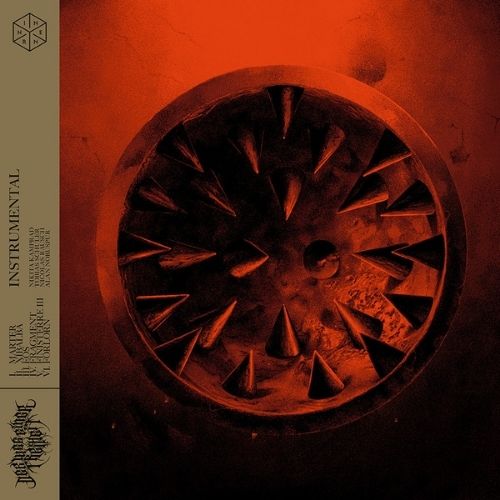
DER WEG EINER FREIHEIT - Innern (Instrumental)
A darker journey revealed without vocals.
not the same thing. Our experience with DER WEG EINER FREIHEIT's "Innern (Instrumental)" is much closer to the latter: looking at an existing work from another angle and discovering new details. Released a year ago, "Innern" was an album about turning inward, exploring pain, alienation, transformation, and vulnerability. Yet the musical expression of these themes was never confined to Kamprad's vocals. The real expression was already there—in the way the guitars touched one another, the drums gradually ratcheted up the tension, the bass maintained its dominance over the dark foundation, and the electronic layers built an invisible architecture around the sound. "Innern (Instrumental)" presents this architecture in a more exposed form.
At first glance, the very reason for this album's existence may seem debatable. After all, there are no new compositions here; we have instrumental versions of the same six tracks. Moreover, "Finisterre III" was already instrumental on the original album. So what I was really curious about here was not, “What remains when you take the vocals out?” but, “Once the vocals are gone, can these compositions still carry the same intensity on their own?” Or, to put it another way, “Can these songs tell their story from a different perspective without the vocals?”
The answer is largely yes.
In fact, at certain points, a more direct way of understanding "Innern" emerges.
A significant portion of the criticism surrounding the original album focused on the two opposing poles in DER WEG EINER FREIHEIT's music. On one side was the merciless intensity of black metal; on the other were melodic, atmospheric, and at times surprisingly tranquil passages. From the slowly building introduction of "Marter" to the extended resolution of "Xibalba", from the movement between serenity and eruption in "Eos" to the wall of guitars rising at the end of "Fragment", "Innern" was built around these contrasts constantly transforming into one another.
When we take the vocals away, that contrast does not disappear. Quite the opposite: it becomes clearer that the contrast fundamentally comes from the music itself.
"Marter" is a perfect starting point for this. In the original version, the arrangement begins with ambient textures and heavy bass frequencies, gradually expanding into a wall of sound before opening into the assault created by the drums and guitars. Some critics singled out the track as one of the album's strongest compositions, particularly noting the way the tension is slowly built before eventually erupting.
In the instrumental version, however, the human vocal timbre carrying the emotional weight of that eruption is no longer there. Yet the track does not lose any of its weight. Because what we hear here is not black metal covered by familiar screams and harsh black metal vocals; it is a composition that rises and resolves within itself.
That distinction matters.
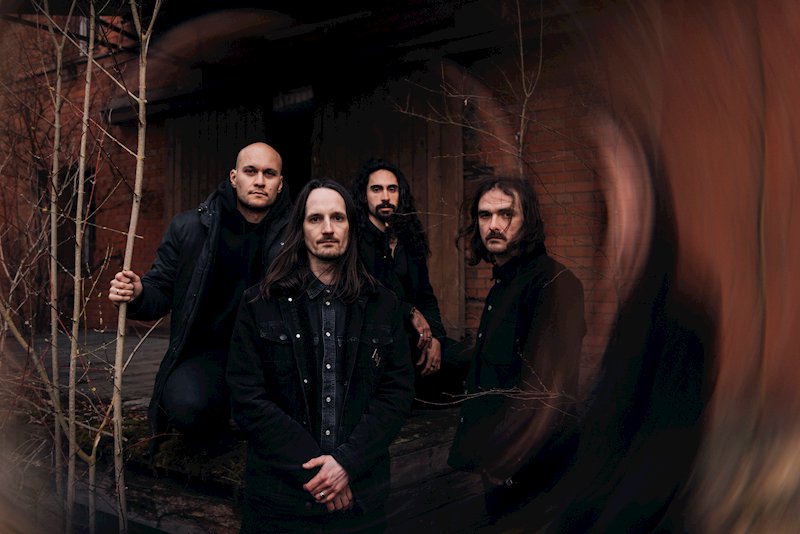
In its songwriting, particularly on its longer tracks, the band does not use the vocals as a major layer added on top of the music, or even as a separate instrument. The vocals often arrive over the emotional peak already prepared by the guitars and rhythm, pushing that emotion even higher. That is why, when Kamprad's voice disappears, the skeleton of the composition does not collapse. On the contrary, the exchanges between the guitars, the movements of the bass, and the small details in Tobias Schuler's drumming become more pronounced.
Looking back at the assessments of "Innern", we once again find Schuler's drumming repeatedly identified as one of the album's driving elements. Once the vocals are removed, the rhythmic and frequency space left behind shows us that the drums cease to be merely a vehicle for moving the songs forward and become the narrative itself.
"Xibalba", meanwhile, sits at the center of this new perspective.
The history of the track itself already explains why "Innern (Instrumental)" came into being. According to the band, "Xibalba" was one of the earliest instrumental compositions completed for the album, despite being one of the last tracks to receive vocals. Bassist Alan Noruspur had lived with the instrumental version for a long time and, once the vocals were added, found himself missing that version. The idea for an instrumental album took shape from this very foundation. Moreover, the new version is not simply the old mix with the vocals removed; it has been remixed by Kamprad, with new atmospheric layers added to certain sections.
For that reason, "Xibalba (Instrumental)" does not feel like a bonus track. Instead, it reveals another face that had been present beneath "Innern" from the very beginning.
In the criticism surrounding the original "Xibalba", the track's extended instrumental resolution in its final section was particularly prominent. For roughly the last four minutes, the vocals receded while the guitars, synths, and atmospheric layers carried the track into another state of mind.
Now the entire track is heard from that perspective.
And the result is surprisingly natural.
The vocal-free version of "Xibalba" does not feel like a diminished version of the song. Quite the opposite, it brings the cinematic side already present in the original composition to the forefront. The melodic movements of the guitars are given more room; the synths no longer sound like decorative elements in the background, but like one of the building blocks of the atmosphere. This makes it clearer just how deeply the classical music, ambient, and post-rock influences the band had developed since the "Noktvrn" era are embedded in "Innern". It also makes sense of why some of the criticism surrounding "Innern" specifically highlighted the influence of CHOPIN and ARVO PÄRT.
"Eos", meanwhile, represents the album's more aggressive side. In the original version, the track's calm and atmospheric opening gradually develops into something harsher and more dissonant, with black metal aggression and melodic, clean vocal elements balancing one another as it progresses. The instrumental version places that melodic counterweight directly on the guitars. This makes "Eos" a colder track. Without the vocals, the song's anger becomes more abstract, more physical. The guitars' tremolo movements and the drums' ever-increasing pressure create tension on their own, without any verbal meaning directing them. Here, the album's “internal” quality also emerges in a different way: there is no voice telling the listener what they should feel; there is only the musical equivalent of that feeling.
"Fragment" is a more contentious track in this respect.
In the original "Innern", it was apparent that the album's second half was less cohesive than its first three tracks, with "Fragment" arguably coming closest to the band's familiar formula. At the same time, there were certainly views that regarded the track's quiet opening and the intense finale that followed as one of the album's significant dramatic moves. The instrumental version does not eliminate this debate, but it makes it easier to understand why "Fragment" was assessed so differently. The spaces in the first section, the guitars' more restrained melodic movements, and the controlled approach of the drums prepare the ground for the intensity of the second half. Without the vocals, the distance between these two sections becomes even more pronounced. The song does not move from one narrative to another; we are watching the same composition accumulate pressure within itself. That is why the wall that emerges as the guitars intensify in the final section feels more physical.
"Finisterre III", meanwhile, stands in the middle of this entire structure as a mere two-minute piano piece.
And perhaps it is one of the tracks whose role changes the most on this album.
On the original "Innern", "Finisterre III" was a brief interlude that cut through the intensity of "Fragment" and provided a transition into the vulnerability of "Forlorn". For this reason, we encountered two different views: one that considered "Finisterre III" important because it fit perfectly into the album's atmosphere, and another that saw it as a beautiful but non-essential two-minute interlude. In the instrumental version, however, "Finisterre III" feels less out of place within the album's overall aesthetic. Because the entire recording has already been stripped of its vocal narrative. The piano therefore no longer sounds like a small window opening beyond the album; instead, it sounds like the most exposed expression of the classical vein already present among the guitars, synths, and drums.
And finally, "Forlorn".
On "Innern", this track was already the most unusual point in the entire structure. With its English lyrics, clean and fragile vocals, guitars approaching post-punk, synths, and the black metal intensity that rises again at the end, it stood almost directly opposite "Marter". That is why it was no coincidence that many critics chose "Forlorn" as one of the album's strongest points. In fact, although I disagree, some assessments explicitly argued that the track saved the entirety of "Innern" or was the album's most distinctive composition.
The instrumental version of "Forlorn" preserves the track's power, but it also pays an interesting price.
A significant part of the fragility in the original song came from Kamprad's vocals. In particular, the fact that the song was performed in English and that the lyrics addressed the human side that seeks help and is vulnerable moved the song out of the album's abstract atmosphere and into a much more personal place.
When the vocals are removed, that directness disappears.
But something else remains: loneliness.
The narrative method of "Forlorn" in its instrumental version is not to say something, but simply to leave us with how it makes us feel. The melodic lines of the guitars, the movement of the bass, and the hazy texture of the synths make the track's vulnerability independent of its lyrics. The result is less personal, but more universal. The “cry for help from someone” in the original version gives way here to a more ambiguous emptiness.
That is precisely why "Forlorn (Instrumental)" does not try to replace the original track; instead, exactly as it should, it presents another interpretation of it.
The same is true of "Innern (Instrumental)" as a whole.
There was a striking consensus among the criticism surrounding DER WEG EINER FREIHEIT's 2025 album: the band had delivered an exceptionally strong, controlled, and compelling record, but some of the experimental boldness of the "Noktvrn" and "Finisterre" eras had receded. Some critics argued that "Innern" was less cohesive, while others deepened the criticism by suggesting that the band had moved toward a safer territory within its own high standards.
"Innern (Instrumental)" does not completely overturn that criticism.
But it does something interesting, almost as if responding to it: it shows just how much intricate songwriting still exists beneath the album's seemingly safe surface.
Because when you listen without the vocals, we once again see that the band's sound is not made up of riffs alone. Small melodic movements between the layers of guitars, the bass guitar subtly shifting the center of gravity of the composition, Schuler's drums doing more than simply generating speed and aggression and instead controlling how the tracks breathe, and the synths functioning not as atmospheric embellishments added afterward but as tonal elements embedded within the compositions—all of these details come to the fore in the band's preferred new mix.
Ultimately, the real achievement of "Innern (Instrumental)" is not proving that the vocals are unnecessary.
Quite the opposite: it helps us understand why the vocals work.
On the original "Innern", the vocals were the human face of this complex structure. In the instrumental version, that face and the physical intensity of the body disappear. The soul of the sound thus becomes visible. The space between the guitars, the tension created by the drums, the coldness carried by the synths, and the position of the silences within the composition all become easier to perceive.
That is why it would be unfair to see "Innern (Instrumental)" merely as an alternative version of interest to collectors.
This album allows us to see beyond the walls of a structure we already know.
And in doing so, it takes nothing away from the emotional power of the original "Innern". It simply changes the source of that emotion. The pain of the words gives way to the pain of the melody, the anger of the scream to the intensity of the guitars, and the loneliness of the fragile vocals to the spaces themselves.
A year ago, "Innern" was a journey inward.
"Innern (Instrumental)" is the map of that journey.
And when you look at the map, you realize that DER WEG EINER FREIHEIT's true strength was never simply shouting in the darkness. The real strength was knowing how to build such a detailed world within that darkness.
This time, that world does not use words or sentences when it speaks, but perhaps for the first time, it can be heard this clearly.

Official Website: https://derwegeinerfreiheit.de/
Bandcamp: https://derwegeinerfreiheit.bandcamp.com/
YouTube: http://www.youtube.com/derwegeinerfreiheit
Instagram: http://instagram.com/derwegeinerfreiheit
Facebook: http://www.facebook.com/derwegeinerfreiheit
Spotify: https://open.spotify.com/artist/7e823b0KQoVtLG86Ui5xGD
Apple Music: https://music.apple.com/artist/der-weg-einer-freiheit/363526020
Deezer: https://www.deezer.com/artist/1386896
Tidal: https://tidal.com/browse/artist/4479035