ALBUM REVIEW
FAUSTIAN - Parable Of The Sewer
Rotten Dark Sermon
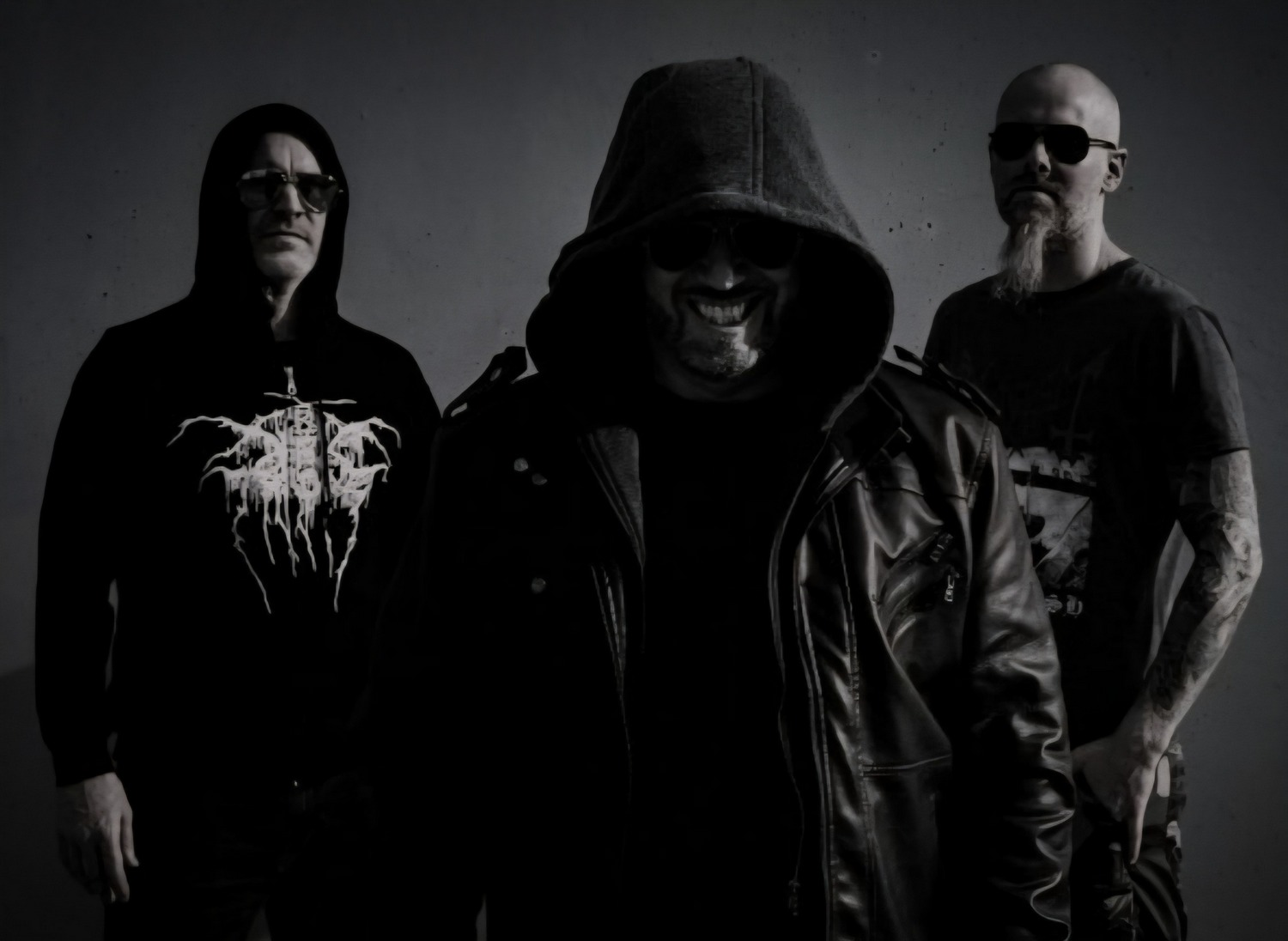
FAUSTIAN, emerging from the Australian extreme metal scene, are reshaping the legacy of traditional black metal through a darker and more unsettling atmosphere with a lineup of seasoned musicians. Featuring members known from bands such as THE BERZERKER, WEREWOLVES, PSYCROPTIC and THE ANTICHRIST IMPERIUM, the trio combines the genre’s aggression with themes of horror, decay and inverted holiness on their second album, "Parable Of The Sewer". The band uses their technical abilities not merely for a display of extreme metal musicianship, but to construct their own decayed aesthetic universe.
The threatening side of black metal has often been built around speed, cold guitar tones and ritualistic aesthetics. With "Parable Of The Sewer", FAUSTIAN do not simply imitate this legacy; instead, they rearrange the genre’s fundamental tools to serve a more unsettling compositional vision. Matt Wilcock’s razor-sharp guitar layers, David Haley’s controlled yet devastating drumming, and Sam Bean’s combined vocal and bass performance transform the album from a mere display of extremity into a self-contained musical structure with its own decaying logic.
The album opener 'I Curse You' immediately reveals FAUSTIAN’s approach. Rather than offering an atmospheric introduction or a gradual build, the track arrives fully formed through blast beats and razor-edged tremolo guitars. Yet the band’s defining quality is not simply their use of speed; it is the way that speed becomes a physical pressure. David Haley’s drumming does not exist as a showcase of technical ability, but as a structural element that drives the tension of the song. The blast beats do not function as a constant backdrop; instead, they become accents that define the track’s dramatic movement.
This approach separates FAUSTIAN from the side of contemporary black metal that relies purely on aggression. The band does not treat speed itself as the goal; they use it as one of the tools for creating an atmosphere of horror. In this sense, "Parable Of The Sewer" carries the martial black metal energy associated with bands like MARDUK and DARK FUNERAL, but its true weight comes from the grander guitar movements rooted in the EMPEROR tradition and the dark atmospheric construction reminiscent of AKERCOCKE.
One of the album’s strongest qualities emerges in the transitions between direct assault and slow-building unease. 'Broken Better' is one of the clearest examples of this approach. The track moves through more controlled guitar passages; melodic lines are not completely erased, but they are constantly held within an unsettling harmonic environment. Matt Wilcock’s guitar writing does more than simply produce aggressive riffs; it distorts melody and ties it into the album’s twisted aesthetic vision. The result is not a complete rejection of classic black metal melody, but rather a corrupted version of it being brought back into use.
This point explains the core approach of "Parable Of The Sewer": FAUSTIAN do not create darkness by multiplying chaos; they place familiar musical elements into a different context. Grand melodic passages and structures that could traditionally create a sense of elevation or grandeur are continuously inverted here. The guitar melodies function not as expressions of triumph, but as extensions of decay.
'I Want The Ride To Begin Again' reveals the band’s more epic side. While the song’s guitar arrangements approach the majestic strain of classic black metal, FAUSTIAN create this atmosphere through riff construction rather than expanding it with symphonic layers. This choice is significant because the band does not imitate EMPEROR’s sense of grandeur; instead, they adapt the dramatic movement behind it into their own dirtier sonic world. The song carries the tension between ascension and collapse through its musical structure.
Sam Bean’s vocals are one of the most important elements supporting this concept. His vocal approach is not built around a single extreme technique; instead, it moves through a wide range, from deep and commanding tones to sharp screams and ritualistic deliveries. Particularly in the slower sections, Bean’s performance becomes more than a simple layer of aggression placed over the guitars. The vocals become part of the narrative structure of the songs themselves.
Tracks such as 'Immaculate' and 'Cephalophore' demonstrate FAUSTIAN’s control over atmosphere. 'Cephalophore' is especially built around contrast, moving from its low-tempo introduction into bursts of savage intensity. Rather than relying on unconventional instrumentation or experimental arrangements, the band’s real experimentation comes from placing traditional black metal structures within different levels of tension. FAUSTIAN are not attempting to move outside the genre; they are searching for disturbing new balances within it.
'We Do Not Use Names Here' stands as one of the album’s strongest compositions. Across its runtime of more than six minutes, the track follows a ritualistic development rather than a traditional attack-driven structure. Repeated guitar figures, increasingly dense drum arrangements and Sam Bean’s authoritative vocals push the song beyond the boundaries of a standard black metal composition and into something more controlled. FAUSTIAN’s greatest achievement here is building atmosphere not merely through sonic intensity, but through compositional logic.
David Haley’s drumming is one of the central pillars of this discipline throughout the album. Considering his background in extreme metal, it would have been easy for FAUSTIAN to pursue a much more technical and relentlessly aggressive direction. However, "Parable Of The Sewer" uses technical ability in service of composition rather than as a display of skill. The drums do not overpower the guitars; they determine the center of gravity within the songs.
The production supports this approach as well. The guitars are positioned within a wide and sharp mix, yet the album avoids the overly sterile clarity often found in modern extreme metal. Matt Wilcock’s guitars sometimes form a dense wall of sound, while at other moments they bring individual riff movements into focus. Sam Bean’s bass, meanwhile, provides more physical weight than expected, particularly in the lower frequencies. This choice moves away from the often-understated bass presence of traditional black metal and creates a fuller sonic space.
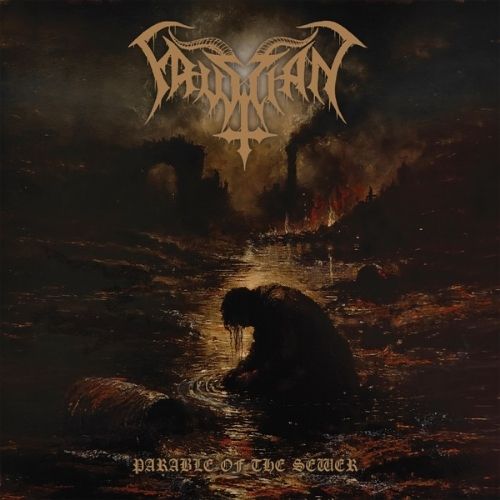
The album’s visual identity also progresses in parallel with its musical approach. The collapsed environment, kneeling human figure and corrupted religious symbolism on the cover do not simply repeat black metal’s classic occult imagery; they place those symbols into a degraded context. The visual language supports the album’s central idea: the focus is not merely on creating darkness or an atmosphere of evil, but on presenting distorted forms of concepts such as meaning, belief and salvation.
From this perspective, "Parable Of The Sewer" takes a deliberate stance against the aesthetic repetition often found in modern black metal. FAUSTIAN are not inventing a new subgenre, nor are they rewriting black metal’s fundamental vocabulary. Instead, they reorganize an existing language around a highly consistent concept. Although this approach occasionally keeps the band tied to traditional structures, the album’s strength emerges precisely from how effectively it operates within those boundaries.
At certain moments, FAUSTIAN cannot completely escape more familiar black metal influences. Tracks such as 'Immaculate' occasionally lean on established atmospheric solutions within the genre, while 'Cephalophore', despite its impressive intensity, struggles at times to push some of its ideas beyond immediate impact. However, the album’s overall structure balances these moments of familiarity. The success of "Parable Of The Sewer" comes less from individual riffs than from the way every composition serves the same aesthetic logic.
FAUSTIAN’s second album is not simply a showcase of technically accomplished musicians displaying their abilities. "Parable Of The Sewer" transforms the classic elements of black metal into a musical system built around horror, decay and inverted concepts of holiness. The album does not ask the listener only to react to volume and speed; it demands attention to recurring motifs, methods of tension-building and deliberately corrupted melodic structures.
Ultimately, "Parable Of The Sewer" demonstrates that FAUSTIAN’s position within contemporary extreme metal is not defined by discovering new sounds, but by connecting familiar tools to an extremely controlled aesthetic vision. The band preserves black metal’s aggression while reshaping it through atmosphere, structure and an unsettling sense of certainty. The album’s true impact does not lie in its noise, but in the way it forces the listener to accept its own dark internal logic.
OZAN
https://faustian666.bandcamp.com/