ALBUM REVIEW
FILTH - Death Exhibition
Old-school death metal grows darker, heavier, deeper.
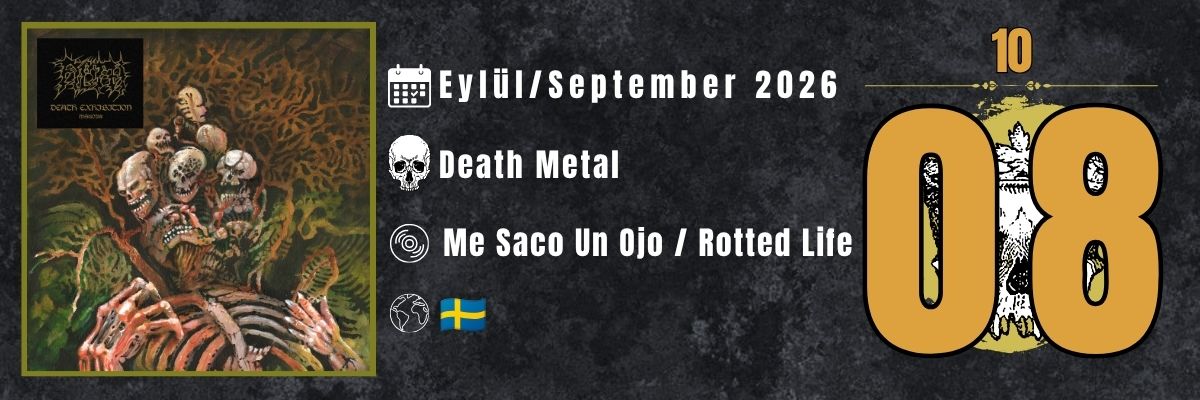
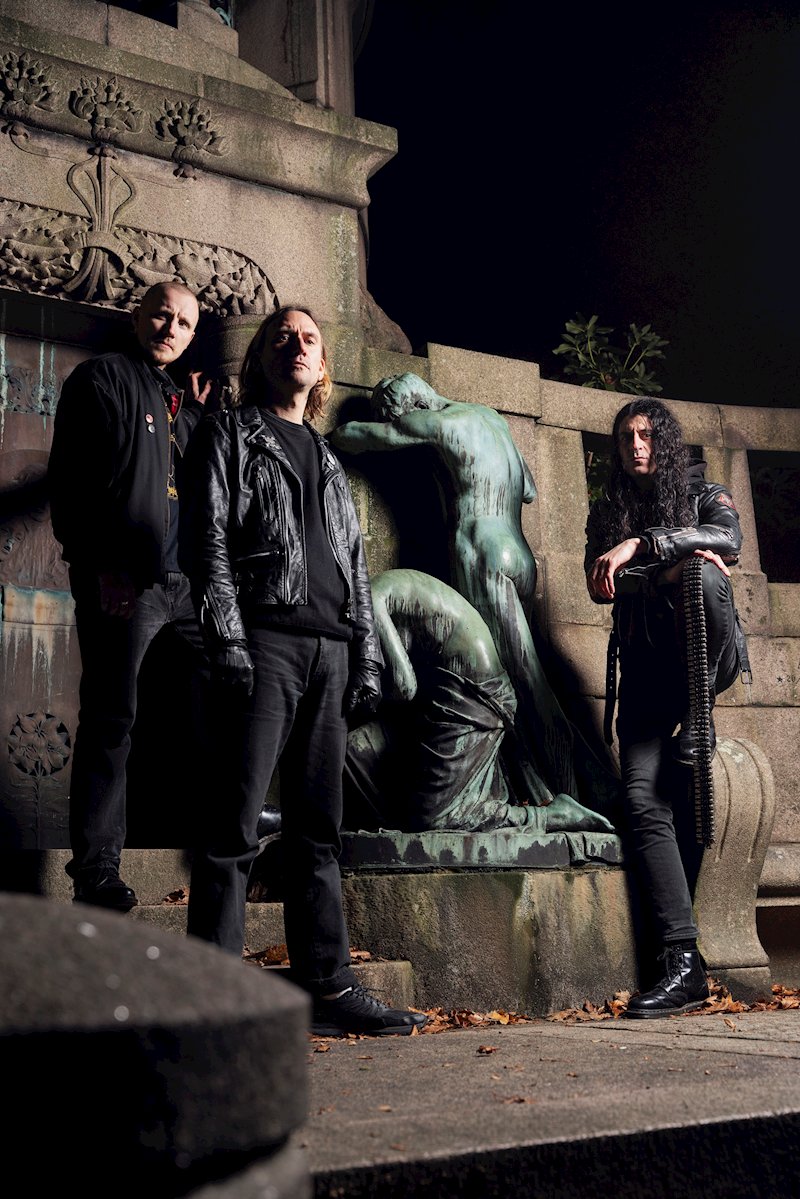
Swedish trio FILTH are back with their second full-length, "Death Exhibition", following last year's "Time to Rot" without much of a wait. Per (vocals, drums), Sebastian (guitar, bass), and Ismael (guitar) once again lean into the rotting textures of old-school death metal, but this time the album's world isn't built solely around speed and brutality. What stands out about FILTH is their ability to place the genre's most primitive instincts alongside a heavier, more atmospheric, and at times downright strange approach to structure.
The opening 'Intro' on "Death Exhibition" announces that the album will establish its own space before launching into a direct attack. Boiling noise and a cinematic atmosphere give way to crawling guitars, deep growls, and increasingly weighty rhythms as it moves into 'Split Casket'. The death metal here operates through physical weight more than sheer speed. The density created by the interlocking guitars combines with constantly active drumming, although the track doesn't yet reveal the album's full potential. The real momentum arrives with 'Buried Alive'. Higher tempos come to the fore here as an exception, and FILTH's riffs don't merely accelerate—they also acquire a sharper edge of aggression.
This approach to tempo defines much of the album. Rather than constantly chasing blast beats, FILTH prefer to create a heavy pressure within mid-tempo and uptempo passages. When the drums occasionally double the pace, they don't so much alter the underlying rhythmic character as add a sudden surge of tension to it. Per's vocals follow the same logic. Extremely deep, full-bodied growls aren't used constantly; instead, vocal lines are stretched out, allowing the spaces between them to contribute to the music's weight. The relative scarcity of vocals therefore never feels like a deficiency. On the contrary, the sections where the growls become more prominent, as on 'Mental Butchery', gain additional impact from the surrounding instrumental space.
The role of the guitars simultaneously reveals the album's strongest and most contentious aspect. "Death Exhibition" preserves the direct, blunt-force riffing of early death metal while expanding it through sections with a stronger doom character. There is a clear continuity between the propulsive riffs of 'Split Casket' and 'Buried Alive' and the heavier, muddier structures of tracks such as '...Exhumed...'. The goal here isn't to push the genre's speed as far as possible, but to extend the physical weight of the riff. When the guitars occasionally open into melodic lines, they likewise serve atmospheric purposes rather than functioning as mere decoration.
The most successful expressions of this approach emerge in the two instrumentals. '...Inhumed...' breaks away from the conventional death metal song structure midway through the album, building itself around flanged bass and dark guitar textures. Here, the bass isn't merely a rhythmic support element; it becomes a sound that directly shapes the track's atmosphere. '...Exhumed...' follows by carrying the idea forward through a more doom-oriented riff structure. The relationship between the two tracks forms one of the album's most thoughtfully conceived compositions: one represents a descent into the depths, while the other seems to struggle slowly toward the surface through that same dark space. This is where FILTH's experimental side truly makes sense; unusual elements aren't being used to move away from the genre, but to expand death metal's physical sensation.
That said, not every slowdown on the album is equally effective. In some of the more doom-heavy guitar passages, the ideas can feel stretched without enough direction behind them. While the more orderly and controlled structure of "Death Exhibition" trims away some of the looser energy of the debut, it also makes certain passages more predictable in return. This is particularly noticeable in the more groove-oriented sections. On a track such as 'Sadistic Ways', the guitars could generate more aggression and impact, yet the current guitar tone doesn't always deliver the full physical force these riffs are capable of producing.
This is where the production creates an important distinction. The album's dirty, humid, analog character fits its aesthetic extremely well. The sounds haven't been sterilized; the rough edges of the guitars, the substantial presence of the bass, and the pronounced drum hits preserve the organic character of old-school death metal. Yet the guitar tone, which could be expected to hit with more punch than it does here—especially compared with the debut—remains somewhat more controlled this time around, and that becomes a disadvantage on groove-driven riffs. Interestingly, the same production choice that strengthens the album's atmospheric side occasionally pulls its aggressive side into the background.
FILTH's reference points within the genre also help make sense of this picture. The tank-like weight of early GRAVE, the angular and restless riffing of early IMMOLATION, the muddy darkness of AUTOPSY, the crushing atmosphere of INCANTATION, and the old Finnish death metal tradition surrounding DEMILICH and ABHORRENCE can all be felt within the album's genetic makeup. But "Death Exhibition" doesn't simply present these influences as pieces taken from the past. The strangeness of its instrumental passages and the space it gives to doom allow FILTH to place that heritage within their own sonic vocabulary. As a result, the album's old-school character functions less as a nostalgic costume than as a foundation for composition.
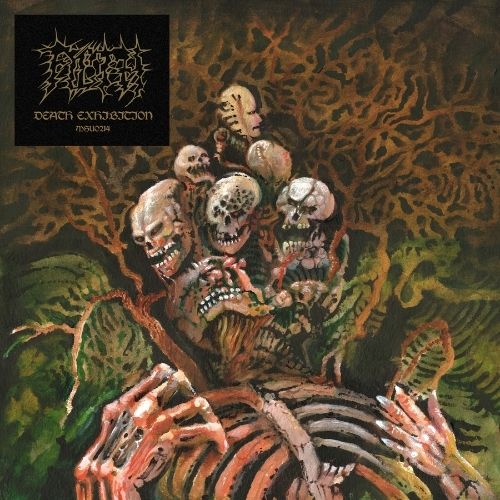
The album cover's move toward a more direct death metal aesthetic, one that supports this musical approach, doesn't seem accidental either. Still, the visual side finds its strongest counterpart in the music itself, where the theme of decay is constructed not only through aggressive riffs but also through space, slowdowns, and sonic textures. FILTH become interesting here not when they try to do more, but when they begin using the genre's basic materials at different levels of intensity.
The closing 'Rotted Life' consequently serves as a good summary of the album. The track is in almost no hurry, yet the guitars' movement beneath the surface, the deep vocals, and the increasingly heavy structure create a distinct tension. It's one of the tracks that demonstrates how FILTH's music cannot be measured by speed alone. The structure, which runs for just over half an hour across ten tracks including the intro, also works in its favor: the album never outstays its welcome, and the instrumental sections feel integrated into its overall atmosphere rather than detached experiments sitting outside the main body.
"Death Exhibition" doesn't abandon the old-school death metal backbone established with "Time to Rot"; it expands it into a heavier, more controlled, and more atmospheric space. That expansion isn't equally successful everywhere: some of the doom-oriented passages would benefit from a more forceful guitar tone and more clearly defined compositional direction. Even so, FILTH's second album gains its significance by moving beyond mere admiration for the genre's past and rearranging some of its fundamental elements—riff weight, dirty tone, deep vocals, and physical intensity—in different proportions. That is where "Death Exhibition" is most convincing: it preserves the rotten material of old-school death metal while making room for a little more darkness within it.

filthdeath.bandcamp.com
mesacounojo.com
mesacounojo.bandcamp.com
rottedlife.com
rottedlife.bandcamp.com