ALBUM REVIEW
Fires in the Distance - Circadian Promise
A boundary-pushing interpretation of melodic death metal.
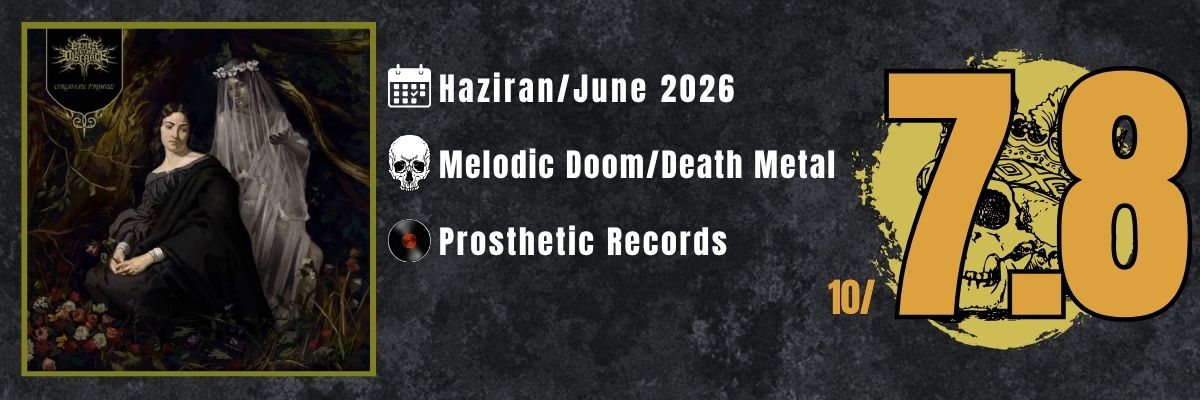
Fires in the Distance, hailing from Connecticut, has in recent years become one of the more notable acts operating within a melodic death/doom framework, defined by dense guitar writing and a broad sense of atmosphere. The band expands its heavy riff foundation through orchestral layers and clean vocal touches, stretching the genre’s traditional boundaries in a controlled, measured way. “Circadian Promise” stands out as a new phase in this approach, representing a more riff-centered and tightly structured version of the same aesthetic.
If you’re ready, let’s turn the lens toward the details of the album together. With their third record, “Circadian Promise”, Fires in the Distance now occupy a position where they more consciously push against the limits of being “just another melodic death/doom band.” However, this expansion does not manifest as a radical shift in direction, but rather as a more carefully constructed orchestral and vocal layering architecture built around guitar-driven songwriting. The album’s overall character is grounded in a compositional logic of slow-paced but continuously moving riff flow, one that understands when to leave space, yet never fully surrenders that space to atmosphere alone.
The opening track, “Of Radiance and Levitation”, frames this approach clearly. The mid-tempo guitars generate a persistent harmonic tension, particularly in their chord progressions; rather than resolving with clear cadences, the riffs are linked through transitions that feel deliberately suspended. On top of this structure, string and synth textures—enhanced by Randy Slaugh’s contribution—create a more cinematic surface, though these layers often function less as agents that reshape the riff logic and more as a soft framing field around it. The points where clean vocals first enter provide melodic expansion, yet they do not alter the underlying guitar framework that drives the track.
“To You, Author of My Fade” emerges as one of the album’s most energetic moments. The sharper articulation of the drums and the more forward-driving rhythmic emphasis in the guitars produce a flow reminiscent of Insomnium and early Dark Tranquillity. Still, the defining factor here is not speed, but the increased density of transitions within the measure. The introduction of clean vocals by interrupting the harsh vocal line does not establish a dramatic contrast, but instead layers two expressive modes over the same melodic spine. As a result, the track does not rely on opposition, but on a sense of controlled continuity.
On mid-album tracks such as “Lightless Days of a Songless Bird” and “By This Time Tomorrow”, a more pronounced dramaturgical issue begins to surface: the intensity of the opening two tracks inevitably pushes the subsequent compositions into a more open, less forceful space. Here, the guitars leave wider gaps, constructing a looser harmonic field that evokes Paradise Lost’s gothic rock period chord work. Johan Reinholdz’s guest solo contribution on “By This Time Tomorrow” technically enriches the track, but it functions more as a luminous overlay on top of the existing structure rather than something that alters its direction. In other words, the solo does not transform the form; it merely sharpens the surface.
One of the album’s more contentious moments arrives with the structural rupture felt in “Once the Silence Takes Your Place”. Here, a more fragmented riff design and an inserted programmed section briefly interrupt the album’s organic flow. While this intervention carries potential for tension, without the strength of the following riff section it could easily have remained decorative. This points to a broader tendency across the record: experimental touches often operate not as elements that redirect composition, but as surface-level variations added onto an already established framework.
The closing track, “Agonal Dreaming”, stands as the most balanced composition on the record. Its piano-and-guitar opening allows the riffs to operate across a wider dynamic spectrum. The guitar passage emerging around 3:31, followed by orchestral escalation and blast beat transitions, marks one of the most effectively integrated moments on the album. Here, orchestration finally moves beyond the role of accompaniment and becomes a component that directly influences rhythmic and harmonic structure. However, this level of integration remains largely confined to the final track, creating a sense of concentration rather than a consistent album-wide development.
On the production side, guitars are placed prominently in the mix. The more fog-drenched, synth-heavy atmosphere of the Air Not Meant for Us era is pulled back, replaced by a more defined riff separation and a harsher overall mix. This decision strengthens the death metal edge, but it also reduces the sense of depth in certain atmospheric transitions. In particular, synth and orchestral elements at times feel less like structural necessities and more like aesthetic filters filling in the gaps.
Vocal usage represents one of the clearest areas of expansion on the record. Clean vocals are no longer simply a refrain-oriented solution, but a tool that actively redirects form within specific sections of the compositions. Even so, their role rarely creates a full dramatic rupture; in most cases, harsh and clean vocals operate as different intensity levels along the same melodic line. This reinforces the album’s reliance on controlled transitions rather than overt emotional contrast.
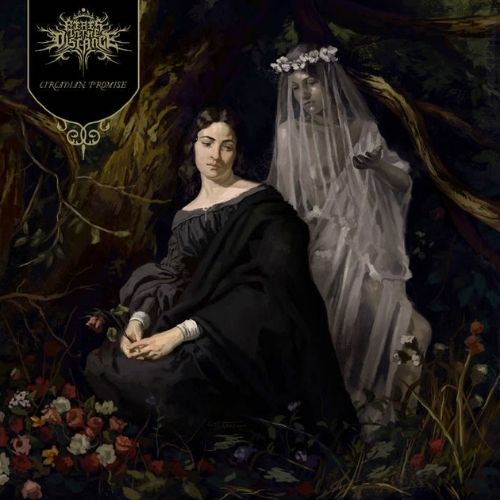
Visually, the cover art shows a deliberate move away from the genre’s typical grotesque imagery. The theme of figurative death within nature and dual imagery aligns with the music’s layered structure; however, it also carries a similar risk to the orchestration at points within the album—symbolic density is present, but its structural correspondence is not always equally strong.
Looking at the broader picture, Circadian Promise narrows the wider atmospheric scope of its predecessor in favor of a more riff-centered compositional focus. While this results in a technically tighter writing approach, it also creates a sense of “front-loading” due to uneven distribution of dramatic tension across the middle section. The gap in intensity between the opening pair of tracks and the finale occasionally fragments the album’s overall dramaturgy.
Ultimately, the record can be read as an exercise in balancing melodic expansion with structural discipline within death/doom. Rather than simply reproducing genre reference points—Insomnium, My Dying Bride, Paradise Lost, Katatonia—the band repositions them within a more guitar-centric writing logic. Yet this repositioning does not always generate a fully new compositional language; at times it simply refines an existing one. For this reason, Circadian Promise stands as an album that aims for expansion but does not realize it uniformly across its entirety, resulting in a controlled yet occasionally cautious progression of ideas.
OZAN
https://firesinthedistance.bandcamp.com/
https://www.instagram.com/firesinthedistance/