ALBUM REVIEW
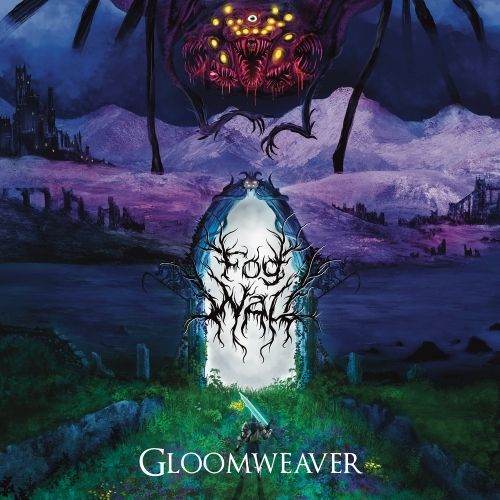
FOG WALL - Gloomweaver
Crushing death metal, dark atmosphere, thunderous bass.
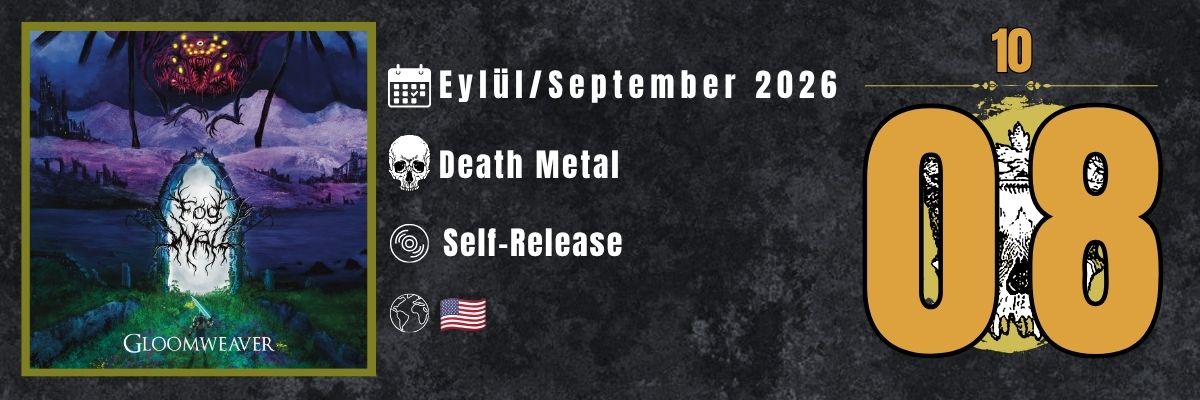
On their debut album "Gloomweaver", Nevada-based FOG WALL go beyond using these references as mere visual or thematic decoration, reshaping death metal's inherent weight through atmosphere. The album is built on some of the genre's most familiar building blocks: filthy riffs, down-tuned guitars, crushing grooves, technical passages, and savage vocals. What sets it apart is the dark, melodic, and at times black metal-leaning layer that settles over them, constantly altering the character of the music.
At the center of this intensity is an intensely physical guitar sound. FOG WALL construct their riffs for direct impact rather than intricate embellishment; when the thick tone of the down-tuned guitars combines with palm-muted, machine-gun-like rhythmic strikes, much of the album takes on an overwhelming mass. But that weight alone is not what separates "Gloomweaver" from an ordinary death metal record. The pressure generated by the guitars is constantly pulled in another direction, particularly through harmonic touches and melodic counterpoints.
'Knife, Sting, Tooth' is a good example. Its heavy, decayed-sounding main riff initially gives the impression that it might crawl forward almost at a snail's pace, before FOG WALL accelerate the rhythm and use blasts to set the structure back in motion. Likewise, 'Mazarbul (Desolation)' and 'Frantic Orb Weaver' contain fast sections that lean toward technical death metal. Yet technical proficiency never takes precedence over the music itself. Fast guitar passages, grooves, and sudden rhythmic shifts are used as tools to fuel the songs' overall aggression.
The album's blackened side serves a different purpose. The twin tremolo guitars in 'The Accursed', and especially the combination of cold synth textures and blast beats in 'Strangling Gloom', carry death metal's physical weight into a more atmospheric and alien territory. In these sections, FOG WALL's music does not simply become harsher; it also takes on a character that alters its surroundings. The darkness of "Gloomweaver" is not a decorative element here, but a second layer that defines the texture of the compositions.
This approach is also evident in the way the band places its various influences alongside one another. The old-school death metal darkness of MORBID ANGEL, the malevolent weight of DEICIDE, and the more direct aggression of THE BLACK DAHLIA MURDER can be felt at the album's core, while more warped rhythmic ideas reminiscent of bands such as IMMOLATION and MAN MUST DIE also come into play. In some sections, the technicality approaches CRYPTOPSY and EXOCRINE, while elsewhere the heavy, swaying doom feel of TYPE O NEGATIVE emerges. Yet these references do not turn the album into a collage of influences. FOG WALL's real achievement lies in melting these different tendencies into a shared sound.
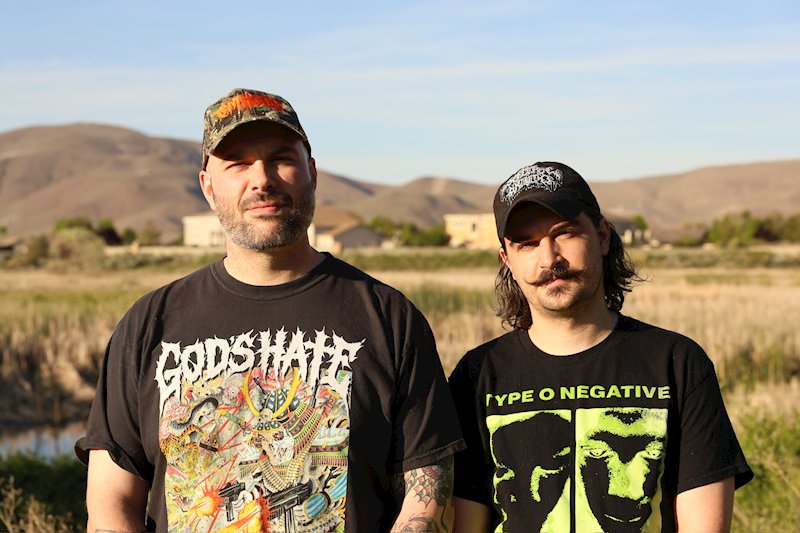
The role of the bass guitar is particularly important in this respect. Alex Malmquist's bass performance is not left as a supporting layer simply filling out the guitars; it has a clearly defined space to move within the mix. In the thrash/death-leaning grooves of 'Fleshpot Ritual', the chaotic sections of 'Frantic Orb Weaver', and the slower march of 'Traverse', the bass makes its own weight felt. Rather than merely repeating what the guitars are doing, it makes a distinct contribution to the songs' rhythmic and tonal texture. This choice does more than increase the album's intensity; it preserves the character of the instruments within distortion layers thick enough to easily blur them together.
This is also where the production's strength becomes apparent. Rather than turning "Gloomweaver" into a clean and sterile death metal production, Alex Malmquist's work on recording, mixing, and mastering creates a raw, thick, physical sound. The sharpness of the drums, the mass of the down-tuned guitars, and particularly the prominence of the bass can all be heard at once. At times, the sheer density of the sound works against the album; because the music remains under constant high tension, details can begin to obscure one another as the listening experience progresses. Even so, this feels less like the result of uncontrolled production than the consequence of FOG WALL deliberately constructing a high-pressure sonic world.
On the vocal side, the screams, growls, and more grotesque guttural tones shared by Zak Brady and Malmquist complement the physical character of the instrumentation. The combined intensity of the two vocalists, especially when placed over the heavier riffs, pushes the human element of the music into the background and creates something more creature-like. This vocal approach is equally effective in the album's atmospheric passages; rather than turning the vocals into a melodic focal point, FOG WALL use them as another layer added to the music's dark texture.
The album's dark-fantasy world also remains inseparable from the music. Its thematic framework, drawing from Tolkien's narratives and the worlds of FromSoftware games, is brought directly into the sound through the use of short samples taken from films and games. The atmosphere established by 'Manor of Ensnarement', along with the samples in 'Mazarbul (Desolation)' and 'Frantic Orb Weaver' that provide transitions into new sections midway through the songs, demonstrates that this material was not added merely for decoration. Its use is particularly effective in placing the album's death metal weight within an atmospheric and cinematic context.
In terms of songwriting, FOG WALL's greatest advantage is the clear discipline beneath all that intensity. The songs do not overstay their welcome; even the faster sections are given enough room to complete their ideas. While tracks such as 'Fleshpot Ritual' and 'Strangling Gloom' can reveal multiple sides within a short span, the band's rendition of TYPE O NEGATIVE's 'The Profit of Doom (Medley)' does not feel like an add-on completely detached from the album's aesthetic. Instead, it reveals another side of the band's relationship with doom, groove, and dark atmosphere.
That said, "Gloomweaver" does not have a flawless flow. After getting off to a strong start, 'The Accursed' cannot maintain the same degree of variation found in the preceding sections. 'Belching Black Vapours' also begins to give off a sense of an early conclusion as it approaches its end. The more significant problem, however, is the closing track, 'Traverse'. Although its slower tempo and doom-influenced bass line make sense as a way of showing another side of the album, it cannot reproduce the vitality carried by the preceding tracks. FOG WALL succeed in creating atmosphere here, but they do not deliver a finale with the same level of physical energy found throughout the rest of the album.
These few pacing issues do not overshadow the fundamental achievement of "Gloomweaver". The album's entire approach is built less around individual songs constantly demanding attention than around the accumulation of intensity and atmosphere. Its refusal to leave the listener much room to breathe is both its greatest strength and its most obvious limitation. At a certain point, you may find yourself remembering the overall pressure it leaves on you more than the musical details themselves.
What stands out about the band's debut is not an attempt to rediscover the fundamental building blocks of death metal, but a demonstration of just how many different ways those building blocks can still be used. "Gloomweaver" expands traditional death metal riffing with black metal atmosphere, technical rhythms, doom weight, and an unusually lively bass guitar presence. The resulting music does not invent a new genre, but it creates its own dark territory by bringing familiar elements together with enough personal intensity. That is also where FOG WALL's most promising quality lies: "Gloomweaver" sounds less like the work of a band still finding its footing on a debut than a band that already knows what it wants to do, yet has not exhausted its full potential—and it leaves expectations high for what they will produce in the future.
