Album Review
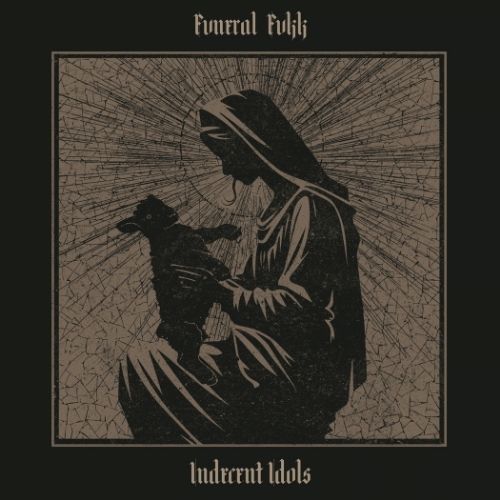
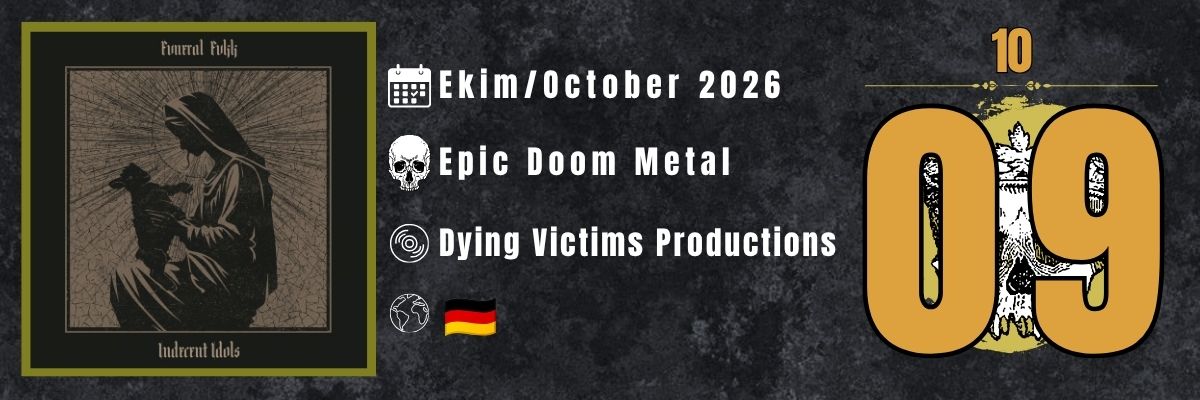
FVNERAL FVKK – Indecent Idols
Indecent Idols confronts history’s darkest shadows
Hey everyone, how’s it going? Bosphorus Open Air Festival hit us pretty damn hard. As much as we came away with so many great memories, there were inevitably some stressful times too, of course. But there’s such a team working behind the scenes that they kept firing every round without missing a beat, like a machine gun. Anyway, we were absolutely exhausted, but it was worth it. Now it’s time to shake off the fatigue. Since we’ve had our fun, it’s time to hear some sad and bitter truths as well. And who better to hear them from than the German band FVNERAL FVKK?
FVNERAL FVKK deliver their epic doom metal in a remarkably forceful manner. While their approach remains firmly rooted in the artistic side of doom metal, their thematically aligned lyrics make it clear that the band has no fear of controversial subjects. FVNERAL FVKK had already demonstrated their potential with their debut album, Carnal Confessions. Hearing them continue along the same path with Indecent Idols is quite satisfying.
A heavy sense of gloom and sorrow dominates this album. Maintaining a bleak doom metal atmosphere throughout, the band brings measured melodic touches and restrained solos to the forefront. Vocalist Cantor’s poignant singing style, built around these elements, is one of the most important components completing the band’s sound. The use of clean vocals gives the classic doom approach a ritualistic quality. Sparse riffs and vocals that at times come close to the feeling of an unsettling hymn create an intensely disturbing atmosphere.
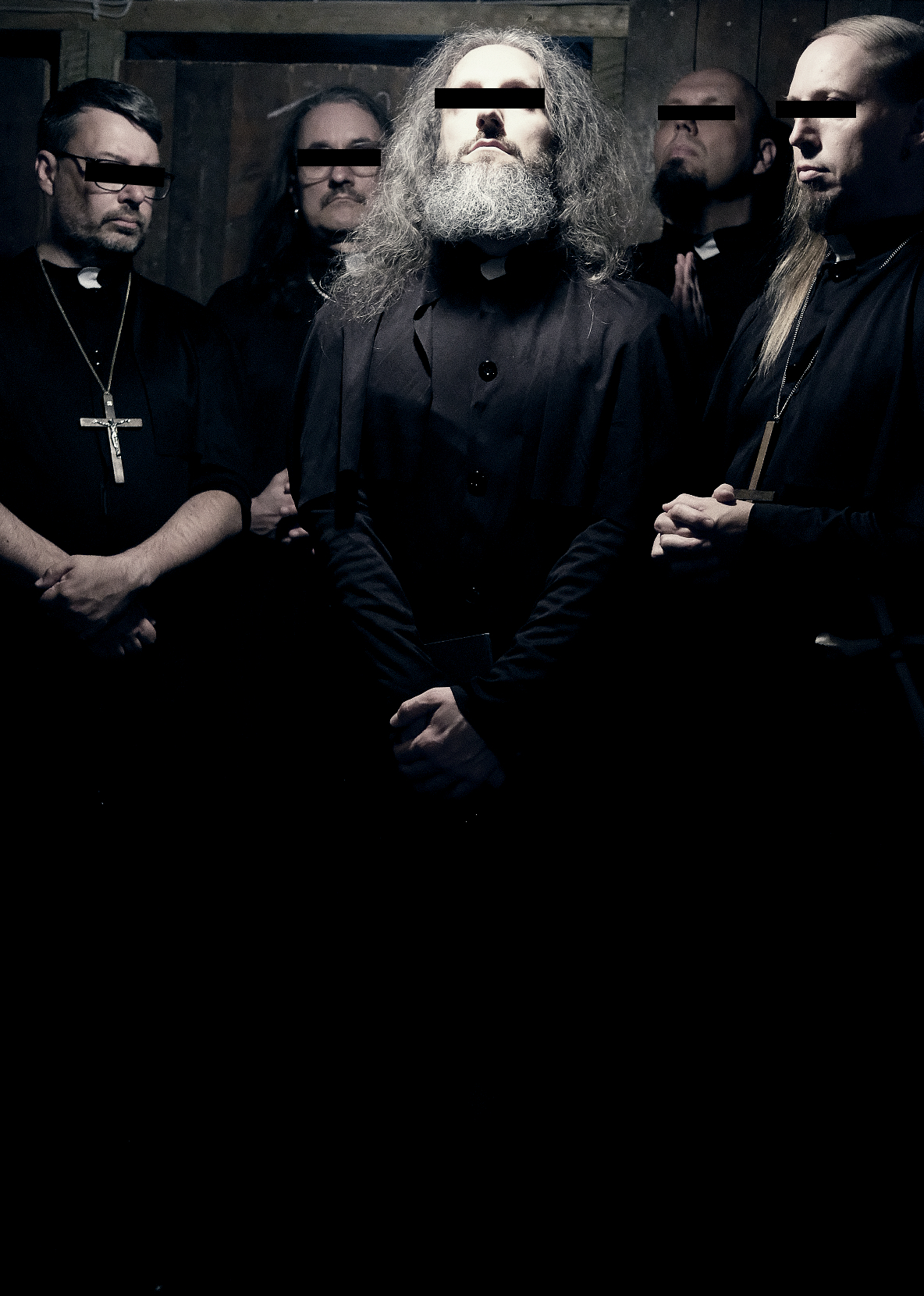
The difficult part here isn’t solely down to the weight of the music. The fact that a significant portion of what is described in the album’s lyrics draws from real events makes the resulting atmosphere much heavier. FVNERAL FVKK doesn’t derive its darkness solely from the familiar gloom of doom metal; they incorporate the darker sides of abuse, oppression, fanaticism and religious authority throughout history into their music.
“Bishop of the Iron Guard” is one of the clearest examples of this. The track deals with the connection between the Iron Guard’s religious symbolism and its ultranationalist, violent politics in Romania, while the reference to Brother Trifa in the lyrics further reinforces this historical framework. Viorel Trifa was one of the leading figures in the Iron Guard’s student movement and was among those who played a role in the outbreak of the Legionary Rebellion in January 1941. There are also historical records showing that religious language and symbols were used within the Iron Guard movement as a means of legitimising violence. FVNERAL FVKK are not merely recounting a political event here; they show how faith, authority and fanaticism can converge on the same ground within a dark doom metal atmosphere.
“Even In Death (We Possess You)” moves away from the social dimension of the subject and turns towards the devastation it leaves on the individual. Institutional abuse, fear and a sense of control sit at the centre of the track. The fact that the narrative becomes personal here is important; rather than describing these events from a distance, the band attempts to convey the helplessness created by victimisation. When Cantor’s clean, poignant vocals meet the heavy guitars, the track takes on an almost elegiac quality. While the music may appear calm, the weight carried by the lyrics keeps the tension alive throughout.
“A Hidden Threnody” takes this approach even further. Allegations of abuse involving Catholic institutions in Ballarat, and the institutions’ responses to those allegations, were the subject of one of the Australian Royal Commission’s extensive investigations. The Commission examined the responses of the Diocese of Ballarat and the Christian Brothers to allegations of child abuse, together with the long-term effects experienced by victims. Here, FVNERAL FVKK move directly towards the voice of the victim, foregrounding silence, fear and the disappearance of any sense of justice. The track’s slow and patient musical progression supports this feeling as well. There is no rush in the riffs; instead, they make us linger within the same dark thought.
“The Beasts of Speyer” reaches into another historical case. A 2021 investigation report concerning a Catholic children’s institution in Speyer brought serious allegations of abuse against children over several decades, as well as institutional failures in management, into the public eye. The report stated that 175 people were identified as victims. Here, the band builds its narrative around guilt and confession. The atmosphere of confession at the beginning of the track gradually turns into the weight of conscience. The slow tempo of doom metal also works like a shadow descending over this sense of guilt.
“Crosses to Gallows” constructs the album’s historical side around dark irony. At the centre of the track is Mastro Titta, the famous executioner of the Papal States, Giovanni Battista Bugatti. According to Treccani, he carried out 514 executions between 1796 and 1864, and records also state that he went to confession and received Communion before heading to the execution site. This is precisely where FVNERAL FVKK’s idea of the “doctor of God” takes on meaning. Sin becomes an illness, while execution becomes its supposed treatment. This grotesque “doctor” figure, using the guillotine, axe and noose instead of medicine, exposes the connection between religious authority and punishment through a deeply dark irony. The track’s heavy, ceremonial progression reinforces the picture even further.
One of the album’s most striking historical stops is “Leichensynode”. Here, the band reaches back to the Cadaver Synod of 897, that bizarre power struggle in which the dead Pope Formosus was exhumed and put on trial. In the trial organised by Pope Stephen VI, Formosus’s corpse was dressed in papal vestments, seated and put on trial, before being condemned after his death. What interests FVNERAL FVKK is not merely the grotesque nature of the event, but how a sacred office could become part of a worldly struggle for power. The bass lines, ceremonial atmosphere and heavy doom passages turn the track almost into a dark ritual.
For this reason, I think Indecent Idols needs to be approached as a whole rather than assessed track by track. Although each song touches on a different historical event, a different form of crime or a different power dynamic, they all come together within the same dark world. The album’s real strength emerges here: more than individual riffs, it is the atmosphere maintained from beginning to end that draws the listener in.
The guitar work of Decanus Obscaenus and Pastor Pellex plays a major role in capturing the atmosphere the band is after. Although they strive to keep things fairly simple, the riffs are memorable and written in a genuinely heartbreaking manner. Their avoidance of unnecessary showmanship allows the melodies and guitar lines to be felt more strongly. The solos remain within the same approach as well; rather than overshadowing the tracks, they support the mood that has been created.
Ultimately, FVNERAL FVKK preserve the solemn and ceremonial structure of classic doom metal while combining it with the darkness carried by real historical events. Cantor’s poignant clean vocals, simple yet powerful riffs, measured melodies and overwhelming sense of gloom keep Indecent Idols within a single atmosphere from beginning to end. What the band are doing here is not simply creating a dark doom metal album; they are reinterpreting the darkest pages of history through their own ritualistic doom metal language.
Indecent Idols is a heavy, bleak and disturbing work built upon the potential FVNERAL FVKK demonstrated on their debut album. At times, you find yourself crushed less by the music itself than by the weight of what is being told. And that is precisely where the album’s greatest achievement lies.

https://fvneralfvkk.bandcamp.com/
https://www.facebook.com/fvneralfvkk/