
ALBUM REVIEW
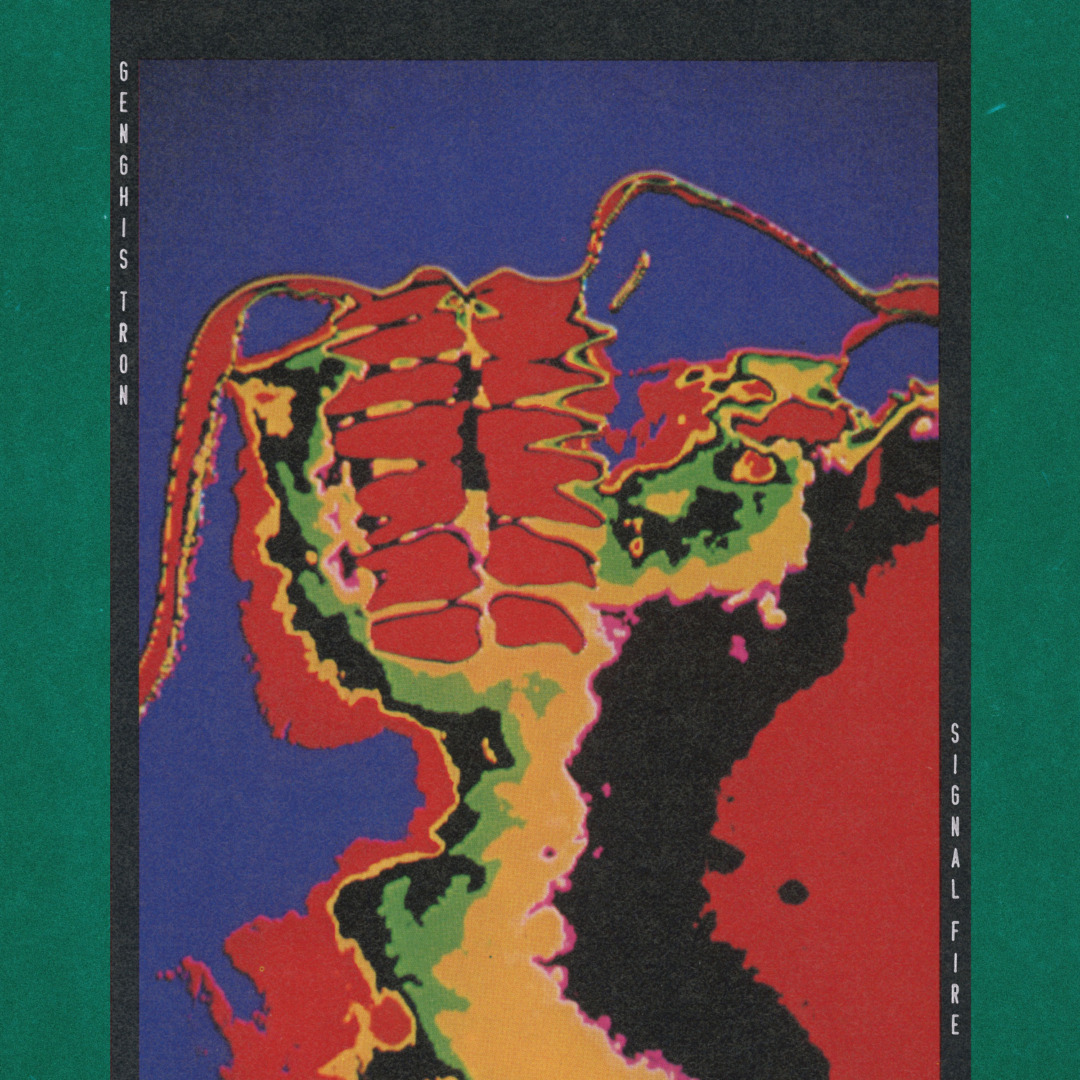
Genghis Tron – Signal Fire
Between Mathcore, Grindcore and Electronics
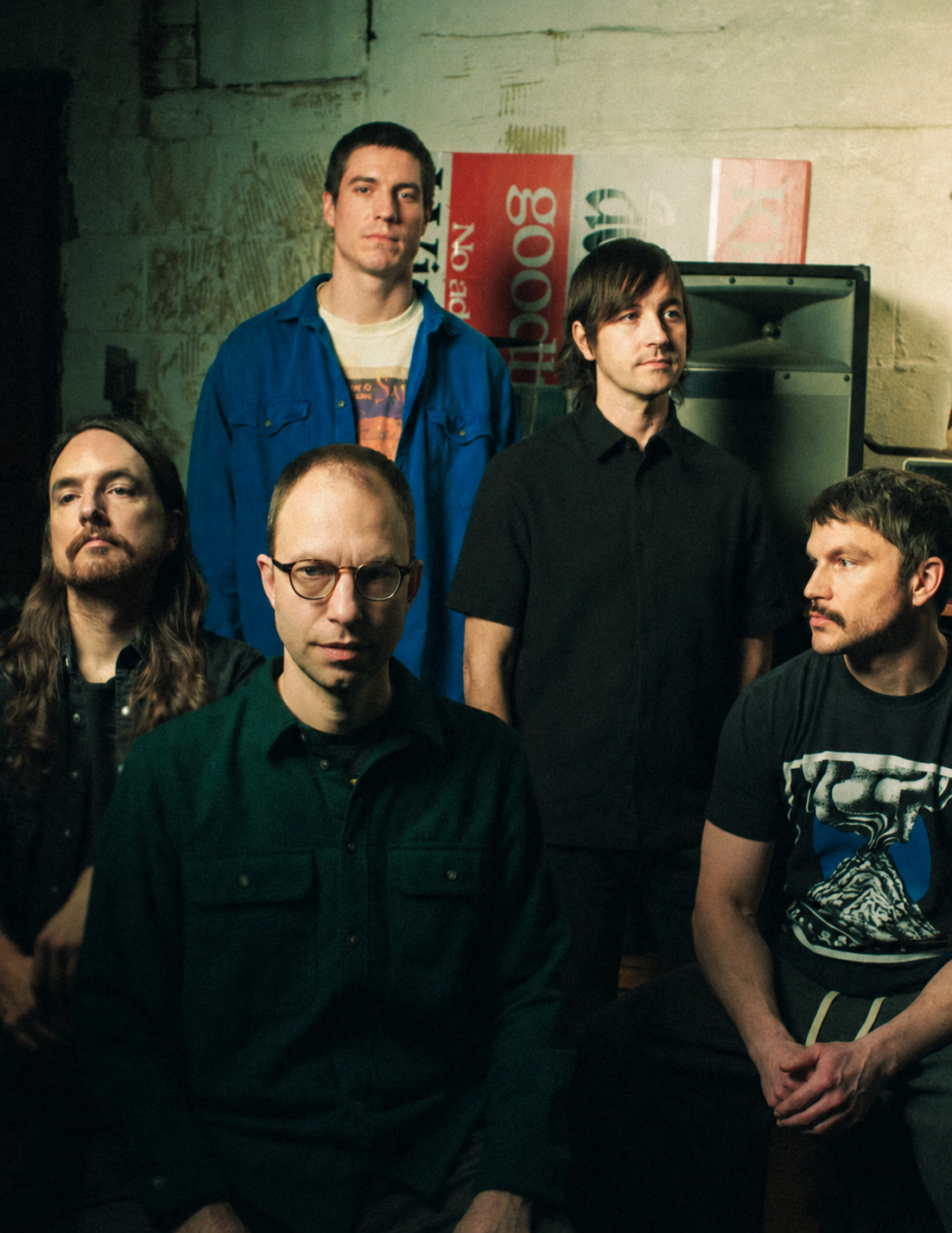
Genghis Tron, since the mid-2000s, has been positioned as a distinctive project operating on the outer fringes of extreme metal, fusing electronic structures with the sharp-edged intensity of mathcore. Following a long hiatus and a reshaped lineup, the band transforms the idea of a “comeback” into a space of compositional reconstruction rather than nostalgic repetition. Signal Fire stands as a critical threshold in this evolution, demonstrating how their sonic identity is continuously being rewritten.
From its very first seconds, the album makes it clear that what we are hearing is not a hastily assembled return decision carrying the nostalgic aftertaste of an improvised studio reunion. Instead, it firmly establishes itself as a sustained compositional strategy. The core tension of the album is built on a constant oscillation between guitar-riff-driven mathematical heaviness and electronically expanded soundscapes. However, these transitions no longer operate through abrupt ruptures in the manner of earlier periods; instead, they unfold through more fluid layering, indicating a shift in the band’s structural focus from “segmented chaos” toward “modular cohesion.”
The opening track, “I Am All,” represents the most direct articulation of this new architecture. The NIN-reminiscent synth textures in the track’s first section create a void in which low-mid frequency guitars have not yet fully entered the mix. This void positions the entry of the screamed vocals not merely as a dramatic accent, but as a rhythmic fracture point. Nick Yacyshyn’s drumming approach becomes decisive here: rather than blast-tempo eruptions, he operates through an accented and fragmented groove logic. This results in guitars aligning less with traditional mathcore syncopation and more with a sense of post-metal flow.
“Future Worship,” placed in the middle of the album, makes this new equilibrium more explicit. Its synth line, close in reference to Depeche Mode, does not overpower the guitar distortion layer; instead, it sits beneath it, blurring the tonal center of the riffs. What is notable here is that the track does not reduce aggression, but rather transforms it into a rhythmic sense of threat. The more recessed vocal placement further supports this structure; screams are no longer a central driving force, but are treated as a textural element.
“Born Prey” stands as one of the most direct references to Genghis Tron’s earlier DNA. The track initially adheres more closely to metalcore templates, but quickly dissolves and evolves into a completely different form. The crucial rupture here is that this transformation is no longer an abrupt “genre switch,” but rather a compositional process of gradual dissolution embedded within the structure itself. Guitar riffs cease to function as fixed motifs and are continuously reframed by synth and drum arrangements. Compared to the chaotic transitions of the band’s earlier discography, this approach constructs a more controlled language of transformation.
Longer-form pieces such as “Tomorrow Mirage” and “Nothing Blooms in the Hollow” function as structural anchors of the album’s ambitions. In particular, the extended synth passages in the middle section of “Tomorrow Mirage” temporarily suspend riff-based composition. The guitars do not disappear entirely; instead, they are reduced to a low-frequency drone layer, sustaining harmonic ambiguity. The subsequent rise of the track is not achieved through a traditional build-up logic, but through the reconfiguration of layered elements. This demonstrates that Genghis Tron now constructs tension less through speed and more through the distribution of density.
The use of electronic elements throughout the album, especially in Tangerine Dream-referencing passages, oscillates between a decorative aesthetic choice and a structural compositional tool. In some sections, synths actively reshape the logic of riffs, while in shorter transitions they function purely as atmospheric overlay. This dual usage remains one of the album’s most debated aspects: electronic layers do not consistently rewrite form, yet they continuously generate a sense of perceptual expansion.
This becomes particularly evident in “A Love So Pure” and similar tracks. The more accessible harmonic structure at the beginning is quickly fractured by segmented rhythmic assaults. However, this rupture does not constitute a full deconstruction; rather, it is the reorganization of the same material through a different rhythmic framework. At this point, the role of the guitars becomes especially noteworthy: instead of traditional metalcore palm-muted riff patterns, a structure based on more open chord voicings and fluid transitions is employed. This reinforces the sense of structural dissolution within the tracks.
The vocal performance, driven by Tony Wolski’s transitions between clean singing and screams, carries the album’s dramatic architecture. However, screams have lost their former central aggressive function; they now operate more as markers of rhythmic intensity or transitional signals. This further strengthens the overarching sense of “controlled chaos” that defines the album.
The closing track “New Gods” attempts to consolidate the album’s entire structural approach within a single composition. It initially establishes a post-industrial atmosphere dominated by synths, where rhythmic structure is almost entirely electronic. The subsequent entry of guitars leads to an increase in density that does not follow a traditional climax model, but rather relies on the layering of distinct stylistic components. However, the final dissolution of the track results not in full synthesis of this multi-layered structure, but in a sudden dispersal, leaving the album’s broader compositional ambition partially unresolved.
Signal Fire redefines Genghis Tron’s position within contemporary extreme music while carrying a dual tension: on one side, a controlled rearticulation of mathcore- and noise-based aggression; on the other, a soundscape-oriented expansion informed by electronic and new wave references. However, this expansion does not always function as a driving force of compositional transformation; in some passages it remains a surface-level aesthetic layer. As a result, while the album offers a constantly shifting stylistic spectrum, it does not engage every point of that spectrum with equal structural depth.
Ultimately, Signal Fire demands a non-linear mode of listening rather than a sequential one. While preserving the rhythmic intensity of extreme metal, it creates a continuously expanding field through electronic layering; however, this expansion does not consistently evolve into structural transformation. This defines Genghis Tron’s current position clearly: a pursuit of synthesis that pushes genre boundaries, yet one in which not every component carries equal compositional weight.
OZAN
https://www.facebook.com/GenghisTron/
https://www.instagram.com/genghis.tron