ALBUM REVIEW
HELL-BORN - VII
Dark, melodic aggression rooted in tradition
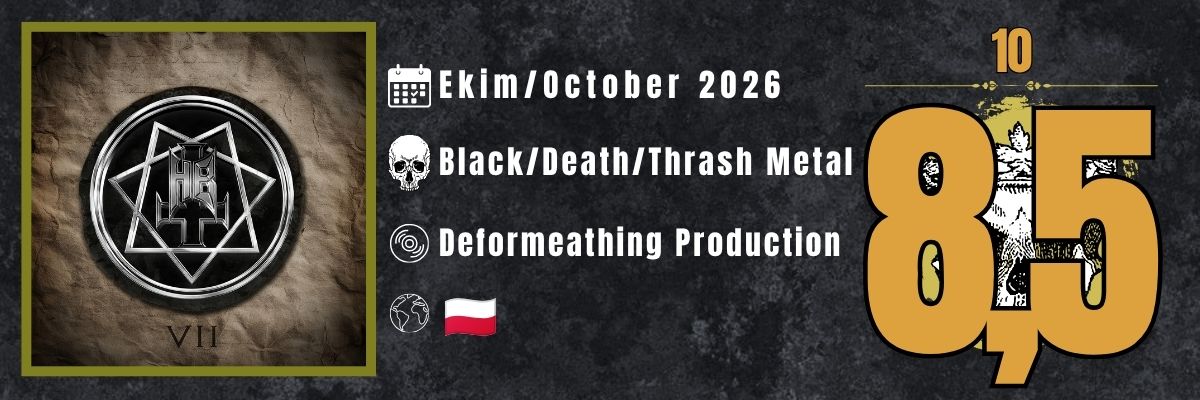
The genre fluidity that Polish extreme metal has carried from the 1990s into the present has undoubtedly given HELL-BORN’s music more than just a point of reference. The tradition of allowing BLACK, DEATH, and, at times, THRASH METAL to blend within the same composition provides the foundation for the band’s seventh album, “VII”, as well. What stands out this time, however, is how the material is arranged. HELL-BORN is not searching for a new formula; instead, the band is using a language it already knows, but in a more controlled, more melodic, and more developed form than on its previous release.
The seven-track album, running just over 38 minutes, opens with ‘Therion Calls’, which is an important indication of this approach. Its wave-like introduction establishes an uncertain and unsettling atmosphere rather than immediately accelerating the track. The heavy, dissonant guitars that follow turn that darkness directly into aggression once the vocals enter. But HELL-BORN is doing more here than simply increasing the level of heaviness. The backing vocals accompanying the dark harmonies and the song’s unexpected cut-off prevent it from functioning as a straightforward opener. ‘Chaotic Entities’, meanwhile, returns to a similarly dark foundation after a sample provides a brief moment to catch one’s breath.
The album’s musical character emerges less from separating its songs into distinct genres than from the way those genres flow into one another within the same structures. ‘The One with Horns’ is one of the clearest examples. An old-school DEATH METAL riff built for slow headbanging gives way to fast, melodic BLACK METAL tremolo picking before shifting toward a more traditional THRASH-oriented picking style in the finale. These transitions never feel like a collage because HELL-BORN does not simply place different genres next to each other; it connects them according to the rhythmic and melodic needs of the composition itself. This is where one of the defining qualities of the language the band has developed over the years lies.
One of “VII”’s significant strengths is its rhythmic variety. The album’s weight does not come from maintaining a consistently high tempo. The groove-oriented character of the riffs, the way the guitars move in and out of more aggressive passages, and the controlled shifts in pace increase the music’s physical heaviness, particularly in the mid-tempo sections. ‘Blood in Stone’ moves toward a far more aggressive structure after its calm introduction, while ‘The One with Horns’ relies on a heavier swing. ‘Funeral of All’, meanwhile, moves from a misty and melodic BLACK METAL atmosphere toward its DEATH METAL roots, raising the level of violence in the process. The album therefore does not treat speed as the sole measure of intensity.
This is where the melodic role of the guitars becomes particularly pronounced. HELL-BORN’s melodies are not instantly digestible or fully revealed on the first listen. They are more like motifs that become clearer through repetition, gaining character as they settle into the structures of the songs. The melancholic tone highlighted by the lead guitars in ‘In Scarlet and Death’ is a good example. Emerging between the aggressive riffs, this melodic thread prevents the album from building its darkness solely through sheer heaviness. This also gives context to the assessment that “VII” is more melodic than its predecessor, “Natas Liah”. Melody does not soften the music; instead, it creates a more lasting sense of musical memory within its heavy framework.
For that reason, the fact that the album does not reveal all of its strength on the first listen does not necessarily have to be seen as a weakness. The compositions on “VII” are structured to gradually settle in rather than make an immediate impact. Some transitions and melodic connections that are not particularly obvious on the first run become more meaningful with subsequent listens. This may also be where HELL-BORN distinguishes itself from its previous album. Compared with the more direct and cutting side of “Natas Liah”, “VII” holds its material slightly further back, leaving the listener room to unpack it. What may initially seem like a calmer structure gains greater intensity as the shifts in tempo and variations in the riffs between songs become more apparent.
The use of vocals also contributes to this sense of cohesion. Different expressions, from growls and screams to occasional macabre laughter, are not simply placed over the guitars as a uniform vocal layer. In more aggressive sections such as ‘Blood in Stone’, the vocals intensify the pressure created by the rhythm section, while in the album’s more atmospheric moments they become part of its sense of darkness. The backing vocals in ‘Exodus (Cross the Styx)’ take the finale somewhere that is not only energetic but also more ceremonial. The choice gives the closing track a broader, more unifying quality without separating it from the rest of the album.
The production supports this approach as well. Rather than embracing the excessively polished and sterile sound of modern extreme metal, it opts for a character that recalls the rawness of the 1990s without turning into an exercise in nostalgia. The heaviness and organic feel of the instruments do not completely bury the album’s melodic and rhythmic details. In that sense, the purpose of the production is less to imitate the past than to preserve the natural harshness of HELL-BORN’s music. The weight of the guitars, the movement of the rhythm section, and the melodic lines are able to coexist within the same sonic space without smothering one another.
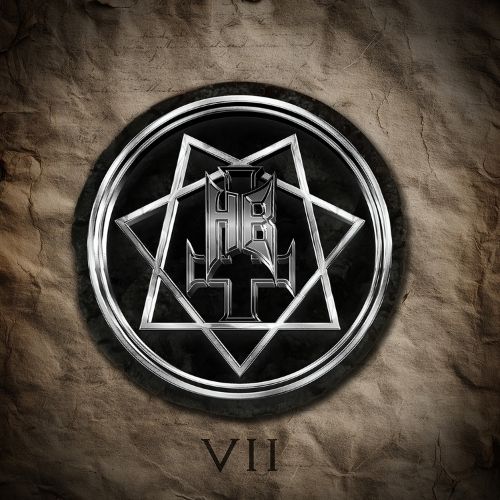
The album’s visual side, however, falls somewhat short of its musical level. The title “VII” is a straightforward reference to the fact that this is the band’s seventh album, and it sits outside the sense of originality found in the music itself. The cover artwork likewise fails to establish a visual identity that reinforces the dark and distinctive atmosphere carried by the music to the same degree. This does not diminish the value of the music, but for an album at risk of getting lost amid the sheer volume of releases today, a stronger visual presentation could have played an important role in bringing HELL-BORN’s musical identity to the outside world.
Even so, “VII” was never really about inventing a new HELL-BORN. The BLACK/DEATH axis inherited from the band’s past remains clearly audible; THRASH influences emerge when needed, while the melodies gradually assume a more important role within that harsh framework. Rather than adhering to rigid boundaries between genres, the album therefore continues the characteristic blend associated with the Polish extreme metal tradition. What matters is that it does not reduce that blend to mere nostalgia. The transitions between riffs, shifts in tempo, more pronounced use of melody, and heavier production expand the familiar formula in small but effective ways.
This is precisely where the value of “VII” becomes apparent. HELL-BORN makes no claim to redraw the boundaries of the genre, and the album’s greatest strength is arguably that it never attempts to. While preserving the BLACK/DEATH METAL identity it has developed over the years, the band enriches its compositions, makes its melodies more functional, and refuses to leave the impact of its songs entirely dependent on the initial hit. Some passages may lack the sudden and abrasive impact of the band’s earlier work, but the overall structure is more balanced and reveals itself gradually.
For HELL-BORN, “VII” is a continuation that is not simply a repetition of the past, yet does not sever its connection to it either. It is a record that keeps its cards close on the first listen, gradually revealing its rhythmic and melodic details, while keeping the extreme metal sensibility of the 1990s at a distance from the excessively sterile production of today. It does not offer a new formula, but it does prove that the band’s own sound still has a reason to be heard.

https://www.facebook.com/Deformeathing
https://www.instagram.com/deformeathing
https://deformeathing.bandcamp.com