ALBUM REVIEW
INLITNMENT - Spiritual Warfare
Heavy, spiritual, and controlled doom metal.
INLITNMENT approaches the physical weight of doom metal from a different perspective, bringing heavy riffs and a controlled rhythmic sensibility together with spiritual and atmospheric layers. The experience Erol Uenala and Franco Sesa bring from the Celtic Frost legacy is transformed here into a musical foundation that seeks not to repeat the past, but to rebuild the power of stripped-down riffs and patient arrangements. "Spiritual Warfare" consequently stands out as a measured yet ambitious debut that avoids flashy gestures and places the dense mass created by guitars, bass, drums, and vocals at its center.
The album's approach to doom metal derives its weight not from tempo variation, but from the physical space occupied by its riffs. Erol Uenala and Oli Keller's guitars generally build structures based on wide intervals, downstrokes, and the power of repetition, while Franco Sesa's drums preserve the spaces between those riffs rather than constantly filling them. The result is a rhythmic architecture that weighs down the ground rather than generating movement. The album's opening minutes deliberately undermine the expectation of a conventional build for precisely this reason; rather than speeding up or constantly redefining the songs through dramatic shifts, INLITNMENT keeps adding weight to the same groove.
Guitar tone sits at the heart of this approach. The layers of distortion and fuzz are used not to increase the technical complexity of the riffs, but to amplify the physical impact of simple harmonic movement. "SpireChewel Slav" is one of the clearest examples of this philosophy: power-chord progressions simple enough to work out with a single finger and muscular downstrokes make the absence of melodic ornamentation feel like a deliberate choice rather than a deficiency. The strength of the riff comes not from how many notes it contains, but from how much space each repetition occupies. The slight friction left by the guitars at times, the string noise, and the imperfect transitions also keep the material from sounding like a sterile studio product.
Franco Sesa's drumming follows the same principle of economy. Sesa does not fill every gap simply because it is there; after a few beats, he pulls back and allows the guitars to breathe. This is particularly important at slower tempos, where an overly active rhythm section can disrupt the riff's center of gravity in doom metal. Sesa's measured approach, by contrast, preserves the continuity of the groove. In passages where the cymbals ride over sustained chords, the drums almost function as an extension of the guitars, while the breadth of the snare hits in the denser sections expands the songs' dynamic scale.
Danis Kelesidis's bass is another element that does not immediately demand attention but becomes more apparent on a second pass through the album. The bass does more than simply support the guitars in the low frequencies; it creates a separate supporting layer beneath riffs that remain in place for extended periods. This is also where one of the production's major strengths becomes apparent: the guitars, bass, and drums are not constantly competing for volume. In particular, when heard through headphones, Kelesidis's lines act as a backbone beneath the space occupied by the guitars, anchoring the album's mass.
On the vocal side, Oli Keller's performance connects the album's two distinct faces. His lower, baritone-leaning delivery expands the space of the songs when clean or atmospheric guitars are present, while his harsher, more expansive roars work in tandem with the density of the riffs. The convergence of vocals and triplet riffing in "SpireChewel Bipas" is a good example. Rather than the heavily layered and meticulously controlled performances common in modern extreme metal, Keller's approach carries a physical immediacy. As a result, minor performance imperfections do not sound like foreign elements left outside the mix, but rather like part of the recording aesthetic.
It is clear that INLITNMENT is not trying to escape its Celtic Frost past. "SpireChewel Slav," in particular, bears a clear kinship with the stripped-down, heavy, downward-collapsing riff logic of the "Monotheist" era. Yet it would be unfair to regard the album merely as a continuation of an old formula. The reason that connection dominates on the first listen but recedes on subsequent plays is that INLITNMENT is using the same compositional economy rather than directly copying the aesthetic it draws upon. The deliberate exclusion of flashy solos, unnecessary tempo changes, and technical showmanship makes it clear that the primary objective of this music is not virtuosity, but mass and continuity.
The more interesting aspect of the album, however, is the way this heavy framework is expanded through atmospheric layers. The woodwind samples and background sounds in "Yoor just Noiz not yet Myoozik" reopen a door to the Eastern mysticism of the band's Oath Of Cranes period. These elements, however, never become a recurring decorative motif throughout the album. The clean arpeggios and delayed effects of "SpireChewel Anlit" establish a dark, sparse atmosphere, while the restraint of the drums gains meaning when the guitars later transition into distortion. The intensification at the song's finale therefore is not simply a "quiet-to-noise" contrast; it is the closing off of the space that had previously been opened up.
At this point, INLITNMENT's approach to doom also intersects with contemporary post-metal. The long-form tension-building associated with bands such as Neurosis is present here, but INLITNMENT achieves it not through more elaborate layers, but by repeatedly increasing the weight of the riff itself. Likewise, in contrast to the mechanical precision often found in modern metal production, the friction of guitar strings and minor timing imperfections have not been completely cleaned up here. But there is no reason to romanticize that choice: imperfection does not create aesthetic value on its own. It works on "Spiritual Warfare" because the band already places a stripped-down, physical mode of performance at the center of its music. Within a more complex composition, the same rough edges would probably do little more than distract.
The album's atmospheric side is similarly restrained. The pastoral darkness of "SpireChewel Anlit" and the nocturnal texture introduced by the folk guitars at the end do not alter the fundamental language of the riffs, but they prevent the album from being perceived solely as a mass of low frequencies. Most of these elements create a shift in perspective around the main riffs rather than occupying the structural center of the songs. INLITNMENT, therefore, is not making an experimental doom album here. A more accurate description would be an approach that expands the traditional doom framework with atmospheric and spiritual textures while deliberately limiting the extent to which those textures control the composition.
The title track, "Spiritual Warfare," is the most comprehensive example of this method. After the intensity of Keller's vocal performance up front, the dynamics pull back around the four-minute mark, creating space for the background choir voices to emerge. The fact that the choirs remain suspended in the background rather than moving fully to the forefront is significant, because INLITNMENT once again chooses tension over resolution. The album's spiritual theme is therefore established through arrangement more than through lyrics. The idea of "enlightenment" is not represented by a grand final explosion; it is developed through a reduction in sonic density, the creation of space, and the partial filling of that space afterward.
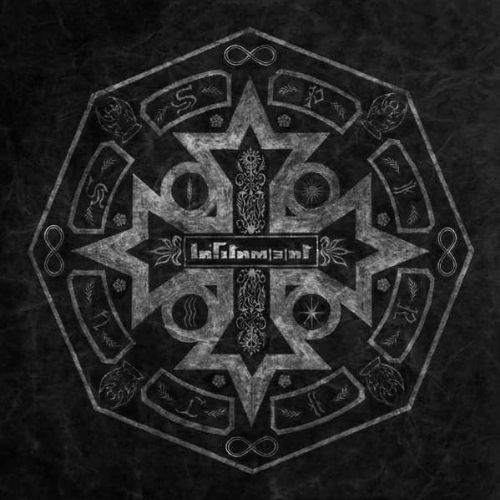
On the visual and conceptual side, the band's choice of "Spiritual Warfare" as the album title also captures the music's central contradiction accurately. The "warfare" here is defined not through speed or aggression, but through a tension that persists beneath the heavy riffs. The album's spiritual dimension therefore does not reject doom metal's traditional darkness and oppressive aesthetic; it changes its function. Slowness here is not a sign of resignation, but the fundamental compositional tool that extends the listener's exposure to the musical material.
The most obvious limitation of "Spiritual Warfare" emerges at precisely this point. The album trusts the rules it has established for itself, but does not push those rules particularly far. Some of the songs can begin to converge on a first listen, and the absence of a clearly defined "killer riff" makes the album's overall pull more important than the individual character of its tracks. Yet this is also part of the band's aesthetic choice. By reducing dramatic turns, INLITNMENT turns weight itself into its primary mode of expression. What is missing, then, is not necessarily more ideas, but the testing of its existing ideas through different compositional forms.
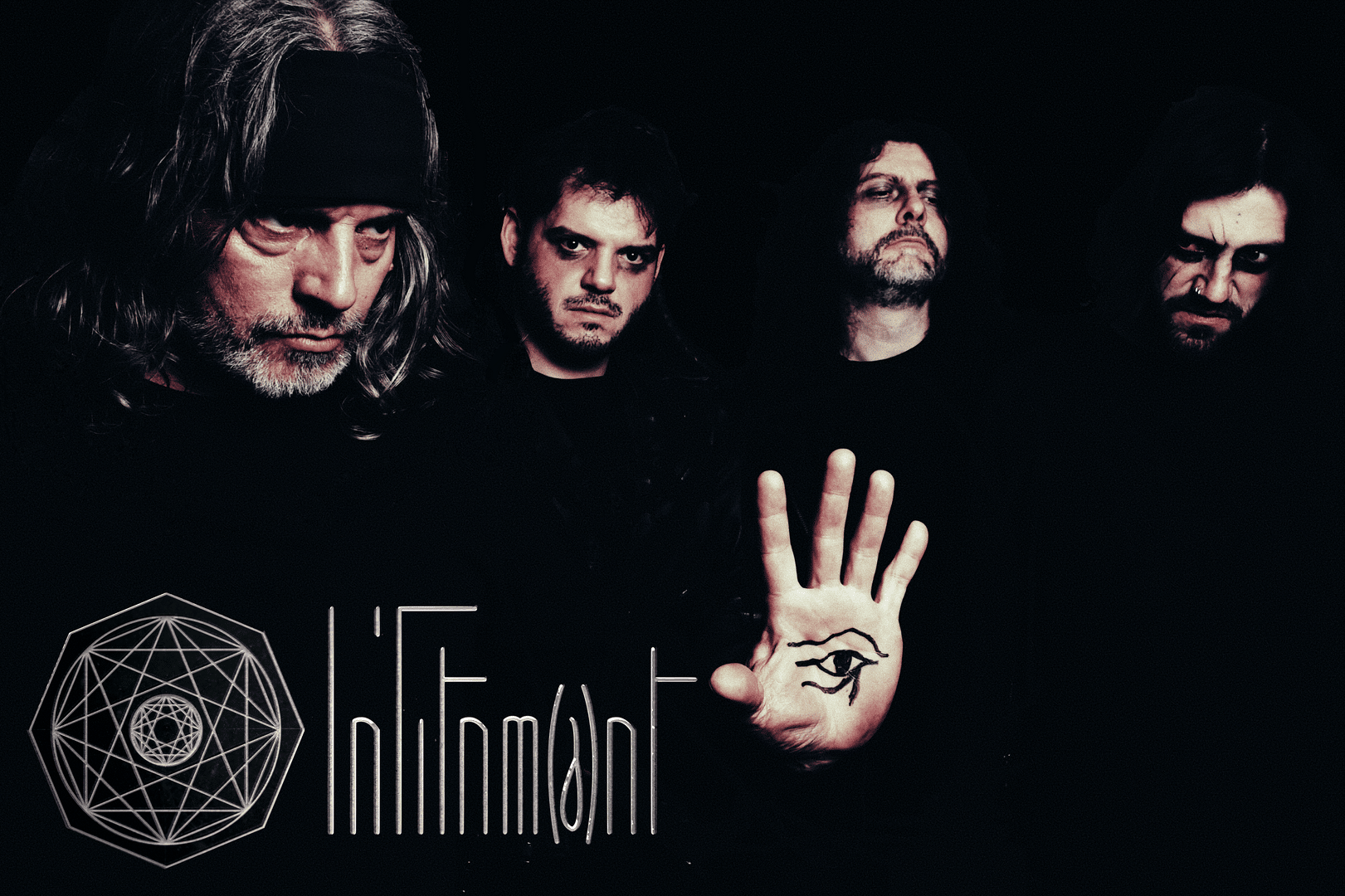
Ultimately, "Spiritual Warfare" does not turn the Celtic Frost legacy into a display piece; instead, it rebuilds its riff economy, use of space, and physical weight through a contemporary production approach. Erol Uenala and Oli Keller's guitars, Franco Sesa's controlled drumming, and Danis Kelesidis's stabilizing bass in the background keep the music within a system stripped of unnecessary ornamentation. The listening approach the album demands follows the same principle: rather than consuming individual riffs quickly, the listener has to follow the mass gradually intensified through repetition. INLITNMENT's position within contemporary doom lies less in any claim to innovation than in demonstrating how effective the genre's fundamental tools can still be; rather than expanding the existing language, the band deliberately narrows it and searches for the limits of weight within that confined space.
