ALBUM REVIEW
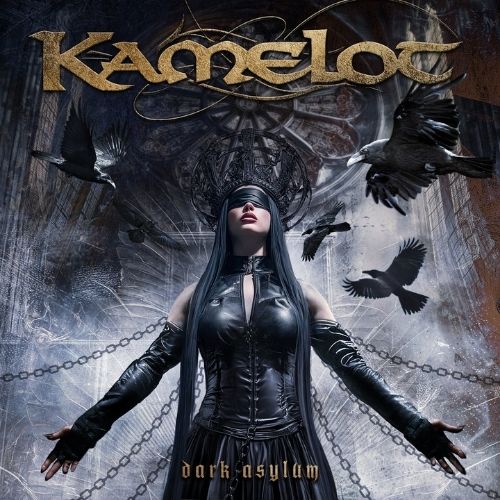
KAMELOT - Dark Asylum
KAMELOT darkens its formula without truly reinventing it.
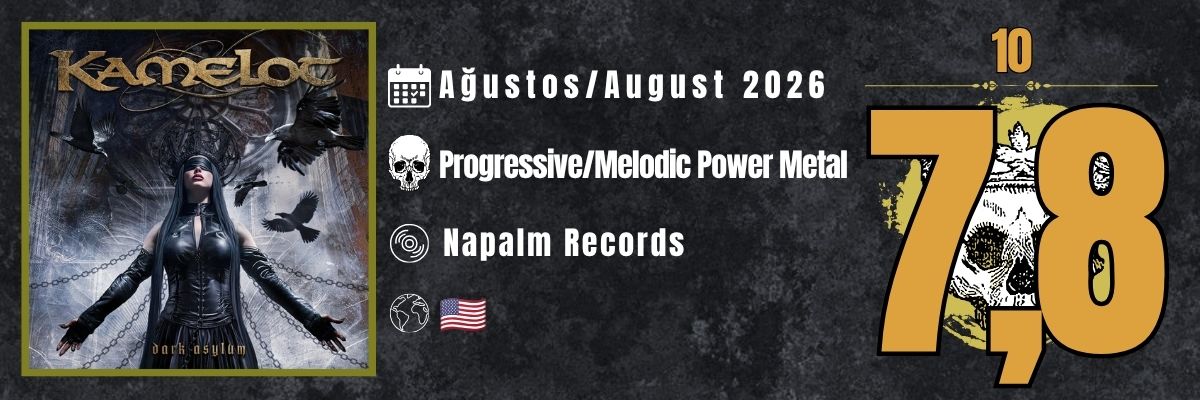
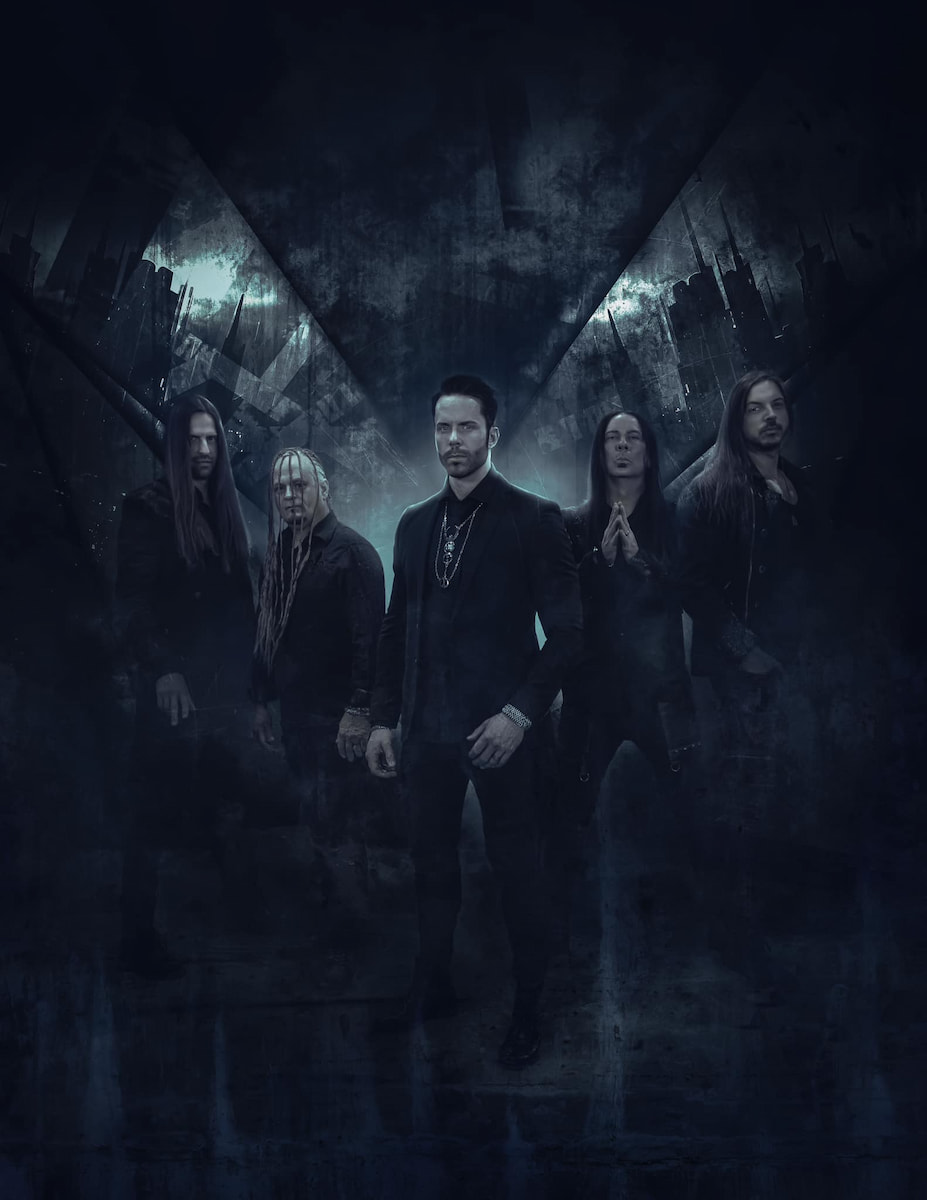
Power Metal is a genre with remarkably few bands that have managed to survive from the 1990s into the present day. KAMELOT is one of them. With their fourteenth studio album, “Dark Asylum,” the band continues to make an impact on the global metal scene. Thomas Youngblood’s melodic guitars, Oliver Palotai’s layers of keyboards and orchestration, Alex Landenburg’s controlled drumming, and Tommy Karevik’s powerful vocals almost completely reconstruct the formula that has defined the band’s recent identity. This time, however, that formula is combined with the theatrical and cinematic character of a neo-Victorian concept built around the RavenHill Asylum, and the album’s greatest strength — its melodic cohesion — simultaneously becomes its most obvious weakness: KAMELOT use the language that defines them with such confidence that they leave very little room to step outside it. The most conspicuous, perhaps even somewhat spoiled, criticism one could level at “Dark Asylum” is not that KAMELOT do not know what they want to do; quite the opposite, they know exactly what they want to do — perhaps a little too well.
Running for just over 50 minutes and spanning 15 tracks, “Dark Asylum” is built around controlled dramaturgy rather than musical surprise. Beginning with the approximately 100-second “Sanctorium,” the album moves directly into familiar KAMELOT territory with “Ashen World.” Double-bass-driven rhythms, ascending guitar melodies, choirs, and expanded orchestral layers turn the track into a classic KAMELOT opener. Thomas Youngblood’s guitars do not disappear beneath the orchestration; instead, they carry the melodic backbone. Yet the position of the rhythm guitars in the mix reduces some of the physical weight one might expect in certain passages. The choice preserves the band’s polished, symphonic character while simultaneously dialing back the riffs’ sense of heaviness.
This is where the production approach of “Dark Asylum” becomes important. Sascha Paeth’s production and Jacob Hansen’s mixing keep every layer of the album clearly defined and tightly controlled. The symphonic elements never become a purely decorative wall; strings, keyboards, and choirs are arranged to support the guitar melodies. Oliver Palotai’s keyboards are particularly functional in this regard. Rather than constantly pushing themselves to the foreground, they fill melodic spaces, broaden the choruses, and reinforce the theatrical side of the songs. But there is a price to this clean organization: the small rough edges that once helped distinguish KAMELOT’s songs from one another are less noticeable here.
The title track is one of the more successful examples of this controlled approach. “Dark Asylum” places the album’s concept directly inside the music by connecting the melodic sharpness of the guitars with the dramatic rise of the orchestral layers. Karevik’s vocals are particularly important here; his clean, wide-ranging delivery keeps the melodies at the center, while the harsher vocal touches in the background point toward the darker side of the RavenHill narrative. However, these harsher vocals do not work as organically throughout the album. “Sanctuary” is the clearest example. While the contrasting vocal characters of Clémentine Delauney and Ignacia Fernández give the song a dramatic tension, the aggressive vocal layer sounds less like a natural continuation of the composition and more like an added element of heaviness. As a result, what initially appears to be an experimental choice remains a surface-level effect rather than genuinely altering the song’s riff and vocal architecture.
“Godlike Alchemy,” by contrast, makes it abundantly clear why KAMELOT remain an effective melodic metal band. The song’s success does not simply come from having a big chorus. The verse establishes the necessary melodic and rhythmic groundwork, the orchestration gradually increases in density, and Karevik’s vocals open into a broader melodic range when the chorus arrives. Here, guitars, drums, keyboards, and vocals do not compete for space but instead work toward the same dramatic goal. The chorus in particular demonstrates that the formula the band has used for so long can still produce strong results. The problem is not the formula itself; it is the inability to sustain that same level of effectiveness throughout the rest of the album.
Tracks such as “Cassandra’s Disease,” “The Sleeping Mind (Orphic Paradigm),” and “Kaleidoscope” similarly keep the album’s more energetic side alive. “Kaleidoscope” in particular raises the tempo and brings the band’s more traditional power metal instincts to the foreground; driving drums, melodic guitar lines, and virtuosic solos provide the necessary contrast to the album’s dense symphonic texture. Yet these tracks share the same problem: despite being well constructed, they do not distinguish themselves from one another strongly enough. The result is a series of dense, functional compositions that operate effectively within the three-to-four-minute range, but the album’s overall language is so homogeneous that the character of individual songs occasionally gets swallowed up by the one beside it.
The concept therefore functions as both an advantage and a limitation. RavenHill’s transformation from cathedral into asylum, together with the tension between science, faith, and madness, supports the album’s Gothic-novel aesthetic. Short interludes such as “Nocte Veritas” and opening pieces such as “Sanctorium” make the album feel less like a collection of songs and more like a narrative connecting individual scenes. However, when these pieces lack substantial weight as music in their own right, a gap emerges between the concept’s dramaturgical function and the actual listening experience. Particularly in the case of very short transitional pieces, their significance within the story may be clear, but judged purely on musical value, they occasionally interrupt the album’s flow.
The use of guest musicians offers a more interesting balance. Tobias Sammet’s duet with Tommy Karevik on “One Last Masquerade” naturally creates a theatrical encounter. Sammet’s vocal character gives the track a distinct Avantasia association, but the arrangement integrates him sufficiently well into the KAMELOT aesthetic that his appearance does not turn the song into an entirely different project. Still, this also reveals the album’s limitations: Sammet’s presence does not introduce a new compositional language; it primarily broadens the vocal color palette of an already theatrical framework.
Delauney and Fernández’s contrasting vocal characters on “Sanctuary,” on the other hand, produce a more structural effect. One creates a more atmospheric and graceful layer, while the other emphasizes the song’s aggressive side. Here, the guest vocals genuinely serve the dramatic logic of the arrangement. The same is even more apparent on “Beneath the Moon (Tunglið),” where Lea-Sophie Fischer’s violin performance takes center stage. The Icelandic guest vocals of Rannveig Sif Sigurðardóttir and Sólveig Sara Leupold, combined with Fischer’s violin, create a different sonic space from KAMELOT’s established power/symphonic metal framework. At only 2:06, the song does not need to stretch its ideas unnecessarily. Here, the violin, vocals, and sparser arrangement cease to function merely as atmospheric color and become the compositional logic of the track itself. This is one of the rare moments on the album where the experimental approach genuinely works.
By contrast, classic power ballads such as “Enigma (Think of Me)” leave considerably less of an impression despite relying on the band’s traditional tools. “Ivy, My Dear” reveals the album’s more introspective side by significantly slowing the pace. The slower rhythm, sparser arrangement, and Karevik’s more restrained vocal approach provide a necessary breathing space against the dense orchestral structures of the preceding tracks. However, the accumulation of such slowdowns in the middle section weakens the album’s momentum. These pauses are understandable within the logic of a concept album, but a more compact arrangement of some of the tracks could have strengthened the overall flow.
Tommy Karevik remains one of the most reliable elements at the center of this structure. His clean, melodic, and theatrical vocal approach has the range required to carry KAMELOT’s grand choruses. Tracks such as “Godlike Alchemy” benefit considerably from Karevik’s ability to expand melodic lines and bring dramatic peaks into focus. At the same time, the fact that he occasionally does not sound completely comfortable at the highest notes suggests that his performance is strong and generally controlled rather than flawless. These small fluctuations become more apparent within the album’s highly polished production.
This is where the real debate surrounding “Dark Asylum” begins. KAMELOT’s balance between symphonic power metal and Gothic theatricality remains solid, but that balance has increasingly become less a framework defining the band’s musical identity and more a template determining the limits of every song placed inside it. “Ashen World,” “Dark Asylum,” and especially “Godlike Alchemy” can still produce strong results within that template. On the album’s weaker tracks, however, the same structure comes dangerously close to the line between melodic consistency and monotony.
For that reason, evaluating “Dark Asylum” simply by saying “KAMELOT are KAMELOT again” would be incomplete. With the RavenHill concept, the band reconstructs its established Gothic-novel aesthetic; guest vocals, strings, choirs, and interludes form not merely the decoration of this world, but to a large extent its dramaturgical foundation. Yet there is an important distinction between musical innovation and a more meticulous application of an existing language. The album generally opts for the latter. Some of the touches that appear experimental do more to add color to the established formula than to transform the band’s compositional logic.
Ultimately, “Dark Asylum” does not represent a change of direction in KAMELOT’s career; it is a reworking of the aesthetic architecture the band has developed over the years, now framed by a darker concept and a broader cast of guests. Its supporting pillars remain solid: Youngblood’s melodic guitars, Palotai’s orchestral approach, Landenburg’s controlled rhythmic work, and Karevik’s distinctive, powerful vocal character complement one another extremely well when the songs are right. But the album’s listening experience follows directly from that strength: picking out the individual strong tracks is more rewarding than following the concept as a continuous whole. KAMELOT are not revolutionizing the genre here; they are working more carefully within its boundaries, and while that makes “Dark Asylum” a dependable KAMELOT album, it is not enough to free the band from the sense of repetition that has marked their recent work.

https://kamelot.bandcamp.com/music