
ALBUM REVIEW
Khemmis - Khemmis
A Hybrid Between Epic Doom and Modern Metal Structures
Colorado-based Khemmis have long maintained a steady trajectory built around a formula that reshapes the classic weight of epic doom metal through touches of modern heavy metal and death metal. Their fifth album, Khemmis, is positioned as an attempt to revisit both their early melodic doom approach and their later hybrid experiments under a single roof. This new work is not merely a continuation, but also a condensed summary of how the band defines its own sound.
Starting with the album’s opening, Khemmis does not so much reproduce a sense of weight as it opens with a riff logic that reframes it. On “Invocation Of The Dreamer,” the guitars move at a low-to-mid tempo, yet rather than relying on traditional “static heaviness,” they progress through constantly shifting chord transitions and subtle melodic inflections. This approach generates a fluid sense of harmonic motion instead of block-like riff repetition. The drums here are not merely a tempo anchor; particularly the doubled kick patterns and brief blastbeat eruptions stretch the boundary between doom and epic heavy metal from the very first minute. However, the most defining aspect of this opening is the way the guitars construct a forward-moving heavy metal narrative rather than maintaining doom-like stasis.
Across the album, Khemmis’ riff writing does not entirely abandon the heavy major/minor dramatics inherited from the Candlemass tradition, but it reorganizes them into more compact phrases. On tracks such as “Corpsebloom Garden” and “Grief’s Reverie,” the guitars avoid long sustain-heavy chord walls in favor of shorter, layered repeating motifs. This layering becomes particularly evident when lead guitars double the vocal melodies; riffs become less an autonomous source of weight and more a structural scaffold carrying the vocal line. At times, this compresses the expansive nature of epic doom, pulling it closer to a more “modern metal song form.”
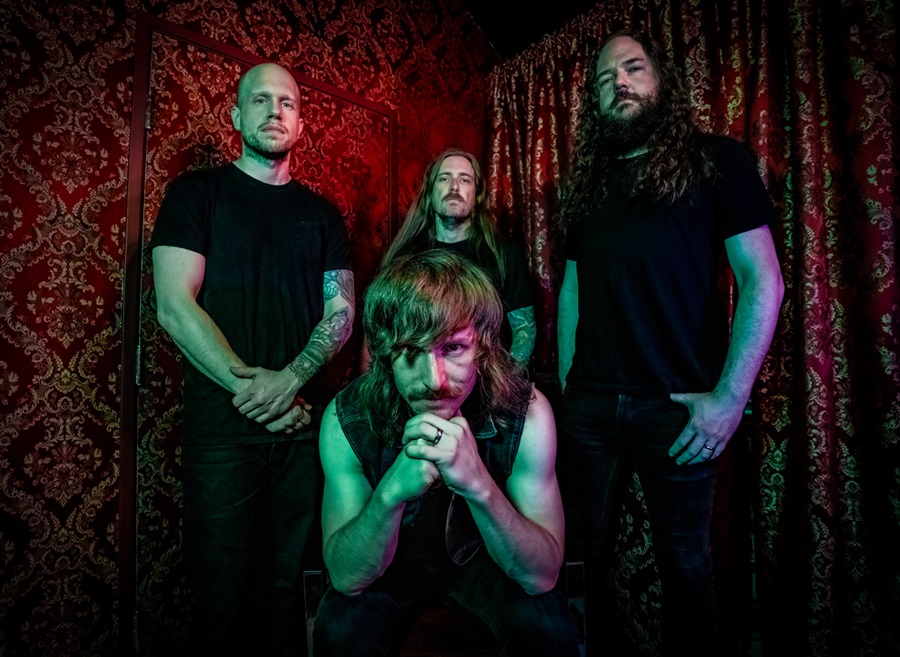
On the vocal side, Phil Pendergast’s clean vocals are established as the album’s central axis. The use of growls has been significantly reduced compared to previous works, a choice that appears coherent with the guitar-driven melodic focus. Keeping the clean vocals in a mid-register allows the tonal center of the riffs to come through more clearly; however, the occasional growl entries—particularly those contributed by Ben Hutcherson—do not function as an integrated layer within this flow, but rather as a pasted-on contrast effect. On tracks like “Gilded Chambers,” this vocal duality does not heighten musical tension, but instead creates two separate aesthetic blocks within the form. This becomes one of the album’s most contentious design decisions: is the vocal contrast a structural tool, or merely a surface-level color?
Zach Coleman’s drumming clearly demonstrates a high level of technical command. Especially on “Beneath The Scythe” and “Carrion King,” the blastbeat passages do not function as disruptive injections of speed into doom’s natural flow, but rather as temporary zones of intensity embedded within the song structures. However, production choices become decisive here: the overly clean and controlled drum mix reduces the physical impact of these bursts. This creates one of the album’s central tensions; while the compositions become more aggressive, the production keeps them on a sterilized surface.
The guitar work stands as both the album’s strongest and most “restrained” element. Solos and dual-guitar harmonies are technically dense, yet they often function more as decorative transitions within the existing structure rather than altering the direction of the compositions. On tracks like “Beneath The Scythe,” this harmonic richness genuinely expands the form, while on “Gilded Chambers” it tends to feel more like functional repetition. In other words, although Khemmis’ guitar language carries constant potential for expansion, this potential is not activated uniformly across the record.
One of the album’s notable ruptures comes in the D-beat opening of “Gilded Chambers” and the band’s first-ever blastbeat experiments in “Carrion King.” These moments signal Khemmis’ intent to engage with more extreme metal tempos without abandoning their doom framework entirely. However, these speed elements do not redefine the compositional architecture; they remain additional layers of intensity rather than structural transformations. The question therefore remains open: do these experiments expand the band’s language, or merely introduce variation?
On the production side, Dave Otero’s approach is one of the most critical factors shaping the album’s aesthetic direction. While guitars are placed in a wide and controlled stereo field, the clinical clarity of the drums evokes a distinctly modern technical death metal sensibility. This creates occasional tension with Khemmis’ traditional epic doom identity; while the songwriting aims to produce a sense of analog weight, the mix renders it into a more digital and separated surface. This mismatch does not reinforce the album’s claim to “epicness,” but instead turns it into a more distanced object of observation.
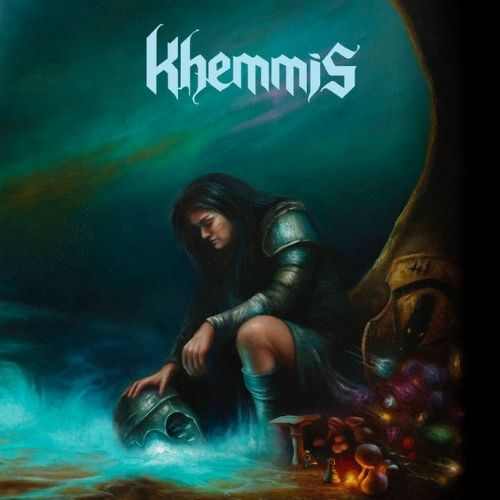
The cover art and overall visual identity remain faithful to classic doom/epic metal aesthetics, yet the stronger iconographic character of previous releases appears somewhat diluted here. The visual language lacks the strength to fully carry the music’s dramatic structure; instead, it leans on safer genre symbols. This means the album’s self-titled gesture is not fully supported on the visual level.
In the closing section, “Tomb Of Roses” and “Benediction Tones” move closer to Khemmis’ early epic doom instincts. However, this conclusion does not function as a regression from the album’s hybrid framework, but rather as a return to a safer structural space. Particularly in the final track, the reduced tempo and minimal riff approach emphasize controlled closure rather than technical variety.
Khemmis essentially attempts to compress different eras of its discography into a single compositional language. Yet this compression does not consistently produce a new synthesis; at times, riff writing, vocal contrast, and production aesthetics remain parallel layers that do not fully converge. The listening experience offered by the album is less an ever-expanding epic structure and more a modern doom/heavy metal hybrid driven by controlled variation. As such, the listening approach it demands is not one of seeking large dramatic peaks, but of tracking how structural details are continuously reorganized.
OZAN