ALBUM REVIEW
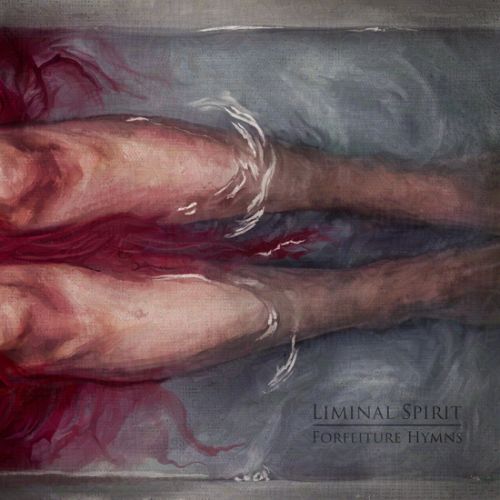
LIMINAL SPIRIT – Forfeiture Hymns
Microtonal melodies within unsettling experimental doom.
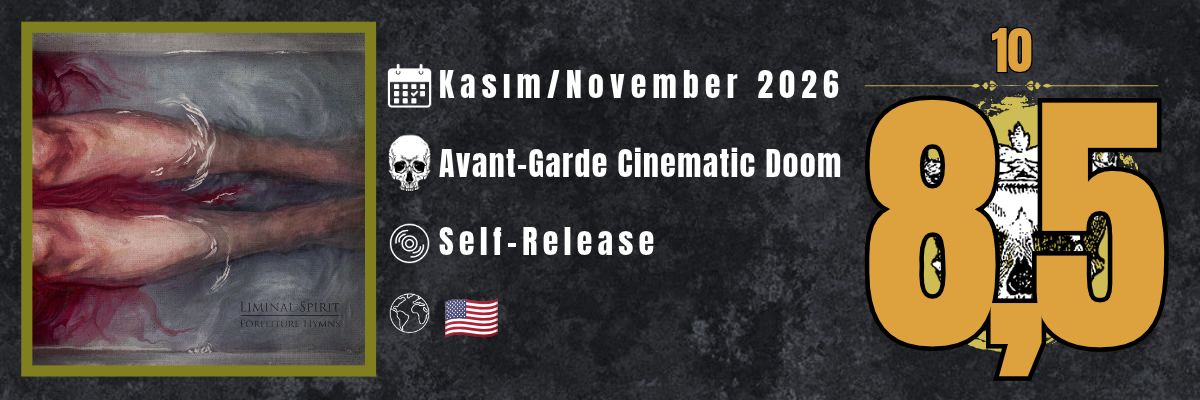
Having chronicled Phillip Hastings' final days in a nursing home on 2025's "Unwell", LIMINAL SPIRIT now revisits the past with "Forfeiture Hymns", expanding the scope of the same story. For Milwaukee-based multi-instrumentalist Jerry Hauppa's solo project, this follow-up is far more than a straightforward continuation. It broadens the narrative by focusing on the people whose lives intersected with Phillip's, unfolding through the tragedies of a cast of interconnected characters. This time, the central figure does not tell the story himself. Instead, each track adopts the perspective of another individual whose life was irrevocably altered by Phillip's influence. That narrative decision directly informs the album's musical diversity.
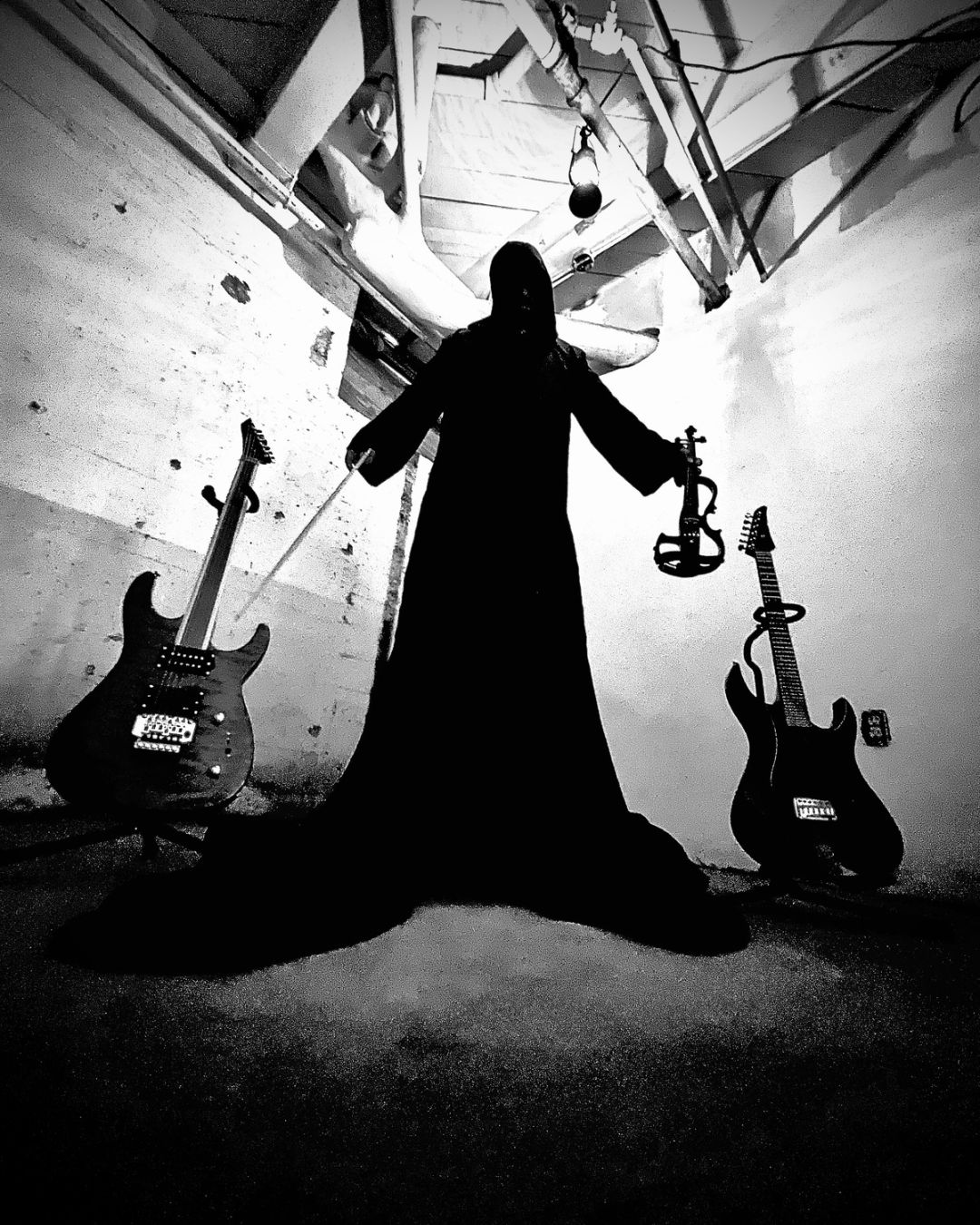
Hauppa's approach, built around doom, industrial and drone, deliberately moves away from conventional riff-driven songwriting. The guitars frequently follow microtonal lines that venture beyond familiar tonal boundaries, with the use of the kite guitar preventing melodies from settling into recognisable harmonic territory and lending the music a persistent sense of unease. Combined with the expressive possibilities of fretless guitar, synths, sampling and vocoder, the resulting sound is not simply rooted in a heavy, dark strain of doom. The relationship between the rhythm guitar's clearly defined chord strikes and the more freely wandering melodic lines also makes these compositions difficult to describe in conventional riff-based terms. At times, these lines move in fragmented, hesitant patterns; at others, they linger within the same tonal territory for extended stretches. Whenever a melody begins to take shape, it often retreats into ambiguity once again.
What matters most about this approach is that the microtonal instrumentation is not employed merely for the sake of sounding different. The melodies' refusal to settle into familiar resolutions creates a musical connection with the psychological states of the album's characters. Hauppa has explained that he developed individual motivations for each character and reflected them in the melodic characteristics of their respective tracks, offering insight into the compositional thinking behind this relationship. As a result, the album transcends the sum of its eleven individual compositions, becoming a cohesive whole that moves through distinct emotional and psychological territories within a shared narrative.
While 'A Mother's Instinct' opens the door to this world with its slow-moving structure, 'Unwanted' establishes a sense of mechanical pressure in which the industrial and drone elements come further to the fore. The kinship with acts such as GODFLESH and JESU can be heard in the repetitive, abrasive character of the guitars and the rhythmic structures' departure from human flexibility. At the same time, Hauppa's microtonal melodies create a distinct expressive space that extends beyond those reference points. 'The Initiate' is one of the album's most successful examples of narrative and musical development working in tandem. Built around Tommy Pearson's childhood struggle to find a sense of belonging, the track gradually sheds its initially light, almost nursery-rhyme-like melodic character. As it progresses, the increasingly frantic structure gives the impression of losing control, musically reflecting the transition from innocence to panic. This transformation demonstrates that the album's unconventional compositional approach goes beyond atmosphere-building.
With 'Apoptosis', the tonal uncertainty created by the microtonal guitar becomes even more pronounced. The track's title refers to the biological process of controlled cell death, forming a meaningful connection with the album's narrative of lives gradually falling apart from within. 'Ensnarer's Lament', meanwhile, approaches the funeral doom tradition through its longer, heavier, slow-dragging passages. The drawn-out weight and melodic sense of mourning found in the music of SHAPE OF DESPAIR and SKEPTICISM are discernible here, while Hauppa's vocals lend the track's claustrophobic character a distinctly human dimension. At this point, the album's experimental side is also kept in check by a more traditional foundation: its identity is not built entirely on unconventional instrumentation and electronic textures. The slow, sorrowful expression of traditional doom metal remains one of the compositions' central pillars.
In 'Do No Harm', the use of vocoder creates a colder, more mechanical expression, while the track's title, which evokes the ethical principles associated with the medical profession, establishes a sharp contrast with the album's themes of trust, betrayal and abuse. The way the rhythms and electronic elements intensify the pressure exerted on the character is a fitting musical choice for the narrative. 'Sins of the Father' is another emotionally significant point in this chain of stories. The inner conflict of Johnathon Hastings, who discovers Phillip's connection to past murders after burying his father, is conveyed through a rhythmic structure that grows increasingly constricted as the track unfolds. The tightening arrangement reinforces the narrative's sense of guilt and inherited evil. The subsequent reappearance of melodic motifs heard throughout the album strengthens the musical thread connecting the stories of its different characters.
With 'The Parting Glass', the pace of this densely woven narrative finally begins to ease. Following the pressure accumulated in the preceding tracks, this piece provides a transition from the album's dark world into calmer territory. The short interludes titled 'Two', 'Three' and 'Four', scattered throughout the tracklist, serve a similar structural purpose. Rather than being arbitrary transitional pieces inserted between the main compositions, they regulate the narrative pacing and provide brief pauses between the characters' stories. The uncertainty left behind by 'Four' in particular avoids bringing the narrative to a definitive resolution, instead leaving an impression that continues to linger in the listener's mind.
The production choices are also essential to understanding this musical approach. The clean, detailed mix brings out the distinct character of each instrument rather than relying on heavy distortion or a murky wall of sound. The rhythm guitar's heavy yet clearly defined tone keeps chord strikes and melodic transitions from blurring together, while the harsher, almost alarm-like lead guitar tone creates a constant tension above this arrangement. The drums are also notable for their unusually soft yet persistent character. Despite their programmed origins, the rhythmic arrangements have a freeform quality that narrows the distance between the music's mechanical side and its human vulnerability. Spoken-word samples, machine-like ambient sounds and abruptly interrupted guitar lines periodically bring the flow of the tracks to a standstill. The bursts of activity that follow these moments of stillness reveal the album's more unsettling and unpredictable side.
LIMINAL SPIRIT's connection to its previous album, "Unwell", becomes increasingly apparent through recurring melodic motifs and their shared narrative. Musical references extending to "Pathways" and the project's self-titled EP further strengthen this continuity. Nevertheless, compared with the more meditative, drone-heavy approach of its predecessor, "Forfeiture Hymns" is more dynamic and, at times, considerably more chaotic. The unconventional melodic movements of VOIVOD, the industrial weight of GODFLESH and the more melodically adventurous strain of early-'90s death metal can all be detected at certain points, but these are merely starting references for understanding the album's identity. Rather than directly imitating these influences, Hauppa transforms them into a different musical language through his use of microtonal guitar and character-driven songwriting.
What distinguishes "Forfeiture Hymns" from an ordinary concept album is its treatment of the story not as a narrative placed on top of the music, but as an element that determines how the compositions themselves take shape. The characters' distinct psychological states find expression in melodic and rhythmic decisions, while the recurring motifs serve not merely to provide musical cohesion but also as a narrative mechanism connecting the album to previous releases. The trade-off is the considerable attention and patience it demands from the listener. Those approaching it with conventional expectations of riffs, choruses and melodic resolutions may find the music overly circuitous and detached at times. Yet the relationship between its experimental approach and its narrative makes that challenge worthwhile. In bringing together elements of doom, drone, industrial and extreme metal, Jerry Hauppa achieves more than simply blurring the boundaries between genres; he constructs a coherent musical framework capable of expressing the tragedies of different characters through melodic identities of their own. "Forfeiture Hymns" is an ambitious work that refuses to reduce its search for innovation to unconventional instrumentation, embeds its darkness within its songwriting and significantly expands the artistic world of LIMINAL SPIRIT.

https://liminalspirit.bandcamp.com/
https://www.instagram.com/liminal_spirit_mke
https://www.facebook.com/people/Liminal-Spirit/61575618106702/