ALBUM REVIEW
Mork – Monolitt
A Refined Take on Second-Wave Black Metal
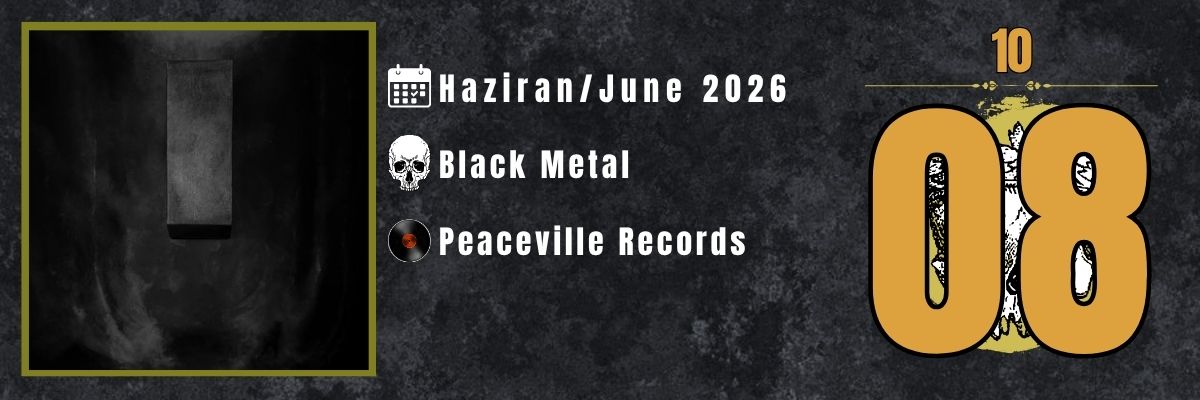
Norwegian act Mork has, since 2004, positioned itself as one of the rare solo-driven projects that preserves the core language of second-wave black metal while gradually reshaping it through a more refined compositional approach. Built around Thomas Eriksen’s singular vision, the project has followed a steady evolution away from raw, lo-fi aesthetics toward a more controlled, layered, and production-transparent form of black metal. “Monolitt”, as the latest stage of this evolution, remains faithful to the genre’s traditional boundaries while standing out as a work that redefines intensity within those very limits.
Mork’s eighth studio album is constructed around the transformation of repeating cells through subtle variations. On the opening track “Under Vekten av Verden”, the guitars present tremolo-driven movements rooted in classic second-wave black metal aesthetics, delivered within a clearly defined midrange density, while the kick-snare patterns placed beneath these riff blocks carry an almost metronomic rigidity. This approach signals a departure from the band’s earlier, more raw and fogged guitar textures toward a production mindset that renders riff articulation more legible.
Although the guitar tone generally maintains an icy, high-gain character, what stands out is the mix’s preference for separating layers rather than creating a monolithic “wall” of sound. This becomes particularly evident on tracks such as “Ødelagt”, where heavier, downward-moving chugs accompanying the tremolo riffs establish a slowdown that edges toward doom territory. However, these transitions do not function as abrupt ruptures; instead, they operate as a natural evolution of tempo reduction within the logic of the riffs. In other words, composition frames contrast not as shock effect, but as a continuous shift in intensity.
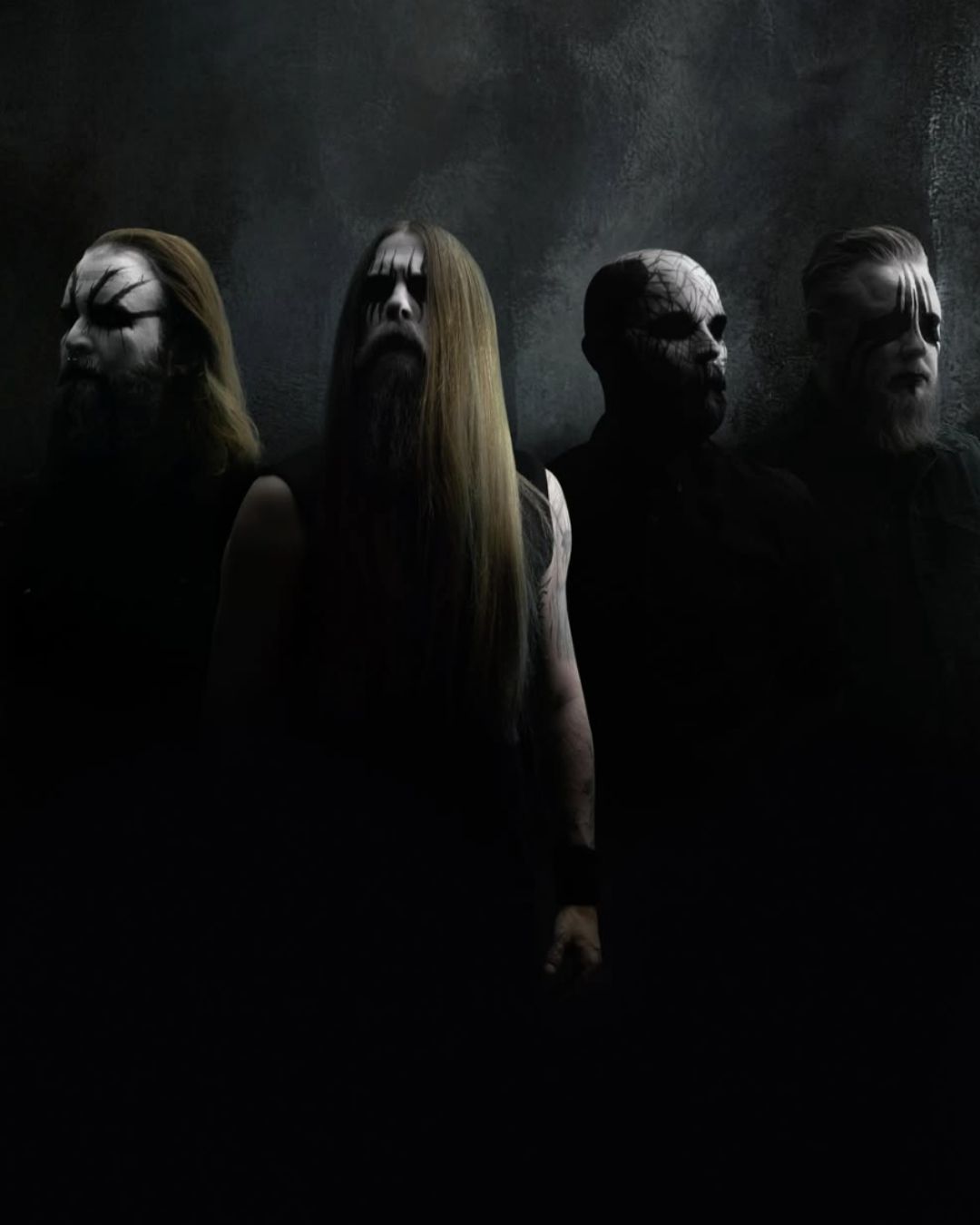
Asgeir Mickelson’s drumming stands as one of the most defining structural elements of the album. Ride patterns and double-time transitions, especially on tracks like “Torden” and “Jutul”, function as a stabilizing frame for the melodic repetition of the guitars. Within this frame, Eriksen’s riff writing is often less about melodic development and more about the repetition of rhythmic motifs and minor harmonic deviations. This results in an album that operates not through “riff diversity”, but through the internal transformation of the riff itself.
The vocal approach also seeks to generate multiple impressions rather than relying on a single-layered aesthetic of destruction. On tracks like “Martyr”, doubled vocal layering creates the sense of a secondary presence within the production, though this choice is aimed more at increasing timbral density than constructing a dramatic narrative. Clean vocals and folk-leaning passages, particularly on “Inn i en Annen Sfære” and “Ferdamann”, do enter the equation; however, these elements often function more as surface-level atmospheric expansion rather than mechanisms that reshape the riff architecture. Experimental layers are present, but they do not consistently rewrite the backbone of the composition.
This becomes more apparent in the album’s middle section. While the opening and closing parts contain more sharply defined riff ideas and tempo shifts, the central block features tracks that, despite operating within the same aesthetic language, generate a more limited sense of dramatic intensity. This can also be read as a byproduct of Mork’s productivity pace, which may necessitate an even distribution of ideas across each track.
In contrast, tracks such as “Inn i en Annen Sfære” and “Utryddelse” represent the compositional peaks of the album. On “Inn i en Annen Sfære” in particular, synth-like expanded background textures do not dissolve the tremolo structure of the guitars but instead build a resonance field around it. This creates a sense of expansion that edges toward the Enslaved lineage, yet even here the harmonic framework does not fully evolve into a new language; instead, the existing riff vocabulary is repositioned within a broader spatial context.
The overall production avoids the overly sterile brightness commonly found in modern recordings. Børge Finstad’s mixing preserves the aggressive edge of the guitars while bringing the mechanical clarity of the drums to the forefront. On the mastering side, frequency separation—particularly in the low-mid range—makes the interaction between guitar and bass more readable, resulting in an album that feels constructed in blocks rather than as a continuous sonic wall.
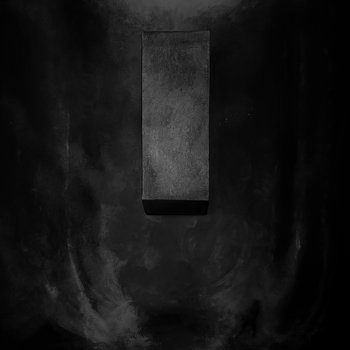
Visually, the monolith imagery aligns directly with the album’s musical logic: a singular yet detached presence. The minimalism of the cover design reinforces the anti-ornamental approach of the music; however, this visual concept remains more of a stabilizing aesthetic marker than a fully conceptual framework that recontextualizes the album’s experimental layers.
While “Monolitt” keeps second-wave black metal references at its core, it chooses refinement over expansion. Experimental elements—folk touches, clean vocal moments, extended atmospheric layers—do not function as primary engines of transformation, but rather as supportive components placed around an existing riff architecture. The album’s strongest aspect lies in the consistency of its riff writing and the tightly controlled interaction between drums and guitars, while its most debatable aspect emerges in the question of how significantly these expanding ideas actually reshape the structure.
In this form, “Monolitt” does not demand passive immersion into background atmosphere, but rather a focused listening approach that follows the internal motion of the riffs. Mork constructs a framework here that remains within the fundamental language of the genre while becoming tighter, more controlled, and occasionally more open-ended; yet these openings do not always evolve into a fundamentally new compositional logic. The album ultimately positions itself within this tension: between expanding ideas and a black metal language that evolves without being fundamentally rewritten.
OZAN
https://www.morkisebakke.no/
https://www.facebook.com/MORKOFFICIAL
https://www.instagram.com/mork.official/
https://x.com/morkhalden