
ALBUM REVIEW
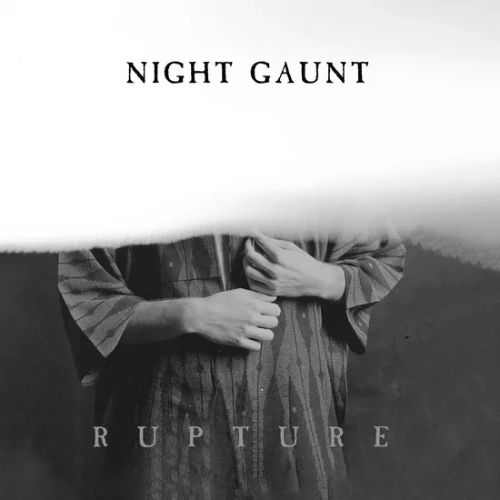
NIGHT GAUNT - Rupture
Doom roots meet post-punk darkness.
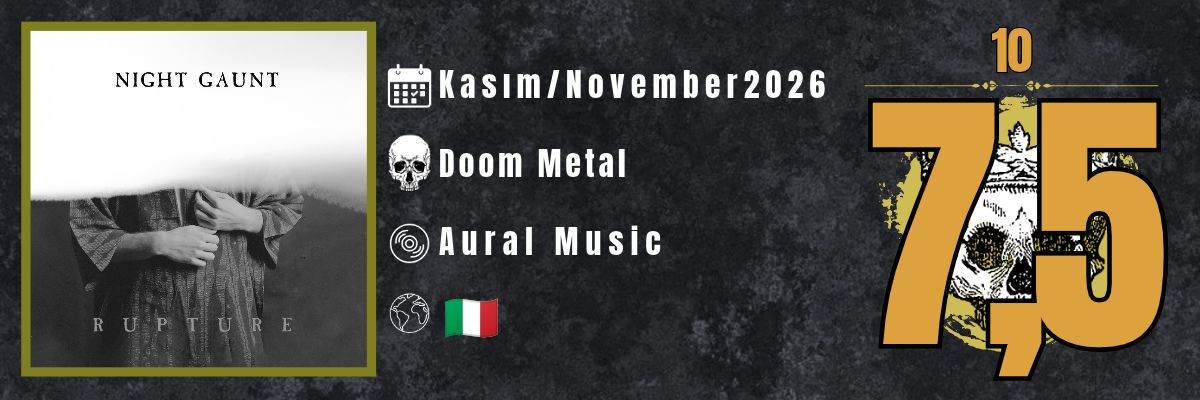
The shift evident in NIGHT GAUNT’s discography with "Rupture" is better understood not simply as a new direction emerging from the Roman band’s return after a six-year hiatus, but as a redefinition of its relationship with doom metal. The weighty guitar tones and traditional doom atmosphere that shaped their previous album, "The Room", have been noticeably scaled back. In their place is a more organic and unpredictable compositional approach, drawing on post-punk, dark folk, gothic rock and, at times, industrial textures. Doom metal remains the fundamental point of reference, but the guitars no longer seek to build towering walls of sound, while the bass takes on a more exposed and occasionally unsettling character, steering the songs towards an expressive territory distinct from conventional metal heaviness.
The first signs of this transformation emerge in the opening track, 'Of Clouds and Gleam'. Its dark vocal delivery and more restrained guitar work establish the band’s new aesthetic direction, while 'Strangers' brings a more energetic, forceful and direct character into the mix. The high-tempo guitar riffs and emphatic drumming in particular prevent the album’s atmospheric side from maintaining the same intensity throughout. 'Ordeal', meanwhile, reveals a heavier dimension to this pursuit of aggression. Its guitar passages lean towards thrash metal, while the reverberant bass and more forceful vocal delivery make it one of the album’s most overtly metal-oriented moments. It is also in tracks like this that the connection between NIGHT GAUNT’s earlier doom identity and their current musical preferences comes most naturally into focus.
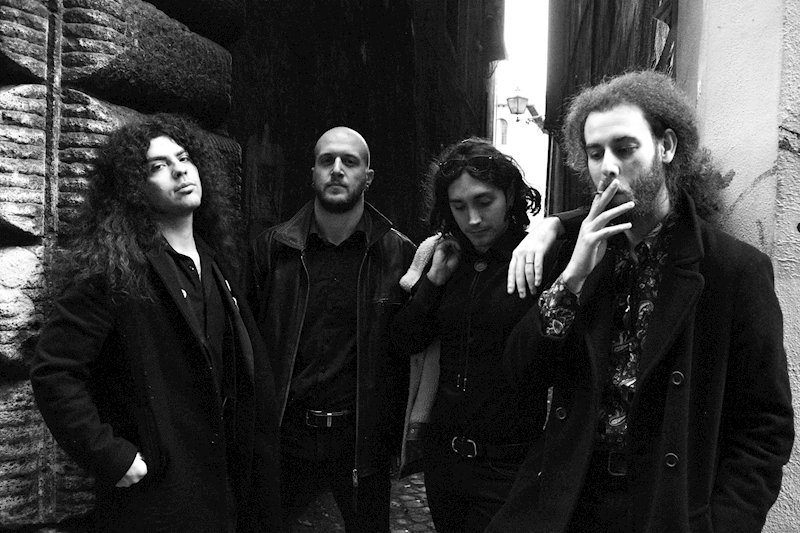
The defining character of "Rupture", however, lies in its ability to move away from the extended, weight-laden compositions of traditional doom metal and bring together contrasting musical textures within relatively short timeframes. With its folk-influenced melodies and dark narrative, 'Struck by the Fever' moves between blues and alternative rock, while 'The Revenant' expands the album’s non-metal vocabulary through its acoustic and folk-based approach. 'The Deer and the Hunter' brings post-punk rhythms together with heavier doom passages within a single composition. What these tracks share is an approach to atmosphere that goes beyond guitar tones alone. The melodic movements of the bass, the measured progression of the rhythm section and the theatrical storytelling in Giuseppe Colio’s vocals all become central to the music’s emotional character.
Colio’s performance is one of the album’s most distinctive, yet also most debatable, elements. Moving beyond the conventions of traditional doom vocals, he combines a dark, narrative delivery reminiscent of Nick Cave with occasional harsher, guttural outbursts. The dramatic choices in his melodic phrasing bring the band’s gothic rock and post-punk influences further into focus, while the more aggressive vocal passages in tracks such as 'Ordeal' and 'The Revenant' keep the music connected to its metal roots. The theatrical approach in 'Of Clouds and Gleam', which recalls Mercyful Fate, is another intriguing example of this versatility. Nevertheless, the vocals sitting noticeably further forward in the mix than the instruments, along with certain melodic choices that do not yet feel entirely settled, occasionally limit the impact of his performance. Colio’s distinctive delivery contributes significantly to the album’s identity, but it is difficult to argue that this approach works equally well across every track.
The quieter passages are just as important as the heavier material in understanding NIGHT GAUNT’s musical world. With its warm acoustic guitars and layered vocals, 'September Song' embraces the simplicity of a traditional ballad. Its romantic, autumnal melancholy opens up an emotional space distinct from the tension generated by the album’s heavier sections. The instrumental 'Blooming' takes this approach somewhere else entirely through its dramatic interplay of piano, guitar and drums. Luca Ercolani’s drumming arrangements are among the key elements shaping the track’s progression. The contrast between the piano’s delicate, restrained character and the drums’ powerful strikes produces one of the album’s most successful arrangement ideas. Here, it becomes clear that NIGHT GAUNT are not simply turning to different instruments to move away from doom metal; they are successfully incorporating them into their own compositional language.
The production is another important decision supporting this musical shift. Rather than relying on the dense distortion and heavy layers of guitars that characterised the band’s earlier period, the album adopts a sound in which the instruments occupy more independent spaces, allowing silence and natural tones to assume greater importance. The less saturated guitar sound, the more prominent bass lines and the ambience that reinforces an analogue feel give the record a character reminiscent of earlier gothic rock and post-punk recordings. Although this openness supports the organic flow of the music, it also leaves the metal element feeling insufficiently forceful in certain sections. Particularly in tracks where atmosphere takes priority, the guitars recede into the background, slowing the album’s momentum and diminishing the memorability of some of its ideas.
This also explains why "Rupture", despite running for approximately forty minutes, occasionally feels longer than it actually is. Moving towards shorter, three-to-four-minute compositions compared with the band’s previous albums has not, in itself, resulted in a tighter overall structure. NIGHT GAUNT are attempting to reconcile two distinct compositional tendencies here: atmospheric, melodic pieces that gradually expand, and more direct, riff-driven metal compositions. 'The Antagonist' illustrates the distance between these two approaches. Its dark bass melodies and post-punk atmosphere are compelling, but its metal identity occasionally struggles to assert itself. 'The End', by contrast, returns to the epic language of traditional doom metal, bringing the album’s different tendencies together in a track lasting more than six minutes. Its weighty guitar passages, recalling the tradition of Candlemass, and Colio’s dramatic vocals turn the closing track into a meaningful link between the band’s past and present.
Perhaps the most interesting artistic aspect of "Rupture" is that, despite stepping beyond doom metal, it retains the genre’s capacity for creating atmosphere. The fragility of folk melodies, the detached and unsettling rhythms of post-punk, the theatrical vocal approach of gothic rock and industrial textures all converge on the same record. Yet this diversity does not always translate into a cohesive musical whole. While some tracks succeed remarkably well within their own aesthetic territory, others struggle to establish a sufficiently distinct identity amid these competing directions. The imbalances created by the album’s choices therefore deserve as much consideration as the courage behind them.
Continuing along their established doom metal path would have been a considerably easier option for NIGHT GAUNT. Instead, the band have chosen to push metal’s weight into the background and reshape their music within a broader tradition of dark rock. Although this decision does not deliver flawless results at every turn, it is valuable in terms of expanding the band’s creative boundaries. "Rupture" is neither an easily categorised record nor one that reveals all its details on first listen. It is likely to resonate more strongly with listeners seeking music in which post-punk, folk and gothic rock influences intertwine, rather than the traditional weight of doom metal. NIGHT GAUNT’s new direction is not yet equally convincing across every track, but the band’s effort to expand its musical identity leaves a more lasting impression than the album’s shortcomings.

facebook.com/nightgauntdoom
nightgaunt.bandcamp.com
auralmusic.com