

ALBUM REVIEW
GATES OF KIEV – Gates Of Kiev
Keyboard-led retro progressive rock with jazz influences

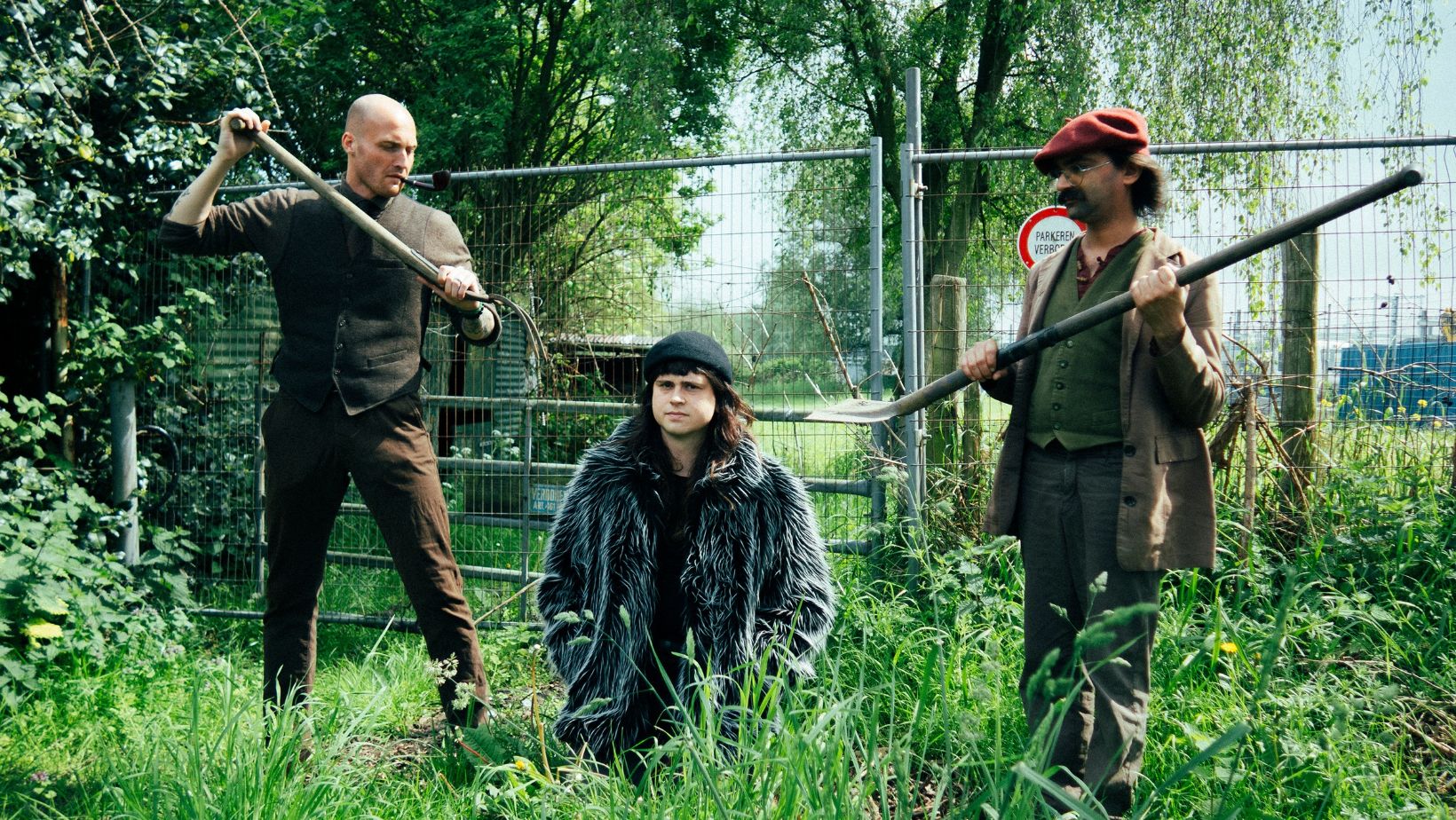
GATES OF KIEV emerged from the Dutch progressive rock scene, taking their name from the iconic piece featured on EMERSON, LAKE & PALMER's "Pictures at an Exhibition". That choice offers an immediate insight into the trio's musical influences. The lineup brings together Tomas Mesman (keyboards and vocals) and Hessel Braat (drums), whose musical partnership dates back to their youth, with bassist Eszl de Vois, who comes from Amsterdam's underground psychedelic scene. Together, they combine the progressive rock sensibilities of the late 1960s and 1970s with contemporary garage rock, punk and jazz influences. Their self-titled debut full-length consists of four extended compositions spanning approximately forty minutes.
Opening track 'Hamlet Burns', at around thirteen minutes, establishes the band's approach to composition. Built around atmospheric sounds and slowly unfolding keyboard textures, it gradually builds anticipation before the first vocal section enters. The vibrato-laden Hammond organ, lively bass lines and Hessel Braat's drum fills carry the increasingly expansive arrangement. The melancholic mood of the opening passages gradually gives way to faster rhythms and more animated instrumental sections around the halfway mark. These transitions evoke both the theatrical keyboard arrangements of EMERSON, LAKE & PALMER and the organ-driven hard rock tradition of URIAH HEEP. The energy of the middle section is particularly effective, offering one of the moments where the band does more than simply reproduce familiar progressive rock formulas.
'Baltazar's Feast' begins with electronic drones and flute-like tones before quickly developing into a more dynamic rock composition. The interplay between Tomas Mesman's keyboards and Eszl de Vois's bass lines shapes the track's rhythmic character. Shifting time signatures and sudden transitions also give the drumming considerable room to move. Here, the jazz influences enhance the rhythmic diversity of the progressive arrangements rather than unnecessarily complicating their flow. The passages where keyboards and bass move in tandem are particularly effective in highlighting the instrumental chemistry of the trio.
At around six minutes, 'Silhouette' represents the album's more restrained and melodic side. Following the animated arrangements of the preceding tracks, it opens at a calmer pace before gradually gathering momentum. Vocal harmonies, a Hammond organ solo and the melodic movement of the bass give the composition a more accessible structure. Its melodic approach, rooted in the progressive rock of the 1970s and particularly close to the Italian prog tradition, brings the band's influences into sharper focus. Its comparatively shorter running time also helps avoid the occasional tendency towards excessive length found elsewhere on the album.
Closing track 'Drunkship of the Mice' is the album's most compelling composition. Spanning approximately thirteen minutes, it brings together slowly unfolding organ and piano passages, rhythmic motifs reminiscent of Middle Eastern music and classical vocal harmonies. The connections established between its different sections prevent the track from becoming a mere collection of disconnected instrumental showcases. In particular, the contrast between its slower, more intricate melodic passages and the increasingly animated drum arrangements strengthens its dramatic structure. Here, GATES OF KIEV move beyond straightforward ELP imitation, making room for psychedelic and experimental tendencies within their progressive rock approach. The album's strongest moments emerge when the musicians bring different ideas together within a cohesive composition rather than simply showcasing their technical abilities.
Hammond organ and other keyboard arrangements occupy a central position throughout the album. Tomas Mesman's performance lies at the heart of the band's relationship with 1970s progressive rock, while de Vois's background in jazz and psychedelic music ensures that the bass serves a purpose beyond providing rhythmic support. Braat's drumming similarly moves between complex time signatures and straightforward rock grooves. This interplay between the three musicians brings a palpable live energy to the instrumental passages in particular. The album was recorded by Ahmad Mansour at Ijland Studio in Amsterdam, with mixing and mastering handled by Jacob Holm-Lupo, known for his work with White Willow. The production gives the various instrumental layers and atmospheric arrangements room to breathe, supporting the album's expansive compositional approach.
That said, not all of GATES OF KIEV's compositions are equally convincing. The reliance on extended instrumental passages across all four tracks occasionally blurs the distinction between structured songwriting and a more improvisational freedom. Particularly in the longer compositions, the balance between developing an existing idea and moving on to a new one is not always maintained. The technical proficiency and musical interplay are evident, but they do not consistently translate into memorable compositional structures. Some of the transitions in 'Hamlet Burns' and 'Baltazar's Feast' could have been considerably more effective with tighter arrangements. This suggests that the band's room for improvement lies less in its musical capabilities than in developing greater selectivity in its songwriting and achieving stronger structural cohesion.
GATES OF KIEV's debut makes no secret of its devotion to the golden age of 1970s progressive rock, combining a Hammond-driven retro-prog approach with garage rock energy and jazz influences. The traces of EMERSON, LAKE & PALMER, ATOMIC ROOSTER, URIAH HEEP and the Italian progressive rock tradition are unmistakable. Although the weight of these influences occasionally overshadows the band's own musical identity, compositions such as 'Drunkship of the Mice' offer glimpses of a distinctive voice waiting to emerge. Even so, the trio needs greater discipline when it comes to making every minute of its extended compositions serve a meaningful songwriting purpose. A debut well worth hearing for anyone drawn to the keyboard-driven progressive rock of the 1970s, "Gates Of Kiev" is, for now, more successful at reviving the genre's past than pushing it forward.

https://gatesofkiev.bandcamp.com
https://www.instagram.com/_gatesofkiev_
https://www.facebook.com/GatesOfKiev
https://lasersedge.bandcamp.com