
ALBUM REVIEW
NON SERVIAM - La Lune Dont Mon Âme Est Pleine
Chaotic industrial ritual
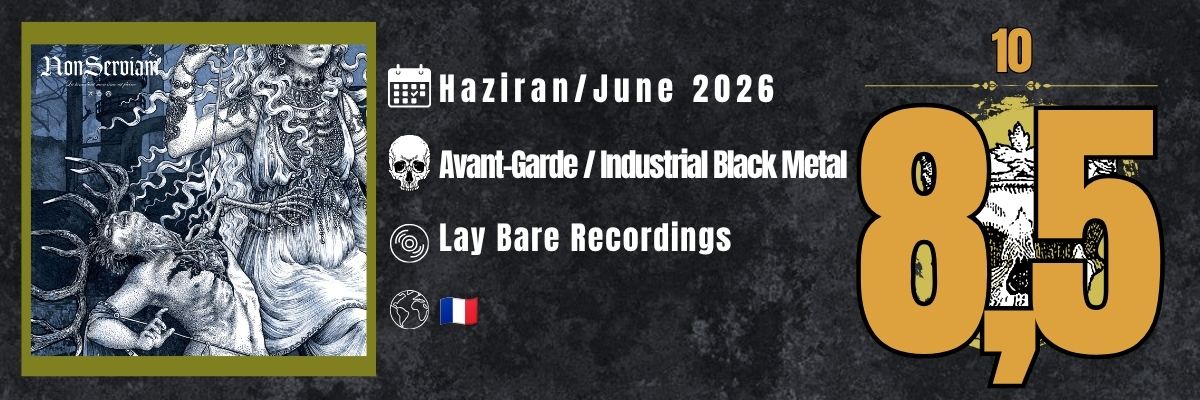
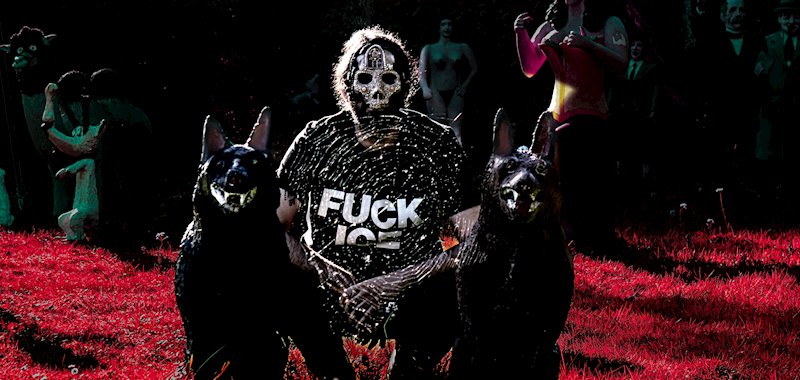
The Paris-based anonymous collective NON SERVIAM stands out as one of the projects reshaping black metal’s aggressive legacy through industrial textures, electronic deformation, and an experimental approach to composition. Firmly rejecting rigid genre boundaries, the band creates its own expressive space by combining the chaotic structures of extreme metal with noise, sludge, darkwave, and avant-garde approaches. "La Lune Dont Mon Âme Est Pleine" emerges as the most comprehensive manifestation of the band’s mythological and symbolist narrative, bringing musical extremity together with a controlled compositional vision.
There are countless albums that attempt to expand the boundaries of black metal; however, a significant portion of them achieve this by simply stacking borrowed elements from different genres on top of one another. NON SERVIAM adopts an entirely different approach from the very first minutes. Here, riffs, electronic layers, noise aesthetics, and rhythmic fragmentation do not move along a shared axis but constantly invade and reshape each other’s territory. "La Lune Dont Mon Âme Est Pleine" is built around a compositional philosophy that strips the listener of familiar genre reference points and forces them to accept its own internal logic.
Black metal remains the foundation of the album, but this framework is constantly reshaped through industrial rhythms, electronic noise, sludge-heavy weight, post-metal textures, darkwave atmospheres, and occasional baroque nuances. The opening track, "La Lune Dont Mon Âme Est Pleine – Part II", immediately reveals the album’s approach through a structure that focuses less on traditional song development and more on the behavior of its sonic mass. Broken drum programming, overlapping vocal layers, and constantly shifting electronic textures deliberately reject the conventional logic of introduction, development, and resolution.
In its opening section, this density also becomes one of the album’s most debatable aspects. Multi-layered vocals, harsh electronic intrusions, and competing rhythmic ideas occurring simultaneously can make some compositions feel fragmented. On tracks such as "Émile Henry", the central role of the riff is frequently overshadowed by electronic textures. Although this decision is clearly intentional, it significantly reduces the sense of direction on first listen and makes the album considerably less accessible.
However, NON SERVIAM’s greatest achievement lies in avoiding the transformation of this chaotic structure into a random collection of sounds. As the album progresses, the calculated nature of its transitions becomes increasingly apparent. "Déesse Morte" naturally connects ambient keyboards, heavy post-metal guitars, and sudden black metal eruptions within the same composition. This movement between violence and stillness does not merely create atmosphere; it also determines the track’s dramatic progression. The concept of transformation at the center of the Diana and Actaeon myth is reflected not only in the lyrics but also in the constantly shifting organization of the compositions themselves.
The guitars often function less as traditional riff showcases and more as components of a dense wall of frequencies. The expansive character of the distortion does not compete with the electronic layers but merges with them. The bass guitar, particularly on tracks such as "Émile Henry", reinforces the physical weight of the mechanical rhythms by emphasizing the low-end frequencies. In the drum department, an industrial and programmed rhythmic approach takes precedence over an acoustic feel. The constant exchange between blast beats and fractured electronic beats makes the album’s rhythmic foundation unpredictable.
The vocal approach extends this same philosophy. Screamed vocals, clean melodies, layered choral arrangements, and heavily processed electronic voices continuously blend into one another. The clean vocals never create a moment of relief; instead, they form an even more unsettling contrast within the industrial noise. As a result, even the album’s melodic passages function less as moments of comfort and more as indicators of another impending rupture.
One of the album’s most striking decisions is its refusal to treat electronic elements as mere atmospheric decoration. Noise layers, synthesizers, and digital distortions become structural components that directly shape the compositions. Mirai Kawashima’s guest appearance on "Victory To Kali" further intensifies the tension between electronics and black metal while strengthening the track’s ritualistic character. His contribution goes beyond adding a recognizable name to the record, becoming a defining element of the song’s dramatic core.
The production is also an essential part of this aesthetic approach. The album contains an extremely dense network of layers, yet the frequencies never completely consume one another. The noise is always kept under control. A cleaner mix would have softened the music’s aggressive character, while a dirtier recording could have buried many of its details entirely. NON SERVIAM largely maintains this balance, transforming sonic intensity into a deliberate compositional tool.
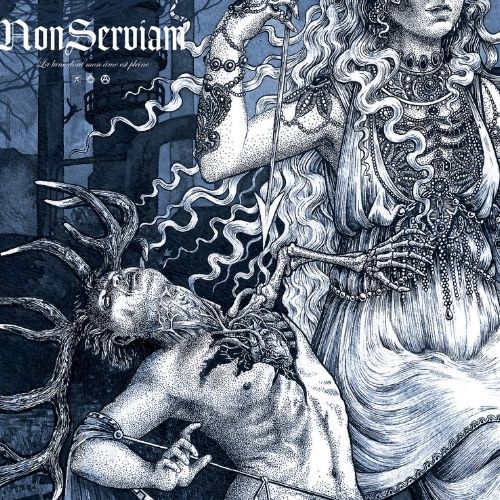
The visual identity also aligns with the album’s symbolist approach. Centered around the narrative of Diana and Actaeon, the artwork reflects the record’s fundamental tension through its Art Nouveau-inspired lines, cold blue tones, and depictions of the transformation between human and animal forms. Rather than romanticizing the mythological narrative, it emphasizes the relationship between power, the gaze, transformation, and violence, creating a unified aesthetic that supports the music’s ritualistic and unsettling nature.
"La Lune Dont Mon Âme Est Pleine" is not an album that presents its experimental ideas merely through different instruments or genre labels. It is a work that attempts to restructure black metal’s riff-oriented foundation through industrial noise and electronic compositional logic, while deliberately disrupting the listener’s sense of orientation in the process. Not every rupture is equally convincing; the excessive layering in the album’s first half can occasionally weaken the impact of its compositions. However, as the record progresses, this fragmented structure begins to form a more meaningful whole. Ultimately, NON SERVIAM delivers a demanding work that does not simply expand the existing boundaries of avant-garde black metal but also questions the very organizational logic of the genre itself — an album that requires patience and focused attention, yet rewards that investment through its aesthetic consistency.
OZAN
https://non-serviam.bandcamp.com
https://www.instagram.com/nonserviamcircle
https://www.facebook.com/NonServiamCircle