ALBUM REVIEW
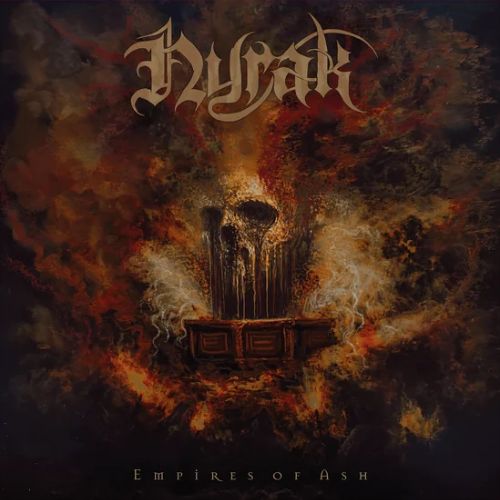
NYRAK – Empires of Ash
Melancholic black metal meets progressive orchestration.
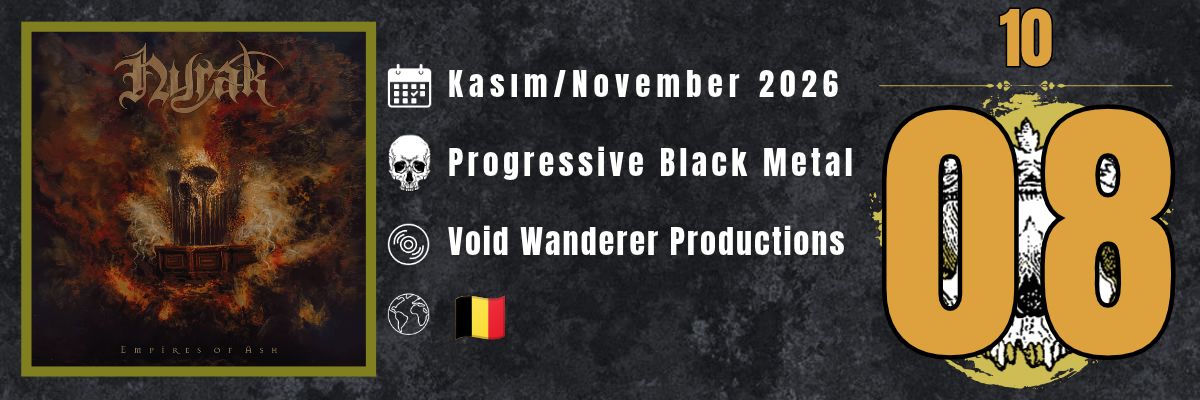
The renewed activity surrounding the Belgian black metal scene in recent years is reminiscent of the 1990s. Alongside emerging names, the scene is also drawing attention through projects that have built up remarkably prolific discographies in a short space of time. Launched in late 2021 by Guy ‘Nevel’ Van Nieuwenhove as a solo studio project, NYRAK has maintained this prolific pace with its fourth full-length, "Empires of Ash", following "Malvs" (2022), "Devourer of All" (2024) and "Phoenix Mortis" (2025). Having evolved into a full live band after its initial recordings, NYRAK has also taken its identity beyond the studio, as evidenced by its concert activity across Europe. Releasing four albums in such a short period inevitably raises questions about how much compositional depth and originality can be sustained. "Empires of Ash" offers a rather ambitious musical answer.
Opening track ‘The Saturnalia Prophecy’ establishes NYRAK’s musical character as tremolo-picked guitars and relentless blast beats emerge from an atmospheric introduction. The cold melodic legacy of second-wave black metal is combined here with fuller guitar tones, symphonic touches and progressive arrangements. Particularly noteworthy is the fact that the guitars do more than simply churn out fast riffs. As melodic lines intertwine, harmonic shifts and dissonance redirect the compositions, preventing the music from becoming an exercise defined solely by speed and aggression. The unsettling guitar passages in ‘Towards a Haunted Future’ represent the album’s more sinister side, while ‘Stare Into the Eyes of Death’ repeatedly reshapes its pace and melodic development, demonstrating how the band’s progressive approach informs its songwriting.
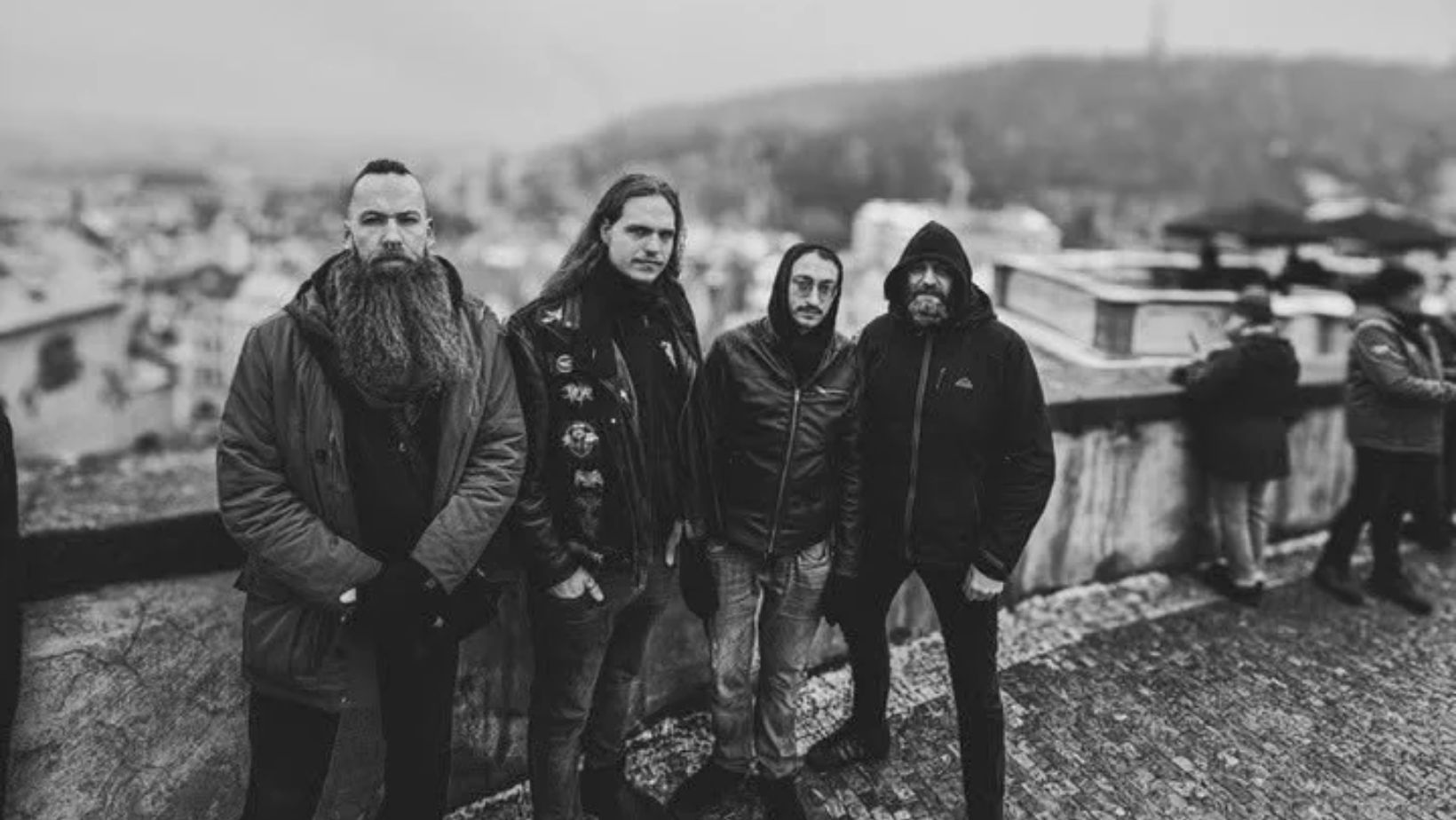
One of the most defining elements of this musical dynamism is Bram Veldeman’s drumming. Rapid footwork, relentless blast beats and frequently shifting rhythmic patterns continually open up new possibilities within the already dense guitar arrangements. Unexpected rhythmic breaks, changing time signatures and subtle drum fills in particular keep the songs from following a predictable trajectory of speed. Although Veldeman’s performance contains plenty of elements that could easily descend into technical showboating, the drums generally serve to reinforce the compositions’ dynamism. Still, it must be said that such an active rhythmic approach occasionally gives the music an uneasy, overcrowded character. NYRAK’s constant urge to introduce another shift can, at times, place a strain on the natural flow of its compositions.
With the guitars and drums this densely packed, one might expect the melodic elements to take a back seat. Yet the guitar work of Lukas Risbourg and Sven Van Laere provides an important foundation for the album’s emotional character. ‘The Fall of Man’ is a particularly good example: as its structure gradually intensifies from an opening built around a more pronounced sense of groove, the melancholic quality of its melodic lines guides the song’s development. This approach, which recalls the dark romanticism of second-wave black metal, ensures that NYRAK’s progressive tendencies never stray too far from the genre’s traditional aesthetic. Lukas’s high-pitched shrieks also play an important role within this musical framework. The vocals are not merely a means of heightening the aggression; they work in tandem with the melancholy of the melodies and the tension running through the compositions. The dual-vocal approach, bolstered by Sven’s backing vocals, adds further variety through shifts between piercing shrieks and deeper, harsher vocal tones.
The album’s symphonic arrangements are another key component of NYRAK’s identity. Guy ‘Nevel’ Van Nieuwenhove’s use of synthesizers and orchestration expands the harmonic and atmospheric dimensions of the compositions without overshadowing the guitars. This choice lends the music a more grandiose character, particularly in its denser passages. What matters here is that the orchestration never feels compelled to demand constant attention. Often remaining in the background, the keyboard layers support the melodic development of the guitars and add depth to the music. ‘Reverie de la Mort’ is the clearest example of this approach. Entirely instrumental and cinematic in character, it stands apart from the intensity of the preceding tracks and brings the orchestration to the forefront. That said, given the album’s overall pacing, the piece could have been tightened up a little. Its atmospheric respite is welcome, but the ideas it develops do not quite sustain its full length.
‘Kali Yuga’ introduces a significant contrast to the album’s approach to speed and intensity. As the tempo drops, the riffs and melodies are given more room to breathe, while the threatening atmosphere gradually comes into sharper focus. This track demonstrates that NYRAK is not reliant solely on high-velocity black metal to make an impact; it can also construct a heavier, more ritualistic form of expression. ‘Ozymandias’, which follows, brings the album to a grand finale, combining orchestration, melodic guitars and another surge in Veldeman’s drumming. The title, associated with Percy Bysshe Shelley’s poem of the same name, evokes the transience of power and grandeur. Considered alongside the album title "Empires of Ash", this reference also establishes a meaningful connection with the record’s visual and conceptual world.
Nevertheless, NYRAK’s way of bringing all these elements together is not always equally convincing. At times, the album’s progressive structures, technical density and orchestral layers begin to draw more attention than the natural development of the music itself. Particularly when the effort to create a grandiose atmosphere becomes more pronounced, a gap can emerge between the music’s genuine emotional weight and the grandeur it seeks to convey. This can leave the impression that certain compositions are trying to appear bigger and more significant than they actually are. Furthermore, the constant rhythmic and melodic activity in the album’s faster passages sometimes makes it difficult to distinguish one track from another. In this respect, pieces with more clearly defined identities, such as ‘Reverie de la Mort’ and ‘Kali Yuga’, leave a more lasting impression.
"Empires of Ash" is a black metal album that showcases the musical experience and technical capabilities NYRAK has developed in a remarkably short time, standing out particularly for its drumming, melodic guitar work and measured use of orchestration. By bringing the melancholic atmosphere of second-wave black metal together with progressive songwriting, the band has carved out its own space within the contemporary scene. Nevertheless, the fact that not every composition achieves an equally strong identity, coupled with arrangements that occasionally lean too heavily towards grandeur, undermines the album’s artistic cohesion in places. Yet despite these minor shortcomings, it would be unfair to judge NYRAK solely on its technical abilities. Its effort to preserve the dark melodic legacy of traditional black metal while taking it into more complex and orchestral territory points to considerable potential for the band to develop further. "Empires of Ash" is a compelling demonstration of that potential, even if it occasionally struggles under the weight of its own ambition.
