ALBUM REVIEW
RAPID - Enter the Realm of Fire
Raw, fast, dirty, melodic old-school metal.
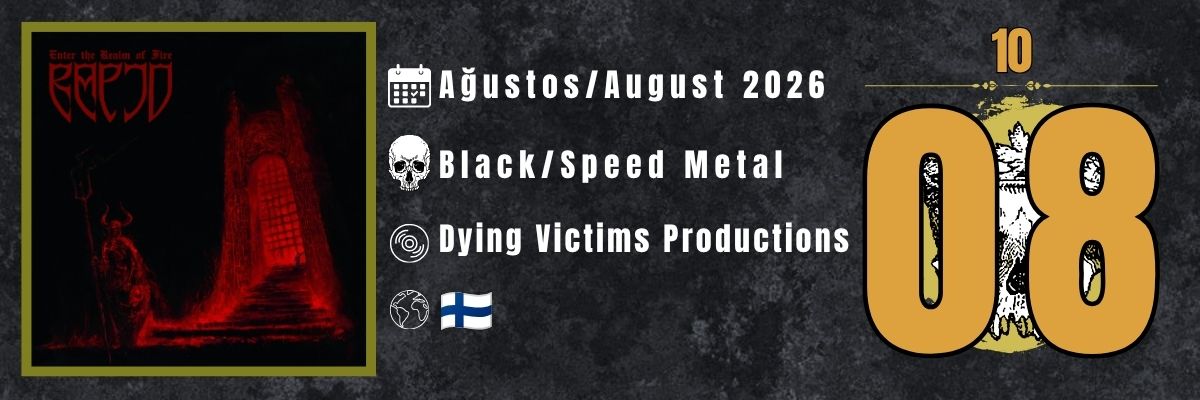
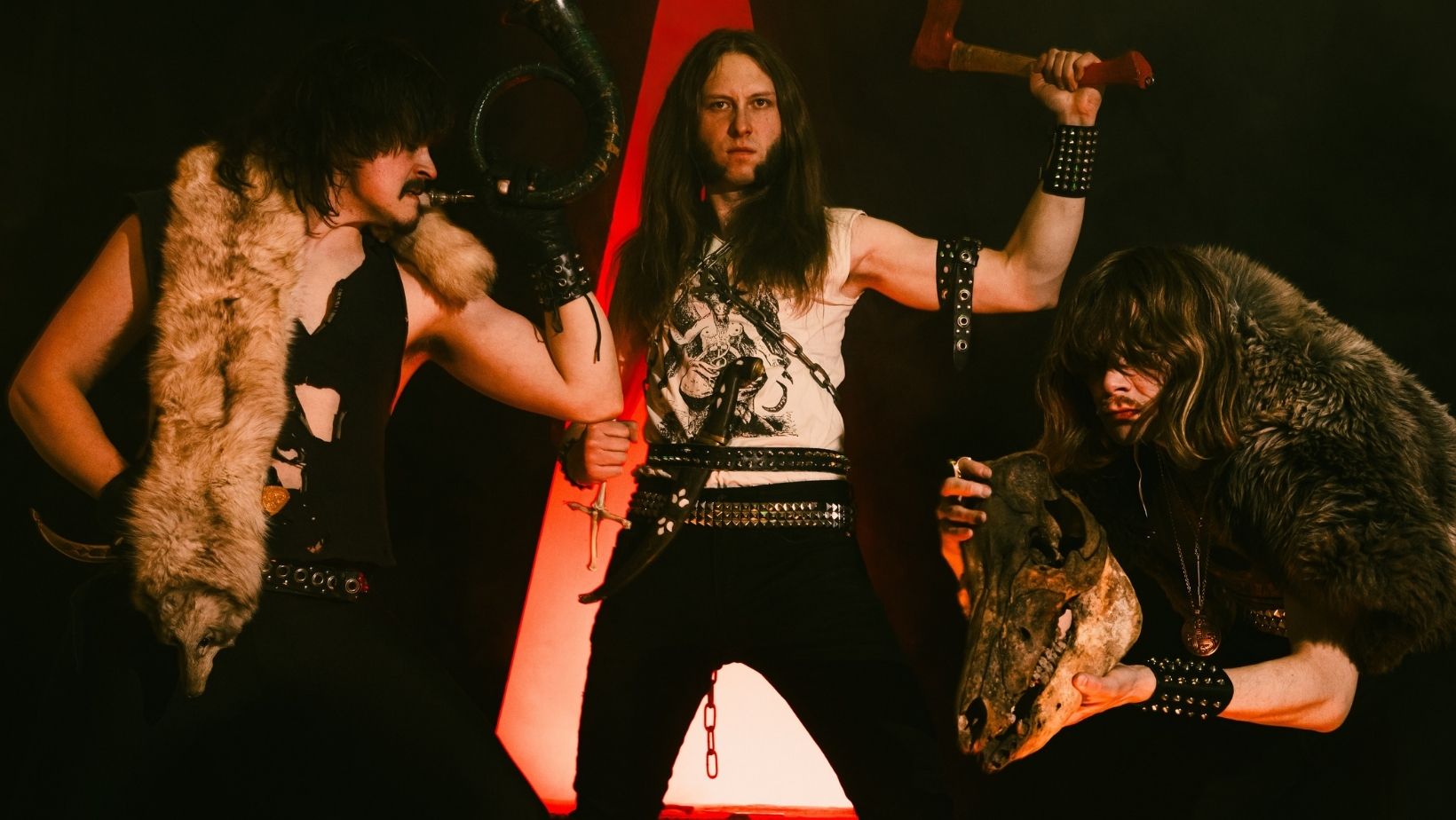
RAPID are a Helsinki-based trio rebuilding the raw energy of old-school metal without surrendering it to contemporary production values. “Enter the Realm of Fire” is the band’s debut full-length, expanding its blackened speed metal roots with more pronounced ’80s heavy metal melodies and stronger songwriting. With this vision, RAPID seeks to offer the entire metal scene—and especially fans of the era’s music—not a simple copy obsessed with the past, but a test of how functional that period’s riff-driven, imperfect aesthetic can still be today.
The album’s thematic approach takes shape not through the construction of a rigid, genre-obsessed framework, but through a reinterpretation of old metal’s raw compositional logic. While retaining the dirty speed of early SODOM, VENOM, MOTÖRHEAD, and HELLHAMMER, the Helsinki trio replaces the black metal and death rock emphasis of its previous EP with a more pronounced ’80s heavy metal backbone. What emerges is therefore more than a retro sonic aesthetic; it is a songwriting approach built around short, direct, repeat-friendly riffs, with melodic lead guitars significantly broadening the character of the individual tracks.
This transformation is particularly evident in the guitar arrangements. Atte Nikku’s guitar work leaves room for more fluid heavy metal melodies without completely abandoning the sharp aggression of early speed/thrash metal. On tracks such as “Witchcraft Of Sorrow,” the high-tempo drive of the rhythm guitars and the melodic lines laid over them simultaneously carry two different traditions: on one side, the directness of ’80s underground speed metal; on the other, the more traditional heavy metal tendency to produce memorable melodies that exist independently of the riff itself. “Wielder Of Might (Death From Above)” brings this latter side further to the forefront. The more emphatic vocal delivery and classic heavy metal melodies here show that RAPID can no longer be understood solely through the lens of early blackened speed metal references.
Yet the album’s real strength does not lie in any claim to perfection. The dirty tone of the rhythm guitars, the unpolished character of the drums, and the overall production’s refusal to pursue controlled modernization in favor of preserving the physical harshness of old underground recordings prevent the songs from becoming overly sterile. This choice pays off particularly well on “Black Poison.” Its riff structure and forward-driving rhythmic accents recall MOTÖRHEAD’s direct connection between punk and metal, and this is where the album sounds most natural. RAPID has no problem reproducing an old formula on a track like this; what makes the formula work is the refusal to overcomplicate the riffs unnecessarily.
The Goon’s drumming serves the same aesthetic principle. The beats are positioned less as a display of technical ability than as a means of sustaining the songs’ forward momentum. As a result, during the album’s faster passages, guitars and drums do not operate as two independent forces; they become components of the same crude engine. Vincent Revenge, responsible for bass and lead vocals, pulls back from the more extreme vocal approach of the band’s earlier material, bringing the lyrics into clearer focus. This increased clarity, however, does not amount to a shift toward conventional heavy metal vocals. His voice remains rough, dirty, and at times reminiscent of a crypt keeper. The more fragile melodic vocal lines on “Pest Eater” are significant in this regard, demonstrating that the album can create dynamics through vocal character rather than relying on constant full-throated aggression.
The hardcore punk energy and old-wave black metal atmosphere that were prominent on RAPID’s previous EP have not disappeared entirely here. They simply no longer sit at the center of the composition. Instead, the band establishes a more defined structure that combines the hard rock and heavy metal heritage of the ’70s with the aggression of early ’80s speed metal. “Necromantic Warriors” is one of the strongest examples of this shift. Its riff and lead arrangements, which move closer to traditional heavy metal songwriting, evoke an almost classic underground heavy metal aesthetic. There are traces of a more epic melodic approach reminiscent of MANILLA ROAD, while RAPID’s rough production keeps the track from becoming a modern retro-metal pastiche.
However, the album’s pursuit of variety does not always produce equally convincing results. The more pronounced influence of SAMHAIN on “Moonless Night” serves to remind us of RAPID’s punk roots, but its connection to the album’s new heavy metal-centered direction is looser. Likewise, the guttural vocal work on “Gaze Of The Black Void” darkens the atmosphere, but as a brief interlude it does not go far enough to alter the fundamental compositional logic of the surrounding material. These moments demonstrate that some of the album’s different influences remain structural, while others function primarily as coloration. RAPID is not attempting to be experimental; the real question is how much variety it can create within the boundaries of its own crude metal vocabulary.
“Beyond The Gates Of The Rapid Flames” is particularly important in this respect. Its longer structure, tangled opening solo, and subsequently emerging, more anthemic lead guitars bring several of the album’s different components together in a single track. Its placement at the end of the record also appears deliberate. Following the shorter and more direct structures of the preceding songs, the composition is allowed to breathe here; melodic ideas are sustained for longer, and the guitars are given room to create a sense of atmosphere and direction rather than merely producing riffs. This points to a point at which RAPID’s work on “Enter the Realm of Fire” becomes more than a simple imitation of the sound of old metal.
At the same time, the rawness the album deliberately preserves is also one of its limitations. On some songs, ideas are quickly built around a strong riff or vocal melody, only for the band to return to a familiar ’80s metal form at points where those ideas could be taken further. Consequently, the strongest moments of the album’s songwriting are not necessarily those with the densest concentration of retro references, but those in which RAPID combines those references with its own riff economy. The band is not inventing a new vocabulary while reproducing a language already used countless times by early SODOM or VENOM. It is, however, correctly identifying which words from that vocabulary still work.
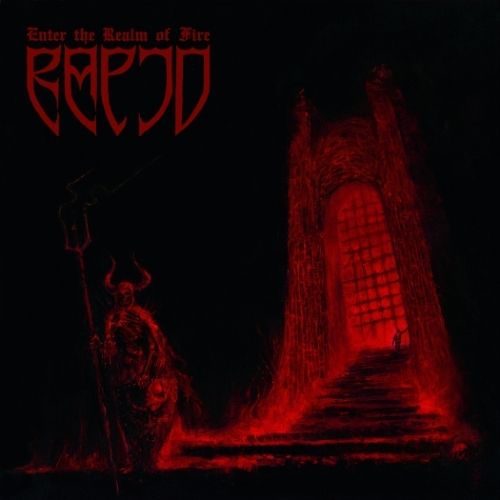
A similar simplification can be found in the visual and thematic direction. As the science-fiction and UFO associations of the earlier period give way to necromancy, witchcraft, and demonic realms, the music likewise moves toward an older, more physical heavy metal aesthetic. Bastian Velasquez’s artwork forms the visual counterpart to this shift, but the album’s real identity is not defined by the cover; it lies in this deliberate return embedded within the sound itself. Rather than using the past as decoration, RAPID attempts to keep the riff-centered, low-budget underground production mentality of that era as close as possible to a contemporary recording context.
This is also where “Enter the Realm of Fire” finds its position within contemporary extreme metal. While many bands working with old-school metal aesthetics today polish the past through their production and songwriting, RAPID keeps that polish to a minimum. Even so, the band does not surrender completely to nostalgia; by pushing heavy metal melodies further to the front, it expands the blackened speed metal formula it established earlier. The result is not an album attempting to overcome the past through claims of innovation. Rather, it is a work that rearranges familiar material around different centers of gravity and occasionally pushes against the limits of that rearrangement.
For this reason, “Enter the Realm of Fire” is not aimed at listeners looking for greater technical display or more radical experimentation. The album rests on the idea that the riff itself can still be a sufficient compositional argument. That is where RAPID succeeds: rather than merely dressing up in the crude, direct language of old metal, the band reactivates its underlying logic of short riffs, melodic leads, dirty vocals, and high-tempo rhythms. Its weaker points emerge when it leaves the same formulas where they are instead of expanding them. Yet it is precisely this controlled limitation that gives “Enter the Realm of Fire” a more defined position within the crowded contemporary retro-metal field; RAPID is not trying to recreate the past, but to test just how far it can still be taken.
