ALBUM REVIEW
REVEL IN FLESH - Flesh For The Kult Of Death
A dark return to Swedish Death Metal.
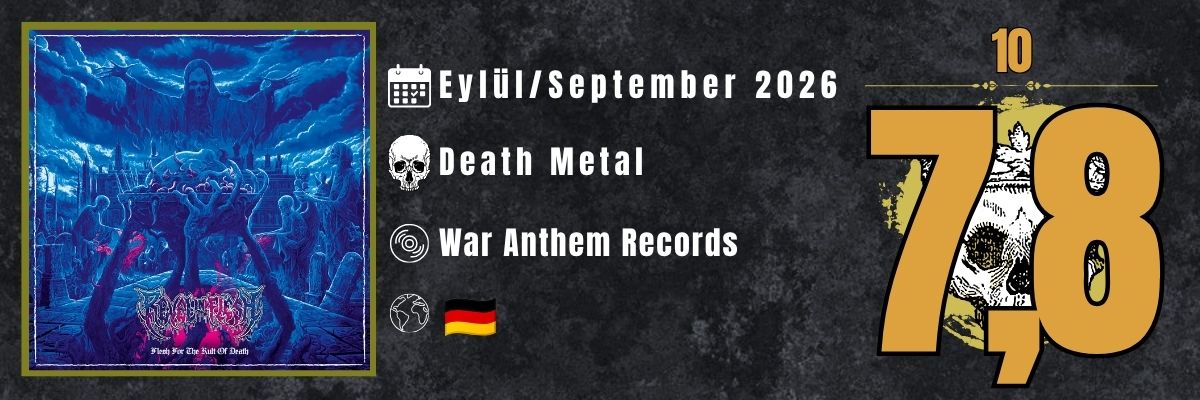
REVEL IN FLESH's sixth album, "Flesh For The Kult Of Death", is more than just a new chapter in the band's discography; it marks a deliberate return to a sonic world they have inhabited for a long time. The fact that seven years have passed since "The Hour Of The Avenger", coupled with the band's reshaping around a completely renewed lineup a year ago, makes that return all the more pronounced. Yet looking back here is less about reviving an old era than refining the Death Metal character in which the band feels most at home.
REVEL IN FLESH's chosen ground has always been fairly clear: the dirty guitar tone, dark melodies, and decayed atmosphere of Swedish Death Metal. "Flesh For The Kult Of Death" makes no attempt to distance itself from that heritage. On the contrary, the songwriting leans as heavily as possible on the fundamental elements of that aesthetic. Thick guitars, riff sequences that leave little room to breathe, and a constant sense of weight turn the individual tracks into parts of a shared mass of sound rather than completely separate compositions.
The important point here is that this density cannot be explained by production alone. Guitar, drums, and vocals are placed so closely together that finding room to breathe on the album is not easy. While the riffs maintain the same dark pressure for extended stretches, the drums are used not merely to accelerate the music but to give it movement. Groove is particularly prominent in Erik Barthold's performance. On tracks such as 'Tombstalker' and 'Demon Dawn', the drums do not disappear beneath the guitars; instead, they translate the weight of the riffs into something physical and rhythmic. This approach, which does not chase technical showmanship, does not make the performance simplistic. On the contrary, it creates a sense of discipline that fits the album's traditional character.
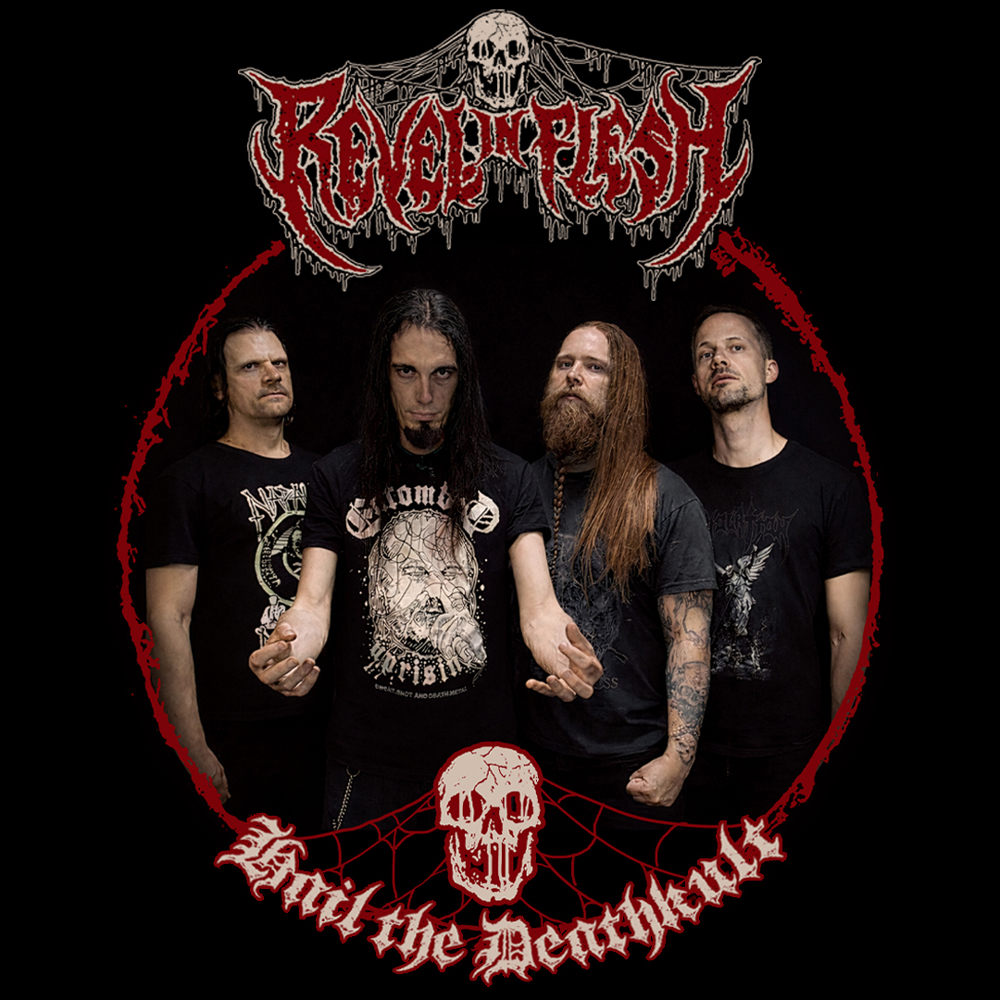
What Jonny Pettersson and Simon Abele do on guitar is even more direct. Tremolo melodies and the characteristic grime of the HM2 aesthetic make the Swedish strain of the genre unmistakable throughout the album. 'Pool Of Blood' and 'The Last Farewell' carry an especially dour melodic character, yet the melodies are never polished to the point where they pull the songs away from the fundamental weight of Death Metal. Here, melody is not the opposite of aggression; it is another colour emerging from within it.
For that reason, it is difficult to regard "Flesh For The Kult Of Death" as a record moving toward Melodic Death Metal. In contrast to the more melodic tendencies occasionally heard on the previous album, the new record leans into a more rigid and deeply rooted understanding of Swedish Death Metal. That conservatism, however, does not erase all of the album's creativity. REVEL IN FLESH are not trying to rewrite the rules of the genre; they are showing how dense and consistent a record can be built within them.
Ralf Hauber's vocals are also at the centre of this cohesion. The muffled, sinister, and ceremonial character of his voice fits naturally with the band's guitar tone. More importantly, the vocals are not used merely to increase the aggression; they become a defining element carrying the dark atmosphere of the songs. At the same time, Hauber does not appear to lean too heavily on huge choruses or exceptionally memorable vocal hooks on this album. Tracks such as 'Flesh For The Kult Of Death', 'Death Kult Maniacs', and 'Demon Dawn' contain passages that are easy to remember, but the album's overall approach is built more around continuity and atmosphere.
That choice reveals the album's strengths and weaknesses at the same time. REVEL IN FLESH know their formula extremely well. But the limits of that formula are equally apparent. In a scene that has been using the chainsaw guitar tone, dark melodies, and decayed atmosphere of Swedish Death Metal for decades, executing those elements correctly is no longer surprising in itself. The originality of "Flesh For The Kult Of Death" does not lie in radical ideas, but in the consistency with which familiar materials are assembled.
Still, the album does not completely seal itself within its own boundaries. 'Priest Of Flesh' brings the band's roots outside Death Metal to the surface through its explicit nod to Judas Priest. At first glance, this choice may seem distant from the album's overall aesthetic; in reality, there is a more natural connection between Heavy Metal's riff-centred approach and Swedish Death Metal than one might expect. The more surprising move is the Crowbar cover that closes the album, 'All I Had (I Gave)'. Following the Swedish Death Metal density maintained across most of the eleven-track record, the song introduces a different source of groove and heaviness, creating a small but meaningful shift in perspective toward the end.
These two choices reveal perhaps the most interesting aspect of the album: while REVEL IN FLESH appear extremely rigid in their commitment to tradition, they do not limit their musical memory exclusively to Swedish Death Metal. Rather than allowing these influences to expand enough to transform the album's main body, however, they keep them at its edges. So this is hardly a case of a major experimental door opening toward the future. Instead, there are small cracks revealing that other musical histories exist behind the band's own genre identity.
The production supports this approach as well. The sound shaped by Dan Swanö preserves the more natural character of the guitars and drums rather than offering a clean or sterile form of modern Death Metal production. The purpose of the dirty tone is not merely to create a nostalgic HM2 reference; it also preserves the physical weight of the riffs. The notably more natural sound of the guitars and drums compared with the previous era means that the album's return is not confined to songwriting alone. The sound itself also moves closer to REVEL IN FLESH's older aesthetic.
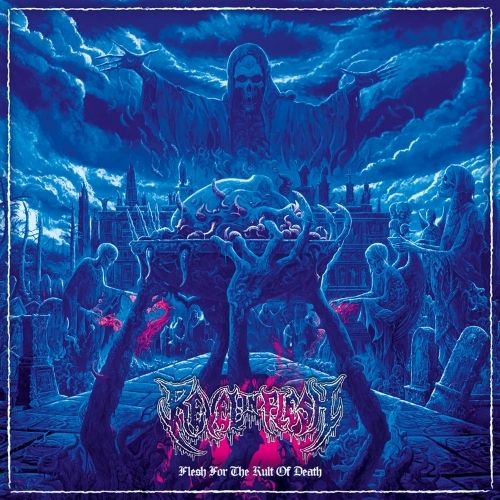
Juanjo Castellano Rosado's cover artwork completes this sense of cohesion. Its visual language, built around themes of death, decay, and cults, does not stand apart from the classic Death Metal aesthetic the band embraces musically. There is no attempt here to create a contrast between the visual and the music or reinterpret the genre's iconography; the cover makes it immediately clear which tradition the album belongs to.
"Flesh For The Kult Of Death" is therefore not an album searching for innovation. As REVEL IN FLESH revisit the well-worn material of Swedish Death Metal, they make no attempt to expand the genre's boundaries. Instead, they tighten the riffs, darken the atmosphere, retain the groove, and place Ralf Hauber's distinctive vocals over the top of it all. The result is a disciplined record that does not use nostalgia merely as decoration for remembering the past, but makes the genre's fundamental characteristics effective once again.
The cost of this approach is equally clear: "Flesh For The Kult Of Death" does not take the listener beyond the familiar terrain of Swedish Death Metal. But that is not the album's claim in the first place. REVEL IN FLESH are less interested in discovering a new direction than in burying themselves once again in their roots, and they do so with such conviction that the resulting record retains its vitality without trying to appear contemporary. It does not alter the boundaries of the genre; it reminds us just how much weight can still be carried within them.

https://www.facebook.com/WarAnthemRecords
https://www.instagram.com/war.anthem.records
https://www.instagram.com/official_revelinflesh
https://www.facebook.com/profile.php?id=100044540135116