
ALBUM REVIEW
Ripper – Towards Rebirth
Aggressive Energy
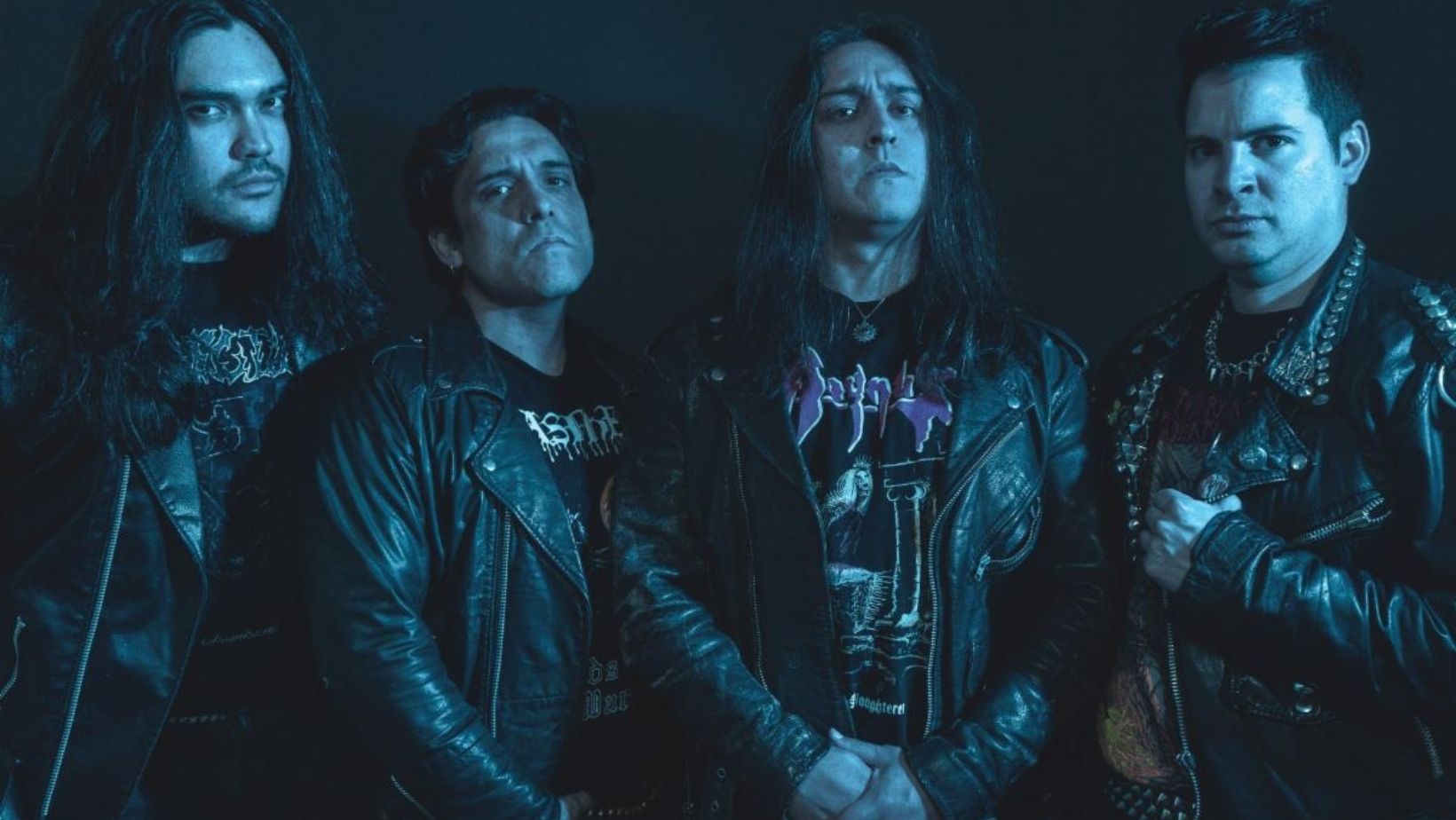
Founded in Chile in the late 1990s, Ripper emerged as one of the bands shaping the aggressive character of South American extreme metal tradition along the axis of death and thrash metal. Having drawn particular attention in international underground circles with 2016’s Experiment of Existence, the band now pushes this trajectory toward a sharper and more refined point with Towards Rebirth, released after roughly a decade-long hiatus. Issued via Dark Descent Records, the album demonstrates both Ripper’s continued commitment to their old-school roots and the level of maturity they have reached in terms of composition and execution.
At first glance, the album can be defined as a Death/Thrash work, yet its core concern lies less in fusing the two genres into a single alloy than in keeping the tension between them constantly alive. The Chilean band’s fundamental riff-writing approach is built on balancing the forward-driving kinetic energy of classic thrash with the density and weight of death metal. As a result, the album never fully transforms into an aggressively thrash-driven record in the vein of Sadus or Kreator, nor does it surrender to the suffocating atmospheric tendencies often found in today’s old-school death metal scene.
One of the most striking aspects of the album is the space given to the rhythm section as much as to the guitars. In particular, the bass guitar is pulled out of its conventional supporting role in contemporary extreme metal production and placed at the center of the compositions. With its thick tone constantly present in the mix, the bass does not merely occupy low frequencies; it operates as a secondary melodic layer that helps define the character of the riffs. This choice injects unexpected movement into the album’s otherwise continuously aggressive guitar work. In tracks such as “The Source Exterminator,” briefly foregrounded bass runs and solos function less as technical display and more as transitional passages that allow the compositions to breathe.
On the guitar front, the band’s main advantage lies in the fact that it does not treat the old-school aesthetic as a mere exercise in replication. Sharp tremolo sequences, rapid palm-muted passages, and frequently shifting riff blocks evoke the aggressive character of early South American extreme metal, yet the technical death metal influence felt in the arrangements prevents the material from collapsing into pure nostalgia. This technical approach does not manifest as flashy virtuosity, but rather through unexpected riff turns, short harmonic shifts, and layered guitar work. In particular, the lead guitars occasionally breaking away from the main rhythmic backbone to form looping, almost hallucinatory melodic movements add a depth to the album that cannot be reduced solely to speed and aggression.
The drum performance follows the same logic. Rather than relying on constant acceleration, it is used as a guiding force that directs the energy of the compositions. While blast beats and thrash-derived, d-beat-like driving patterns are heavily present, the album’s impact is not solely derived from tempo. The placement of drum accents that emphasize riff changes prevents the songs from dissolving into uncontrolled aggression and preserves the clarity of the material.
The vocal performance also follows a similar balancing strategy. Shifting between deep death metal growls and more feral, beast-like thrash-influenced shouts, the approach reinforces the album’s cross-genre positioning. The aim here is not to construct a dramatic character, but to rhythmically support the aggression of the riffs. As a result, the vocals function less as a melodic center and more as an additional percussive layer.
One of Towards Rebirth’s strongest qualities is its ability to largely avoid the nostalgia trap that has become increasingly common in the genre. The overly dirty productions, Swedish chainsaw tone imitation, or consciously lo-fi romanticism that have become widespread in recent years’ old-school death metal scene are not defining elements here. Pablo Clares’ production is both sufficiently harsh and organic while still maintaining enough clarity for the instruments to remain distinguishable. This allows the band’s technical details to become visible, enabling the album to be evaluated not merely through atmosphere, but through direct songwriting.
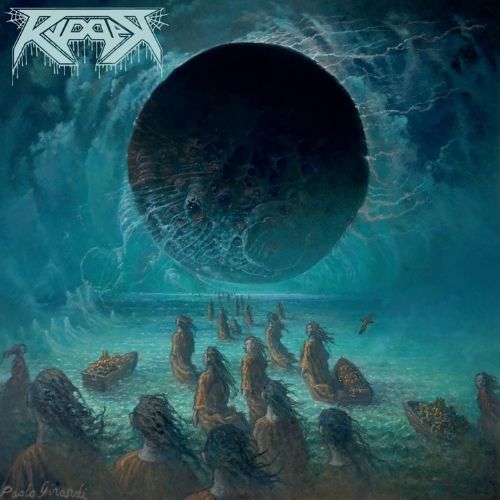
Paolo Girardi’s cover artwork also gains meaning as an extension of the musical content. Although Girardi’s densely detailed, chaotic compositions are often associated with overly complex and overwhelming music, here a balanced relationship is established between visual language and musical approach. While the album’s themes of death, cosmic destruction, and metaphysical transformation find visual correspondence, the cover does not attempt to present the music as more experimental or avant-garde than it actually is. This creates a coherent link between the band’s aesthetic choices and their musical reality.
However, the album does have its limitations. While RIPPER interprets the Death/Thrash formula with considerable skill, the material at times prefers to remain within familiar territory. Although technical touches and strong rhythmic awareness elevate the album above standard retro efforts, the sense that the band’s potential could be pushed into more radical directions never fully disappears. More extreme levels of aggression or more distinctly developed unconventional ideas could have sharpened the album’s identity further.
Still, Towards Rebirth stands as one of those records that speaks the language of the past without merely imitating it. It brings together the weight of death metal, the kinetic drive of thrash, and the additional layers provided by technical detail within a controlled sense of cohesion. The album does not demand that the listener learn a new extreme metal vocabulary; instead, it demonstrates how an already familiar language can still be reshaped in a compelling way. In this sense, it positions itself less as a disruptive force within the contemporary old-school Death/Thrash scene and more as a strong reference point reminding that the existing formula can still be used with intent and precision.
OZAN
https://ripperdeathrashchile.bandcamp.com/
https://www.instagram.com/ripper.chile?igshid=YmMyMTA2M2Y%3D