ALBUM REVIEW
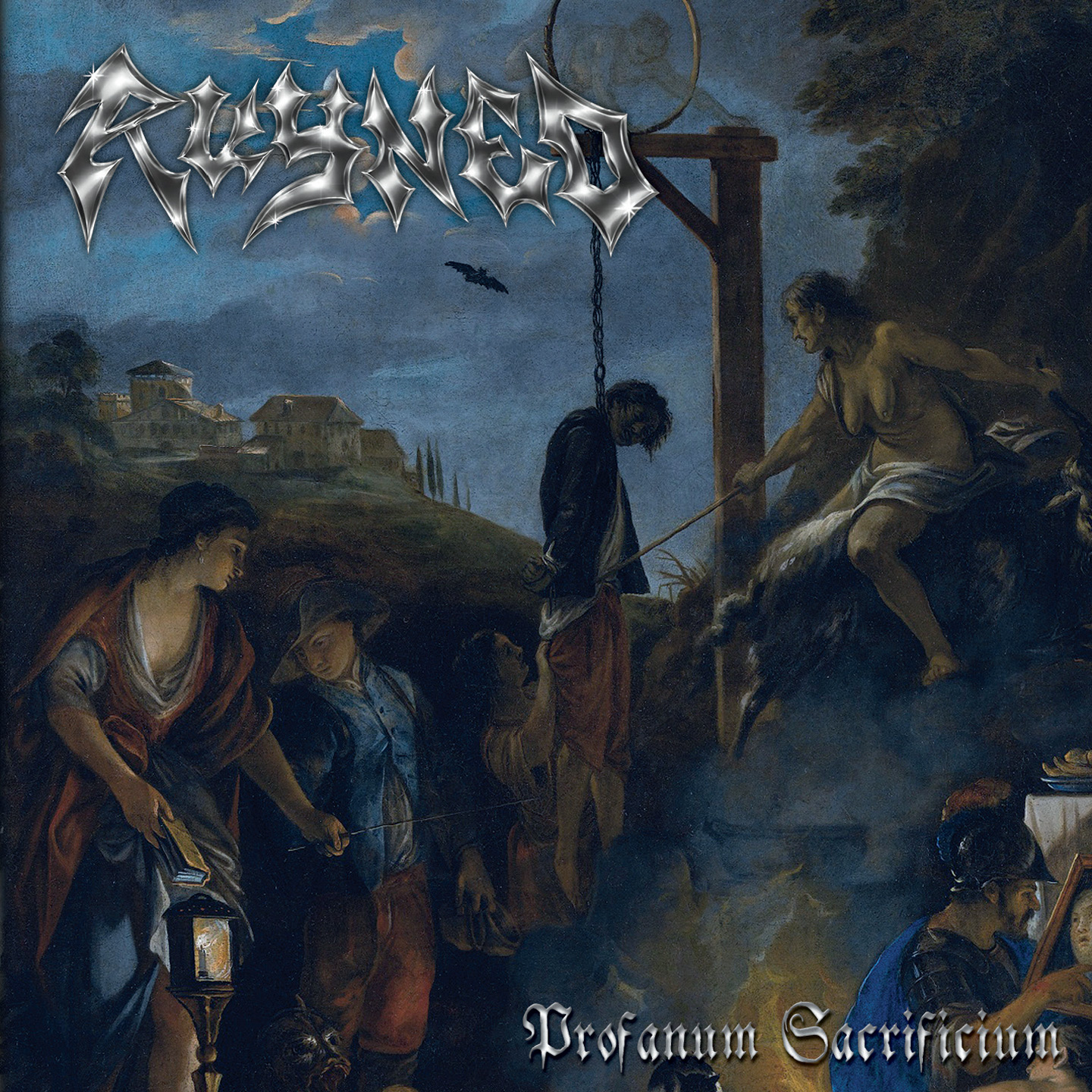
RUYNED - Profanum Sacrificium
Own Black/Speed/Thrash Metal Way
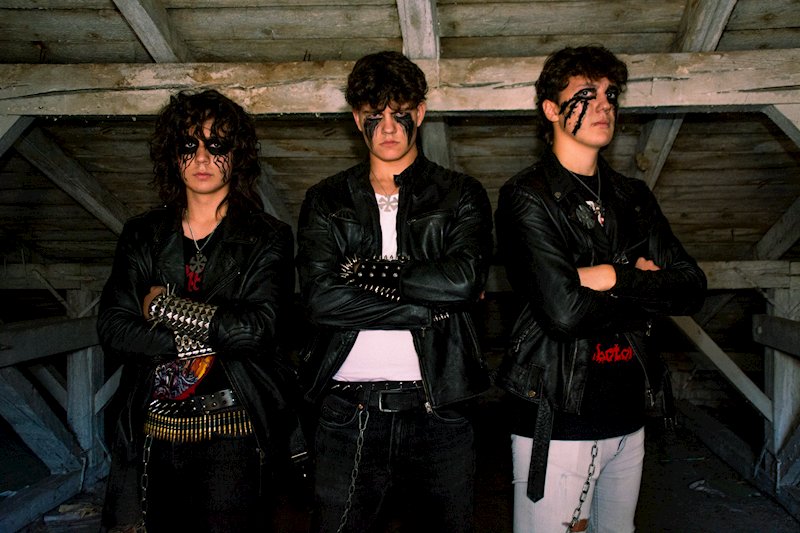
RUYNED, as a Romania-based extreme metal project, constructs a sonic aesthetic positioned at the intersection of black, thrash, speed, and heavy metal. Profanum Sacrificium reframes this multi-layered genre amalgam not merely as a stylistic blend, but through a compositional logic built on high velocity and sustained tension. By fusing 1980s speed metal tradition with modern production density, the album creates a field of aggression that is both referential and tightly controlled.
The album proceeds with a compositional approach rooted in pure speed, while simultaneously reweaving 1980s extreme metal aesthetics around that velocity. The acoustic guitar and synth layer used in the opening creates a brief contrast against the high BPM and constant forward thrust of the record’s core; however, this introduction functions less as a motif embedded within the album’s internal structure and more as a threshold. In other words, rather than initiating a dramatic transformation, it remains a prelude framing the transition into the speed-driven main body.
Once the main body is reached, the guitars clearly settle into tremolo-heavy writing. The riff structures are predominantly linear, maintaining a continuous tension line instead of moving toward harmonic resolution. When combined with the first-wave black metal vocal aesthetic, this framework produces a configuration where the vocals operate as a rhythmic “upper layer”; the vocal line does not steer the riffs but instead sits above them as a fixed stratum of aggression. Blast beats are deployed less as points of dynamic rupture and more as a mechanism for sustaining perpetual motion, turning the drums into a motoric driving force rather than a vehicle for transition.
The influence of thrash and speed metal becomes more apparent in the guitar solos and lead transitions. In these sections, the sharpness of the riffing opens slightly toward a “classic heavy metal” melodic vocabulary, yet this expansion never alters the underlying compositional logic. In other words, melodic passages function not as a secondary layer expanding the structure, but as brief shifts in coloration placed atop an existing velocity-based foundation. This reinforces the album’s 1980s reference frame while merging it with the high-density pressure of modern production, resulting in a more sterile yet controlled sonic space.
On the production side, the most striking element is the presentation of all instruments within a simultaneously separated and compressed dynamic field. The guitars form a dense wall in the midrange, while the bass remains primarily at the level of rhythmic reinforcement. The drums, particularly in faster sections, stand out through pronounced transient attacks, making the idea of “speed” continuously visible not only in compositional terms but also in the mix. This approach generates an impression of controlled intensity rather than organic chaos.
Released under the Osmose Productions label, one of the most notable aspects of the album is the division of its conceptual framework into two distinct axes. The first section moves through fragmented, hedonistic, and violence-oriented track titles (“Sex’N Speed”, “Sex Commander 666”), while after “Daemonium Ritualis” the record shifts noticeably toward historical and ritual themes. This transition does not produce a radical musical shift; the compositional language retains the same velocity and riff logic. As a result, the conceptual change operates less as a restructuring of musical architecture and more as a layer projecting different narrative frames onto the same sonic surface.
In the mid-to-late sections shaped around witch trial themes, there are moments where the riffs lean toward a more “ritualistic” sense of repetition. However, these repetitions function less as minimalism and more as motifs dissolved within continuous speed. Tracks such as “Malleus Maleficarum” and “Witches Gallöw” carry the weight of the conceptual narrative, yet musically they do not break the speed metal backbone established earlier. This indicates a parallel progression between concept and music rather than a fully integrated structural fusion.
The melodic outro, which closes the album in the form of a bard-like narration, introduces a clear rupture from the preceding high-intensity framework. However, its impact functions less as a reinterpretation of the material developed throughout the record and more as an external addition framing the narrative. Consequently, the final section does not transform the internal logic of the composition but instead appends a thematic closure marker to it.
Within this overall framework, Profanum Sacrificium combines first-wave black metal vocal aesthetics with the uninterrupted tempo of speed metal, while using thrash and classic heavy metal references primarily as surface-level melodic inflections. The album’s core strength lies in its ability to contain these elements within a unified velocity-driven structure; however, this same unity also produces a sense of parallel coexistence rather than mutual transformation between genre layers. RUYNED’s approach, therefore, reads less as an expansion of the vocabulary of extreme metal and more as a reorganization through compression of its existing formal language.
OZAN
Online release page: https://osmoseproductions-label.com/ruyned-profanum-sacrificium-cd-lp-mc-digital/
Pre-Order/Order on: https://tinyurl.com/ruyned-store
Bandcamp: https://osmoseproductions.bandcamp.com/album/profanum-sacrificium
All Digital Links: https://bfan.link/RUYNED-Profanum-sacrificium