
ALBUM REVIEW
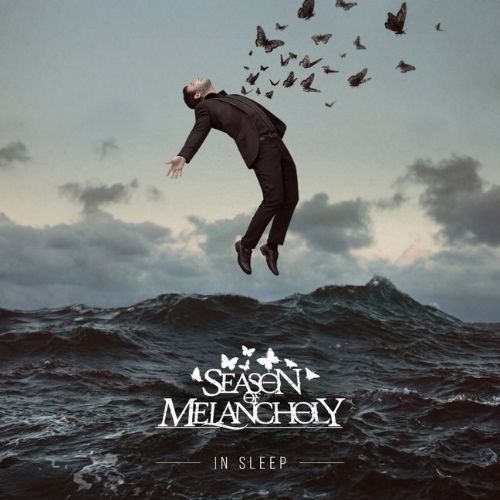
SEASON OF MELANCHOLY - In Sleep
Dark romance, dance and metal collide.
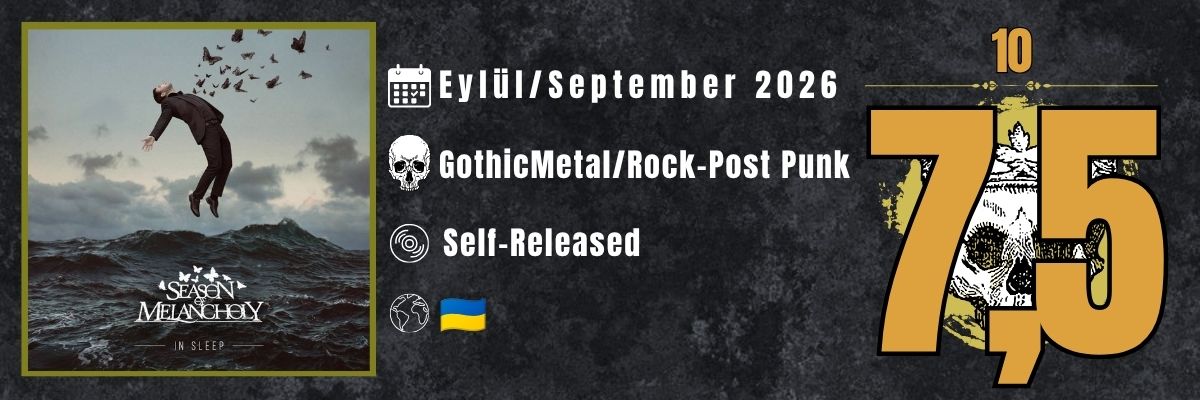
Ukraine’s recent years, marked by war, the pandemic, and periods of relative stability, do not merely serve as background to SEASON OF MELANCHOLY’s second album, "In Sleep". Spanning twelve tracks shaped between 2018 and 2024, the record brings compositions written at very different points in time into a cohesive album while moving the band’s romantic darkness into a more energetic and accessible musical framework. The album’s completion was also delayed by Russia’s full-scale invasion, which began in February 2022; the recording process continued amid air raids, sirens, and prolonged power outages. These circumstances do not explain every element of the music, but they provide important context for understanding why the different moods within "In Sleep" feel so distinctly separated from one another.
SEASON OF MELANCHOLY’s central approach here is to place the more kinetic side of gothic rock and post-punk alongside the dark emotionality of romantic metal. The weight of downtuned guitars, bright synth textures, and danceable rhythms coexist within the same structures without cancelling each other out. The baritone at the heart of the vocals, in particular, preserves the band’s melodic and theatrical side even when the music turns heavier. 'Inmate' is one of the clearest examples of this approach: a lively, instantly memorable track that combines a strong rhythmic drive with the metallic weight of its guitar tones and a pronounced sense of stage energy. The song’s live performance footage also shows that this material is not confined to a pop-goth formula that only works in the studio.
The guitars on the album are built more around rhythmic function than display. Instead of relying on virtuoso solos or constantly shifting riffs, the emphasis falls on chugs and prominent bass lines that use repetition to create a danceable momentum. For that reason, the role of the guitars on "In Sleep" cannot be reduced to simply generating metallic heft; they act as an anchor for the brightness of the synths and the smooth baritone at the center of the vocals. High-energy tracks such as 'Keep the Night', 'Way Out', and 'Down in Rage' reveal different sides of this formula, while the more mid-paced 'Farewell Song', 'Ghost', and 'Born in Lies' use synth passages to fill the gaps and bring the album’s dance-rock side further into focus.
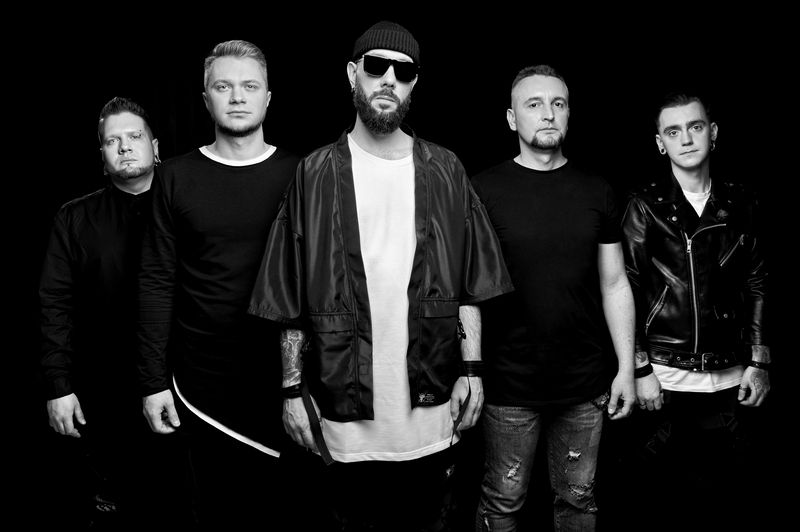
One of SEASON OF MELANCHOLY’s significant achievements here is that material emerging from such different periods never feels completely alien to the rest of the record. The total running time of just over 43 minutes also works in the album’s favor; it never overstays its welcome, and most of the songs reveal their central ideas quickly enough. At the same time, that cohesion can become a limiting factor. The reliance on recurring sections and a familiar, chorus-driven structure makes the material immediately accessible on first listen, but narrows its room for discovery over repeated plays. The fact that the guitar and rhythmic layers often serve similar functions across different tracks further reduces the distance between the songs in the middle of the album.
This does not make "In Sleep" a weak album, but it does suggest that the band is not making full use of its melodic potential. As several tracks demonstrate, SEASON OF MELANCHOLY is capable of creating more distinctive details even within simple, memorable structures. The problem is that these ideas are not diversified enough. Greater riff variation, bolder song structures, or more pronounced instrumental passages could have significantly increased the album’s long-term impact. As it stands, the band mostly follows a safe route; it brings together different traditions within the genre, but does not always turn the tension between those traditions into a creative advantage.
The album’s sole Ukrainian-language track, 'T.Y.CH.I.YA.', is particularly noteworthy in this regard. The shift in language does more than create a superficial difference; it adds another emotional layer to the band’s romantic and dark aesthetic. Considering that most of the source material is in English, a broader use of Ukrainian could have strengthened the album’s identity. 'Probach...' also contributes to the attempt to bring material from different periods together within a single narrative, while the closing 'In Sleep' brings the title concept back to the center. The idea of leaving this world in one’s sleep may have initially emerged as a romantic image, but given the historical circumstances in which the album was completed, it takes on a more unsettling meaning. Personal romanticism and the era’s sense of death and uncertainty meet at the same point, almost inadvertently.
On the production side, the album opts for a modern and notably clean approach. A bass-heavy, balanced mix carries the guitars’ aggression without allowing them to compete with the vocals and synth layers. The trade-off is that the dynamic range can occasionally feel overly compressed. The album has a loud, polished character; while this choice supports the music’s accessibility, it also smooths away some of the rawness that gothic rock and post-punk can sometimes require. Even so, the instrumentation remains controlled enough that the mix never becomes completely suffocating. The production language SEASON OF MELANCHOLY has chosen here is musically consistent with the band’s desire to reach a younger and broader audience.
The more interesting point is that this accessibility does not completely erase the album’s metal identity. "In Sleep" does not constantly try to become heavier in order to win over listeners of harder music; instead, it keeps metallic guitar tones within the same compositions as post-punk rhythms, synths, and romantic vocal melodies. Rather than placing SEASON OF MELANCHOLY squarely within gothic rock or traditional heavy metal, this approach leaves the band somewhere between the two. At certain points, however, the shadows of references such as HIM, AFI, Dead or Alive, and Unto Others become too apparent. The band clearly understands the common ground between these influences, but does not yet appear to have transformed that material into a compositional language entirely its own.
Even so, the value of "In Sleep" cannot be reduced to the way it moves between genres. Bringing together songs written in different years and under different circumstances, then reworking them into a single album over a period stretching from the relative stability before the pandemic through uncertainty and into the reality of war, helps explain the record’s emotional diversity. Not all of these contrasts are radical from a compositional standpoint, but they are perceptible in the album’s moods. Rhythms that approach exuberance and melancholic melodies, romantic lyricism and the unease of the modern world all exist within the same framework.
"In Sleep" is therefore an intriguing snapshot of SEASON OF MELANCHOLY’s search for a more mature identity. The band is moving toward a livelier, more melodic, and more accessible sound without abandoning its dark atmosphere, yet it occasionally remains too safe and predictable in the process. The album’s greatest strength lies in the natural way it combines a romantic gothic/post-punk aesthetic with the weight of metal; its clearest weakness is that it does not push the compositional possibilities created by that combination far enough. Ultimately, "In Sleep" matters not only as a record completed in the shadow of war, but also as a document of SEASON OF MELANCHOLY’s attempt to carry its own darkness onto a broader stage. A definitive victory of identity is still difficult to claim, but the band clearly has room to cross the line between accessibility and originality with greater confidence.

https://www.instagram.com/season_of_melancholy_official/
https://www.facebook.com/seasonofmelancholy/
https://seasonofmelancholy.bandcamp.com/music
https://www.youtube.com/c/SeasonOfMelancholy