
ALBUM REVIEW
SLEDEON - Sovereign
Dark electronics shape progressive metal.
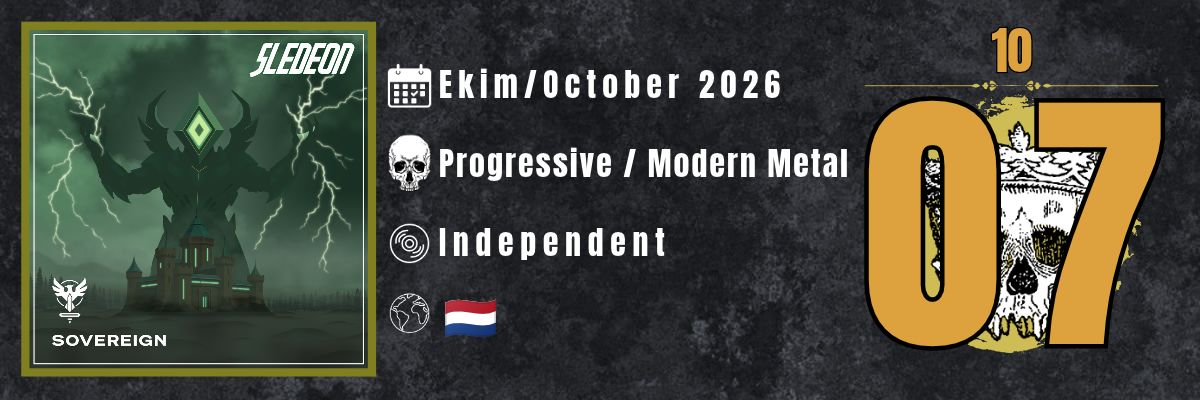
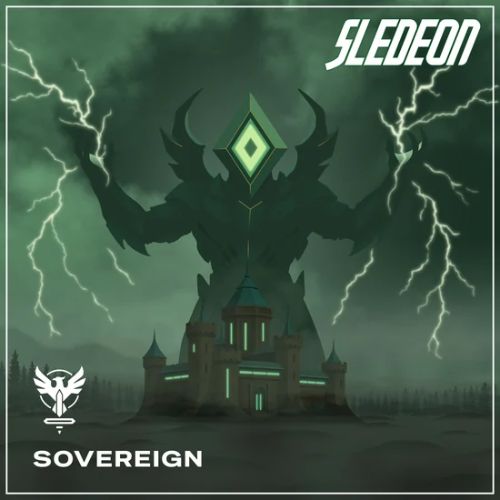
Dutch quartet SLEDEON follow up their 2024 full-length debut, "Futuroscope", with their second album, "Sovereign". Their take on modern progressive metal brings together symphonic layers, electronic textures, heavy guitar riffs and female vocals. On the new record, these elements are accompanied by a darker atmosphere and a more dramatic approach to songwriting. The band also favours a musical direction that moves beyond traditional metal conventions, drawing on different styles and appealing to a broad range of listeners.
Following the symphonic opening, 'Propulsion of Sins (The Eternal Unveiling Pt. 1)' sets the album in motion and immediately reveals its willingness to move between genres. The orchestral character of symphonic metal takes a back seat, giving way to a stronger emphasis on modern and progressive metal. Sharp guitar riffs and expansive synth layers form the musical framework, while the rhythm section occasionally introduces a more traditional, straightforward approach with hints of power metal. Bringing these different elements together gives SLEDEON considerable room to explore, although the results are not always equally cohesive.

Fabienne Hurkens' vocal performance is one of the album's most defining aspects. She draws on a broad expressive range, moving between clean vocals, occasional spoken passages, choral arrangements and forceful growls. Mike van Keulen's vocal contributions further enhance this variety. The music's dramatic impact becomes particularly apparent when different vocal styles interact. 'Phoenix (The End of the Realm)' is a notable example. The shift from clean vocal passages to growls during the breakdown brings the song's themes of collapse and rebirth directly into its musical structure. However, the vocal melodies are occasionally burdened with too many words, disrupting the natural flow of the music. In certain passages, the lyrics do not sit comfortably within the melodies, diminishing some of the impact Hurkens' expressive delivery could otherwise achieve.
This is also where the album's main songwriting weakness becomes apparent. SLEDEON are clearly eager to bring different musical ideas together. Their songs move constantly between electronic arrangements, symphonic textures, modern metal riffs and progressive transitions, offering an experience that refuses to remain confined within the boundaries of a single genre. Yet this diversity does not always translate into strong compositional cohesion. Particularly in sections where electronic elements are used extensively, these layers sometimes compete with the guitar and rhythmic arrangements rather than complementing them. There are also moments when transitions between genres sound more like ideas placed alongside one another than elements that develop naturally. As a result, some sections fail to deliver the refined outcome their underlying potential suggests.
By contrast, the passages where electronic elements recede and the guitars are given more room to breathe prove considerably more convincing. 'Golden House' is one of the album's standout tracks in this respect. Built around a social critique of monarchy and political power, the song expands its straightforward chorus with keyboard and guitar solos. The way the keyboard and guitar solos follow one another adds considerable dynamism to the arrangement. Here, musical ideas work together as parts of the same composition rather than competing for attention, demonstrating what SLEDEON can achieve with a more balanced approach to songwriting.
'Propulsion of Sins' offers a more direct combination of symphonic and modern metal elements through its choral arrangements and breakdown. Its narrative of the rise and fall of those in power is reinforced by the use of collective vocals. 'The Messenger', meanwhile, takes a different direction, placing greater emphasis on electronic and atmospheric layers while building its dramatic structure around the transitions between whispered vocals and a more forceful chorus. The change in vocal delivery during the second half also alters the impact of the threatening voice conveyed through the lyrics. Nevertheless, the frequent use of such dramatic shifts across the album occasionally diminishes their ability to surprise.
A similar diversity can be found in the lyrics. 'Silent Witness' tells the story of a survivor attempting to bring the horrors of genocide and destruction to the world's attention, while 'The Storyteller' revolves around past tragedies, collective memory and the possibility of a new beginning. 'Radiate' approaches death, existence and the idea of transcending time through more abstract imagery. 'Forget It All', with its focus on personal suffering, exhaustion and the need to be understood, takes a different path from the album's broader thematic concerns. Consequently, "Sovereign" covers a wide narrative territory, ranging from social and political issues to deeply personal conflicts. However, just as with its musical diversity, this thematic range does not always translate into an equally cohesive album identity.
Compared with 2024's "Futuroscope", the increased emphasis on atmosphere and darker tones in SLEDEON's latest release is evident. The synths, in particular, move beyond their role as mere background accompaniment and become an integral part of the music's identity. Influences ranging from classical and electronic music to the metal sounds of the 1990s and 2000s, alongside contemporary progressive metal arrangements, contribute to this expansive sonic palette. Comparisons with bands such as VOLA, AMARANTHE and LACUNA COIL help illustrate SLEDEON's tendency to combine different approaches to metal, although the extent to which the band manages to transform these influences into a distinctive identity of its own remains open to question.
The most significant shortcoming of "Sovereign" is not a lack of ideas, but a certain indecision when it comes to bringing them together under a unified musical identity. SLEDEON have more than enough material at their disposal to combine progressive arrangements, electronic and symphonic textures, varied vocal techniques and heavy guitar passages. Tracks such as 'Golden House' demonstrate how much more effective the results could be with a more selective approach to arrangement. Elsewhere, however, the transitions between genres and the density of the vocal melodies undermine the natural flow of the compositions. Ultimately, "Sovereign" is an occasionally impressive but not yet fully mature record that reflects the ongoing development of a band with the potential to establish itself within the modern progressive metal scene. Rather than adding further musical layers, SLEDEON's next step should be to put their already extensive range of ideas through a more focused and decisive songwriting process.
