ALBUM REVIEW
TÅRFÖDD - En Känsla Av Hopplöshet
Dark, melodic, aggressive, and depressive black metal.
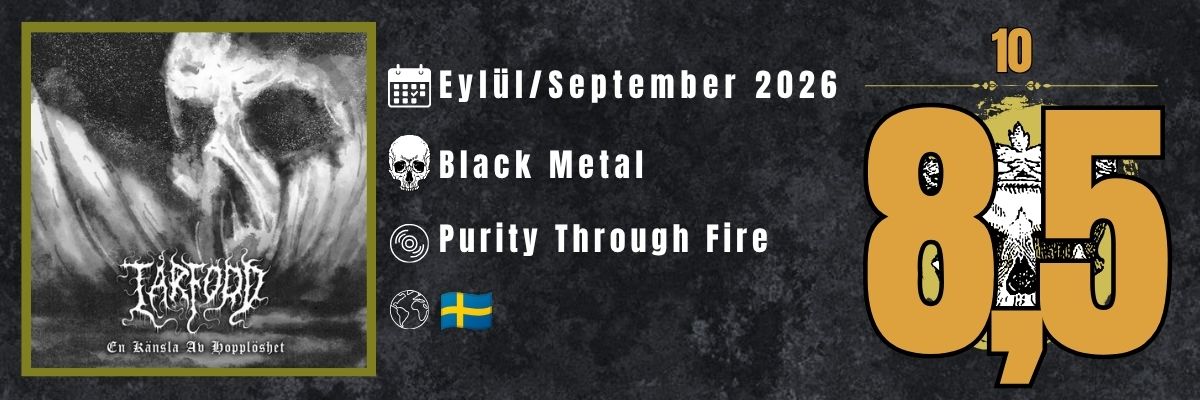
TÅRFÖDD’s seventh full-length album, "En Känsla Av Hopplöshet", is yet another release that, in my view, proves why the Swedish approach to black metal remains a step ahead of that of the other Nordic countries. Taking a quick look at the album in our usual critical fashion, it becomes clear that its pervasive atmosphere of intense darkness is not merely built around the aggressive riff assault we have come to associate with second-wave black metal, but is instead rooted in the contrasts established between the guitars. Simon Lindgren builds the album’s strong backbone by bringing together, with equal conviction, the bare and melodic lines of the acoustic guitar on one hand and layers of black metal built from tremolo picking, blast beats, and high-pitched screams on the other, all within the same compositions. As a result, these two extremes never come across as disconnected sections that clash with one another. Lindgren’s approach to arrangement allows the acoustic guitar to function not merely as a moment of calm before an aggressive passage, but also as part of the album’s harsher texture, giving expression to TÅRFÖDD’s distinctive depressive black metal language.
From this perspective, "En Känsla Av Hopplöshet" occupies a distinct position between "Mörker täcker livets ljus", released at the beginning of the year, and "Skyfall", which arrived at the start of the summer. While the new album carries over various ideas from the rawer and more stripped-back soundscape of "Skyfall", it builds a faster and more aggressive rhythmic structure on top of them. Yet that aggression is not used to crush the familiar melodic melancholy of DSBM. The blast beats and dense tremolo guitars function as tools for heightening the tension carried by the melodic material. Consequently, the compositional language does not change when the pace accelerates; the same dark melodic core is simply transferred into a harsher rhythmic framework.
The guitars are the album’s true defining element. The acoustic passages that enter both at the opening and throughout the later sections are not separated from the wall of distorted electric guitars merely to create contrast. Particularly in the layered arrangements, the acoustic guitar ceases to be a decorative color added on top of the black metal guitars and instead becomes one of the tonal and textural components of the arrangement. This approach sets TÅRFÖDD apart from contemporary examples of DSBM that rely solely on a slowed-down, lo-fi, and monotonous aesthetic of depression. Lindgren’s ability to alter the density of the sound while preserving the melody ties the album’s dynamics directly to its riff writing.
On the electric guitar side, tremolo picking and melodic leads clearly retain the genre’s fundamental vocabulary. However, the emphasis placed on melody prevents the material from being confined to the category of merely "raw black metal". The melodic character of the solo and lead sections allows the guitars to establish a narrative layer independent of their rhythmic aggression. For this reason, the album’s faster passages are not simply moments when the drum tempo increases; they function as compositional peaks where melodic intensity rises as well.
The rhythm section carries this approach. Simon Lindgren’s programmed drums determine the physical tempo of the songs, particularly in sections driven by blast beats, while the transitions created through slower and mid-tempo passages prevent the album from becoming locked into a single rhythmic axis. The mechanical feel that can naturally arise from programmed drums does not dominate the music as a whole here, thanks to the constantly shifting intensity of the guitars. Even so, the drums’ primary role is to provide structural momentum rather than character. The album’s identity is shaped by the guitar arrangements far more than by the drum performance.
The vocal approach is also part of this distinction. Simon Lindgren’s high-pitched black metal screams create a deliberate contrast with the melodic side of the music. The introduction of clean vocals on some tracks and the use of growls in one section broaden the vocal palette without altering the album’s fundamental aesthetic axis. Rather than creating a different vocal identity, these elements remain tools for reinforcing the contrast in specific sections. The real continuity lies in the tension created between the screams and the melodic structure of the guitars.
The production is also an important part of the relationship established with "Skyfall". "En Känsla Av Hopplöshet" is not as raw as the previous mini-album, yet neither does it move toward the clean, bright, and sterile production of contemporary metal. Its dark and distinctly harsh sonic character, particularly in sections where the distorted guitars and vocals come to the fore, preserves DSBM’s grimy aesthetic heritage. This choice is important because, while the album’s high-tempo sections are structured well enough to accommodate a more modern and aggressive mixing approach, the production does not over-polish them to the point of stripping away the album’s fragile side.
The album’s seven-track structure also demonstrates Lindgren’s ability to bring short-form and long-form ideas together under the same roof. The way sections beginning with acoustic guitar transition into denser black metal passages does not completely reject the traditional "calm → explosion" formula, but approaches it through a more controlled logic of transition. This approach, particularly pronounced on "Skyfall", is combined here with higher speeds. As a result, the album uses the contrast between silence and intensity not merely for dramatic effect, but to construct the internal architecture of its songs.
At this point, TÅRFÖDD’s position within DSBM also becomes clearer. Lindgren’s music does not abandon the genre’s depressive and melodic foundation, but neither does it accept defining it solely through a low-tempo, atmospheric, and lo-fi aesthetic. By bringing black metal’s tremolo guitars and blast beats further to the forefront, the material occasionally approaches the boundaries of atmospheric black metal and blackgaze, while the acoustic guitar’s recurring presence demonstrates that a different compositional approach lies at the center of the music. The experimental aspect here lies less in creating a new genre synthesis than in altering the hierarchy established between the existing tools of DSBM.
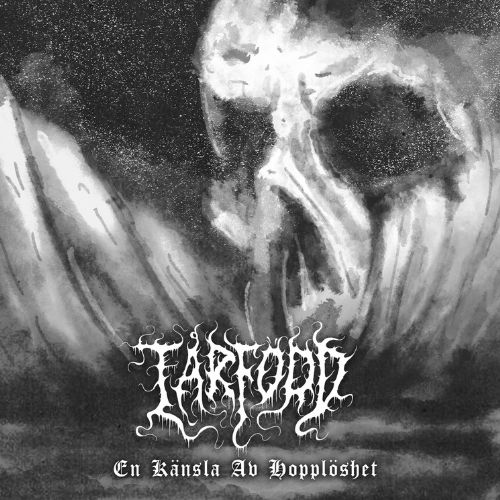
The visual identity created by Vindur for the album artwork, when considered alongside this musical direction, provides a framework that supports the grey and seasonal aesthetic of TÅRFÖDD’s recent work. Yet the album’s true visual character emerges not from the cover, but from the acoustic-electric contrast within the music itself. Lindgren’s placement of dry, bare guitar tones alongside dense distortion and programmed blast beats is far more decisive in producing the musical equivalent of the visual atmosphere.
For this reason, "En Känsla Av Hopplöshet" is not an album that seeks to break away from TÅRFÖDD’s previous work. Rather, it preserves the sense of rawness and bareness that became more pronounced on "Skyfall" while carrying it into a faster, denser, and more expansive black metal arrangement. The important difference lies not in the number of new elements, but in their functions. The acoustic guitar genuinely becomes part of the arrangement; blast beats are used not merely as a genre requirement but as a mechanism for increasing melodic intensity; and the diversity of the vocals does not disrupt the central aesthetic line.
Therefore, the album does not take TÅRFÖDD beyond the boundaries of DSBM in search of a new form of expression; instead, it creates a broader space for movement within those boundaries. The right way to approach "En Känsla Av Hopplöshet" is consequently to focus less on individual genre labels and more on how Lindgren connects these different interpretations to one another. Because the album’s defining quality is not that it amplifies its darkness with more distortion, but that it can hold acoustic openness, melodic guitar lines, high-tempo drums, and abrasive vocals within the same compositional system.
