ALBUM REVIEW
TERATUM - Ordnance of Spiritual Warfare
Old-school black/thrash, melodic and ferocious.
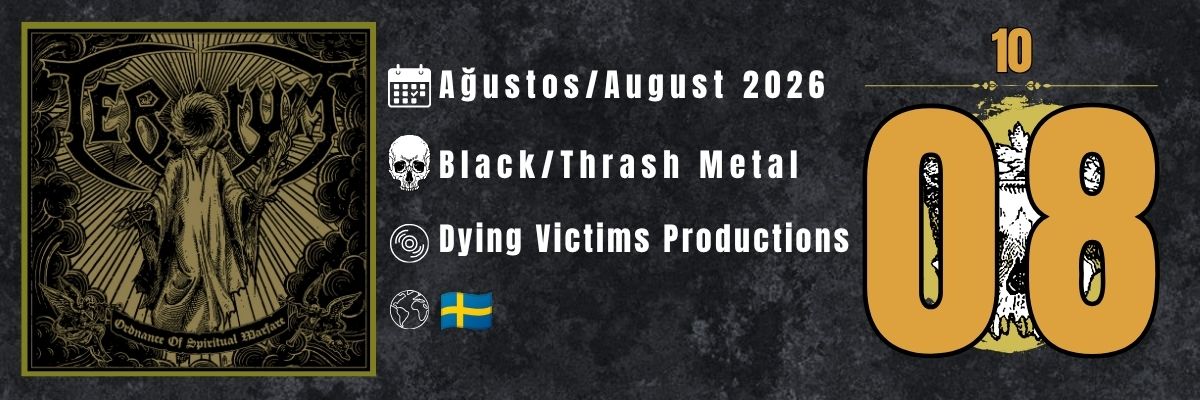
Drawing from the old-school strain of Swedish extreme metal, TERATUM combines the darkness of black metal with the high tempos of speed and thrash metal while establishing a guitar-centered language of its own. Born from the ashes of Beastiality, the group’s "Ordnance of Spiritual Warfare" EP reshapes the genre’s familiar aggression through denser melodic layers and shifting rhythmic structures. Spanning four tracks and 21 minutes, the recording offers the first serious indication of how TERATUM might rework the legacy of extreme metal’s past through a contemporary aesthetic without leaning on nostalgia.
The opening track, "Dead in the Marshes", presents this approach in its clearest form. As the song moves through dense tremolo chords interspersed with high-pitched, ringing tones, the lead guitar does not simply sit on top of the main riff as decoration; it creates a second melodic line. This choice brings the traditional cold, cutting tremolo logic of black metal into contact with more pronounced melodic phrasing inherited from classic heavy metal. The rhythmic foundation, meanwhile, remains consistently at high velocity. The drums’ transitions from hard-hitting passages into faster sections do not restrain the guitars’ melodic movement; instead, they give it additional momentum.
PWL’s bass work also avoids being completely swallowed by the density. The production, which favors the mid and upper frequencies rather than excessively boosting the low mids, keeps the bass audible. This is particularly important given the movement in the guitars’ upper frequencies, because instead of surrendering to the wall-of-guitars approach so common in extreme metal, the mix attempts to separate the rhythmic body from the movement of the bass. The result is a sound that is bright without becoming dry, with a clearly defined edge.
The growling, scream-heavy vocal approach contributed by DTH and PWL, on the other hand, is far less variable than the melodic guitars. This deliberate contrast is important: while the vocals keep the aggression of the songs fixed along a consistent axis, the guitars create a more mobile and detailed form of expression. On "Dead in the Marshes" in particular, this allows the vocals to function as a rhythmic anchor around which the guitars can move more freely. Much of TERATUM’s melodic character emerges from this contrast.
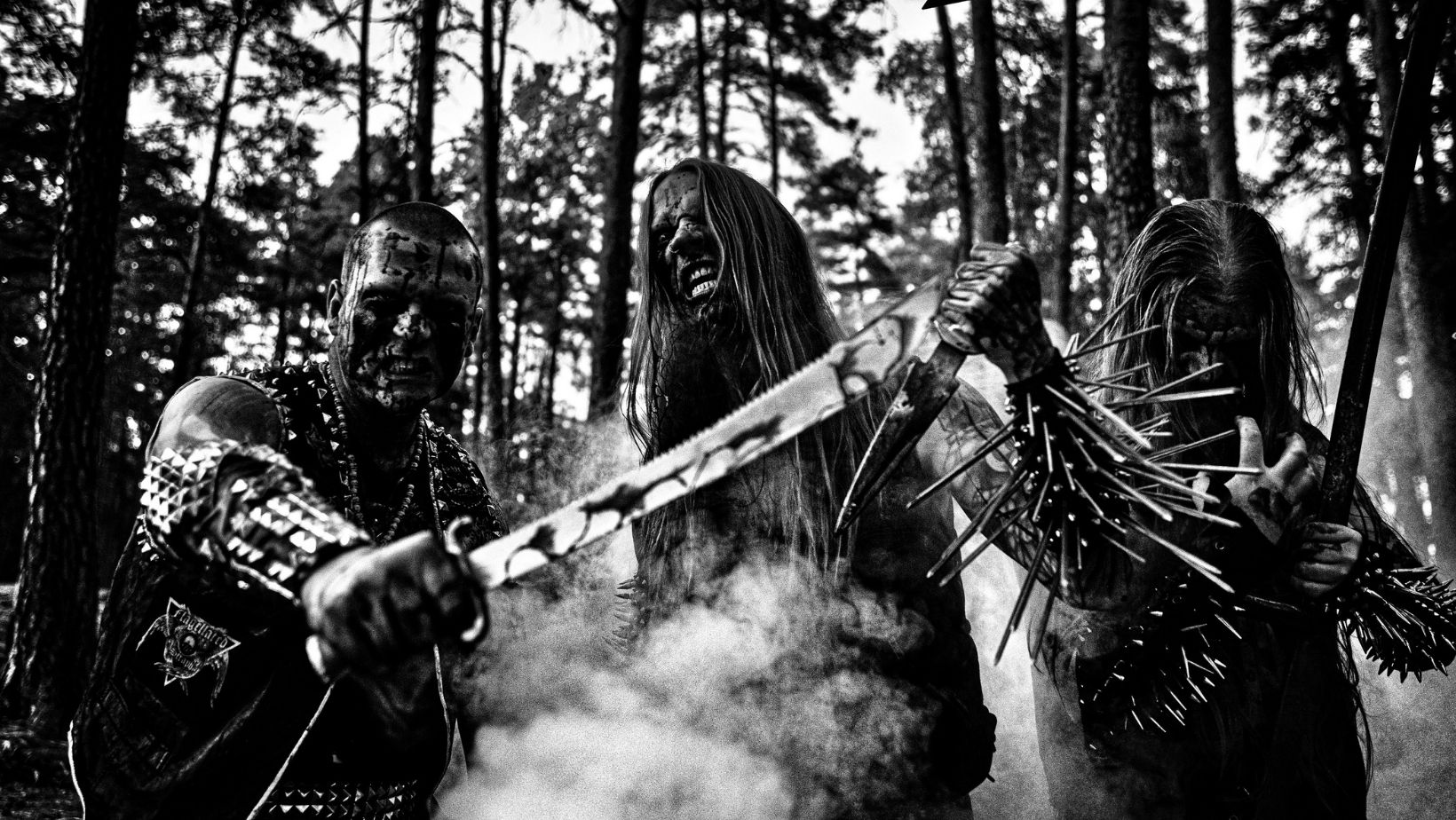
"Leviathan Rise" retains the same basic language while making the rhythmic arrangements somewhat more flexible. The way the blast-beat passages shift into different grooves demonstrates that the song is not dependent on a single level of speed. Even when the tempo drops, however, the tension is never completely released. In the middle section, a bright, vibrating lead guitar line comes forward, briefly pushing the rhythmic attack into the background. Here, the movement rooted in speed/thrash intersects with black metal’s more atmospheric and ominous approach to melody. The face paint, grimy appearance, and exaggerated costume details used in the song’s video aesthetic also fit these musical choices; however, the visual identity remains complementary rather than overshadowing the music, essentially staging the old-school extreme metal language the band has already established.
"Total Void", meanwhile, brings the EP’s darker side more directly to the forefront. The way the opening ominous melody is established alongside heavy beats is an important arrangement choice, demonstrating that TERATUM cannot be defined solely through speed. As the riff develops, the guitars grow denser, the drums hit with greater force, and the vocals create a collective sense of attack. Yet the song repeatedly returns to ringing and ominous melodic motifs. Rather than establishing a simple opposition between acceleration and atmosphere, the structure turns both elements into parts of the same riffing language.
At this point, it becomes clear why Dying Victims Productions does not position TERATUM merely within the old-school black/thrash category. While the speed/thrash sharpness associated with bands such as HEXECUTOR is clearly present, TERATUM’s approach to lead guitar and the heavier, moonlit melodies that emerge at times keep the music from becoming a purely nostalgic reproduction. The connections to names such as NIFELHEIM, DESASTER, ZEMIAL, Sweden’s MORBID, and POISON are also meaningful in this regard; however, rather than imitating these influences individually, TERATUM connects their different extremes within the same compositions.
The EP’s longest track, "Metropolis Of Death", provides the most extensive application of this method. At the outset, the rhythm section establishes a galloping, thrash-based momentum while the guitars continually change direction. The brief but distinct solos do less to showcase technical ability than to add a melodic peak to the existing velocity. More importantly, as the song progresses, the riff structure changes and the tempo drops, allowing a more mournful yet threatening melody to come forward. The motif is then accelerated and connected back to the high-tempo section. This transition is one of the EP’s most successful structural moves because the slowdown is not merely there to provide a breather; it establishes the musical rationale for the acceleration that follows.
The lyrics also support this musical framework. While "Dead in the Marshes" revolves around images of rotting bodies, poisonous fumes, and plague, "Leviathan Rise" constructs an apocalyptic language around death, war, and the reemergence of Leviathan. "Total Void" centers on the collapse of reality’s foundations and the dissolution of the body, while "Metropolis Of Death" presents a more direct vision in which death is portrayed as a final and almost redemptive force. Rather than creating an original literary world, these lyrics form a symbolic framework that supports the band’s musical aesthetic. Images of rotting bodies, hell, war, Leviathan, and apocalypse speak the same language as the atmosphere already established by the fast riffs, sharp guitar tones, and aggressive vocals.
The position of "Ordnance of Spiritual Warfare" in the wake of Beastiality is also significant here. The black/thrash heritage carried over from the previous band is clearly preserved, but TERATUM does not simply make it faster or harsher. The real change lies in the weight given to melody within the songwriting. The frequent use of lead guitars, and their brief assumption of the rhythmic center in certain sections, expands TERATUM’s black/thrash identity through the melodic language of older heavy and speed metal. They therefore do not need to step outside the genre to appear experimental; the change takes place in how the genre’s own tools are used.
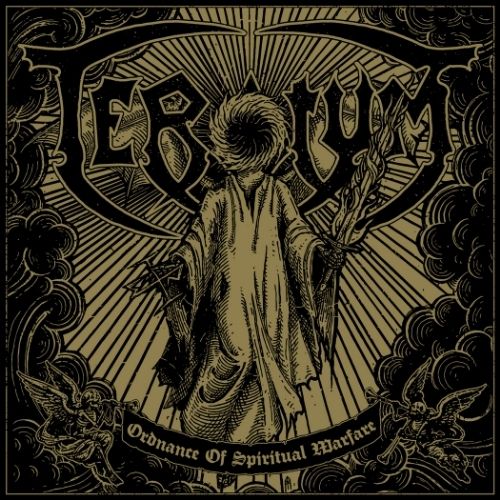
The cover artwork by Mørkestøl provides a visual counterpart to this approach. Its dark aesthetic, corresponding with the EP’s lyrical world of death, decay, and apocalypse, reinforces the music’s old-school character. The purpose of the visual identity here is not to break with the genre’s established iconography, but to complement the traditional yet aggressive direction TERATUM has adopted musically. As a result, the cover does not create a separate conceptual layer above the music so much as strengthen the album’s overall aesthetic coherence.
The 21-minute runtime is another factor shaping the EP’s impact. The sustained high energy across four tracks allows an approach that could easily become monotonous in a longer album format to work here in concentrated form. The songs are not completely uniform, thanks to their tempo changes, melodic breaks, and shifts in riffing; nevertheless, TERATUM deliberately preserves its fundamental attack mechanism. This short format works in favor of a musical identity the band is still developing.
"Ordnance of Spiritual Warfare" is therefore not simply a black/thrash release built around speed, distortion, and aggressive vocals. TERATUM’s real proposition is to rearrange the old-school grammar of these genres through a more pronounced melodic guitar language. They do not create a radical break with the genre; instead, they establish a functional balance between black metal’s dark atmosphere, the rhythmic momentum of thrash and speed metal, and the lead-guitar heritage of classic heavy metal. That is precisely where the EP becomes noteworthy: rather than claiming innovation through elements imported from outside, it creates its distinction by changing the weight its existing tools carry within the compositions.
Ultimately, "Ordnance of Spiritual Warfare" asks the listener not to follow an extended narrative, but to catch the melodic details and rhythmic transitions beneath its high-tempo surface. TERATUM’s position within contemporary extreme metal is shaped by this approach: they preserve nostalgic genre codes while connecting them to a more melodic, more mobile, and at times more atmospheric approach to songwriting. This four-track format reveals the areas the band is still exploring without overstating them; the decisive question going forward will be how much they can diversify this guitar-centered language across a full-length album.
