ALBUM REVIEW
TOMBAL – Grave of the Damned
Swedish Death Metal Revival
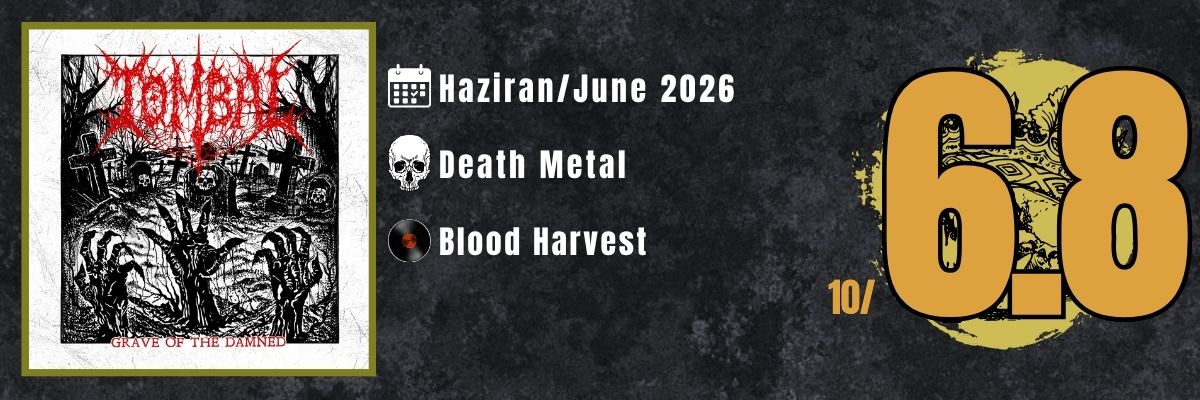
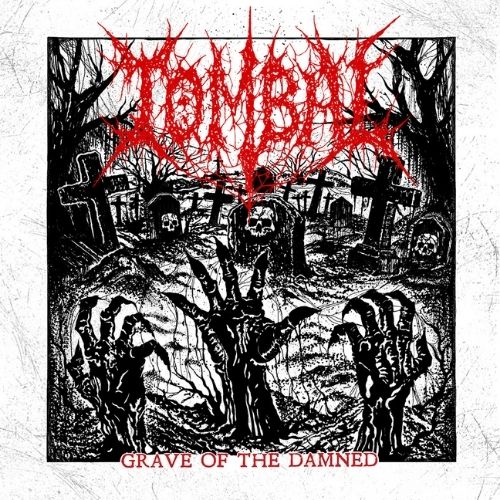
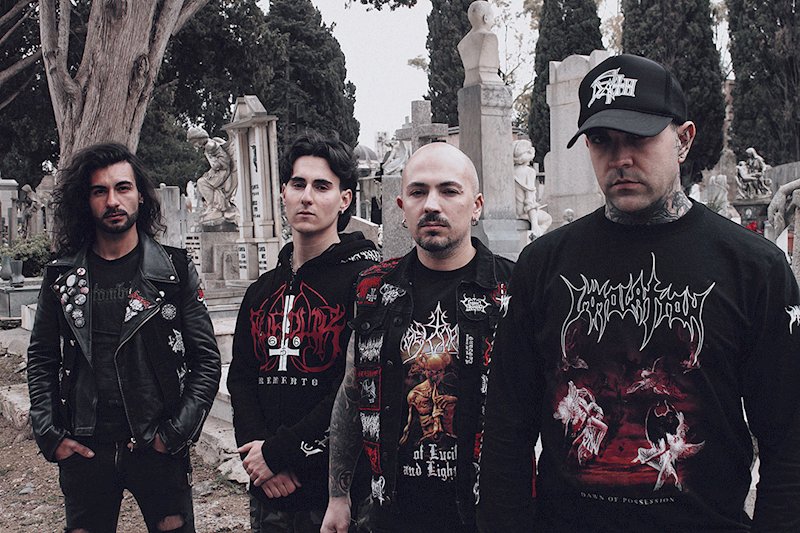
The Swedish death metal aesthetic rooted in the HM-2 pedal’s characteristic chainsaw tone forms the core reference point reworked on TOMBAL’s Grave of the Damned EP. Emerging from Italy in 2025, this quartet attempts to reconstruct the early ’90s Stockholm sound within a contemporary production framework while also pushing its compositional approach beyond mere nostalgia. However, the extent to which this claim translates into a distinct songwriting identity becomes more clearly legible through the EP’s riff architecture and arrangement choices.
TOMBAL’s first post-introduction release, the EP Grave of the Damned, leans into one of the most heavily exploited sub-strains of Swedish death metal: the HM-2’s signature sawblade tone, the thick guitar wall of the Sunlight Studios school, and the muddy aggression of the early ’90s. What makes the record more interesting, however, is that the band does not treat this aesthetic as a purely nostalgic costume. The approach across the EP is one of attempting to reproduce the sonic vocabulary of the past as directly and as controlled as possible, while still retaining its structural intent.
Following the brief opening “Cryptic Invocations,” the title track immediately lays bare the band’s compositional mindset. The riffs draw heavily from traditional Swedish death metal patterns—tremolo runs, galloping rhythms, and the dense midrange push of the HM-2 remain constantly at the forefront. Despite this, TOMBAL’s music cannot be reduced to a straightforward Dismember or Entombed imitation. The core energy of the songs at times leans toward a more direct form of death metal aggression, and particularly the use of blast beats shifts the material away from classic Stockholm punk-inflected hostility toward a slightly more brutal axis.
The EP’s greatest strength lies in its arrangement discipline. A significant portion of records in this stylistic lane rarely moves beyond reordering the same handful of riff ideas. TOMBAL, however, manages to keep its songs in constant motion. “Cemeterial Death Worship” stands as the clearest example of this. The melodic guitar layers are not dominant enough to reshape the song’s backbone, yet they generate a sense of direction within an otherwise forward-driven rhythmic framework. The harmonized solo section in particular demonstrates that the band is not solely committed to brute-force dynamics. Here, melody functions less as atmospheric coloration and more as a structural device that diversifies the composition.
The rhythm section’s contribution is another factor reinforcing the EP’s impact. The bass does not disappear beneath the guitars in the way it often does in many modern HM-2 derivatives; instead, it occasionally surfaces as a readable low-end layer that reinforces the weight of the riffs. The drums, on the other hand, avoid the sterilized precision of contemporary death metal production and instead retain an organic, physical character. Rather than triggered perfection, there is an attempt to preserve a genuine room-like presence. This choice strengthens the raw energy running through the record, though it also fails to fully conceal the lack of memorability in some of the riff material.
This is precisely where Grave of the Damned’s core limitation becomes apparent. While the aggression across the EP is highly convincing, the number of distinctly memorable riffs left behind once the songs end is lower than expected. TOMBAL successfully captures the sonic aesthetic and performance language of the genre, but it has not yet established an equally defined songwriting identity. Tracks like “Funebral Furnace” function effectively on energy alone, yet structurally they largely serve established genre mechanics.
For this reason, the closing “Cathedrals of Rot” becomes the EP’s most promising moment. Its mid-paced, darker passages and heavier riff structures demonstrate that the band is capable of operating beyond speed and density alone, and can also work through dynamic contrast. The increasingly weighted final section, in particular, creates a meaningful counterbalance to the EP’s otherwise constant forward assault.
The production approach aligns closely with the band’s aesthetic direction. In contrast to the increasingly clean, digital, and overly polished sound prevalent in modern death metal, TOMBAL opts for a dirtier, more breathing mix. This decision does not function merely as a nostalgic gesture; it actively reinforces the early ’90s references the music is built upon. The visual identity and track naming also remain firmly anchored in the classic death metal iconography shaped around graves, decay, and death culture. There is no radical reinterpretation here, but there is also no contradiction that extends beyond the musical world it constructs.
Grave of the Damned is not a record that expands the boundaries of Swedish death metal or adds new conceptual vocabulary to the genre. Its value lies in how effectively it reworks an already oversaturated formula through careful execution, appropriate tonal selection, and solid performance. At this stage, TOMBAL does not yet appear to have fully formed its own language; however, this short release suggests they may be more than just another HM-2 nostalgia project. If future full-length material develops more dynamic and character-driven ideas in the vein of “Cathedrals of Rot,” the band could establish a more distinct position within the crowded Swedeath landscape.
OZAN
facebook.com/profile.php?id=61587116306886
bloodharvest.se
facebook.com/bloodharvestrecords
bloodharvestrecords.bandcamp.com