ALBUM REVIEW
TSIRHIC - To Satan I Reply...
Revives the spirit of ’90s black metal.
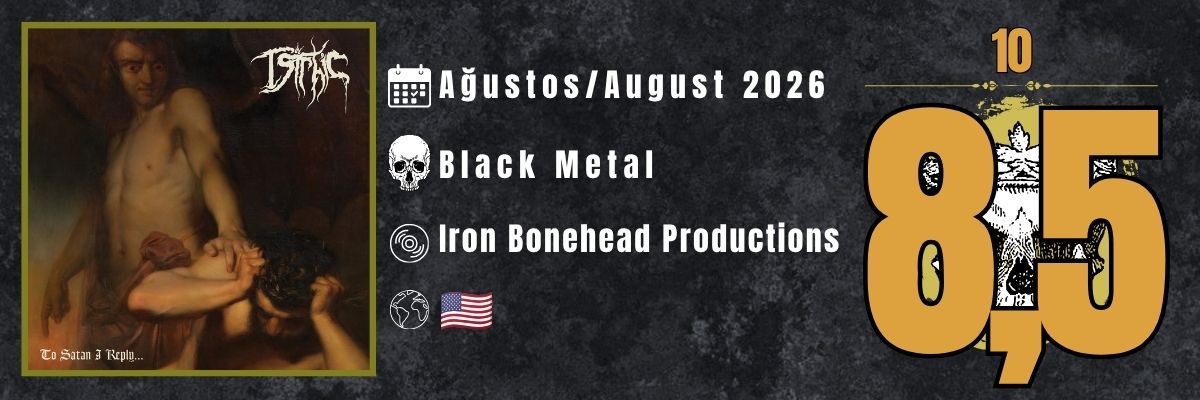
TSIRHIC’s debut mini-album, “To Satan I Reply...”, does more than reproduce black metal’s mid-to-late 1990s formula; it demonstrates through rhythm, riffing, and production why that formula can still work. Across roughly 25 minutes and five tracks, the guitars are built around tight tremolo lines and sharp melodic motifs, while blast-beat-driven passages are balanced by heavier, tension-focused transitions. The material is deliberately compressed, with riffs returning to established patterns, songs kept short and intense, and arrangements free of unnecessary layers. The album’s retro character therefore comes not merely from its tone, but directly from its compositional logic.
TSIRHIC’s guitar writing brings together two defining traits of mid-to-late ’90s underground black metal: tremolo riffs that create a constant sense of motion, and melodic lines that operate beneath the aggression. The riffs are not designed to be technically complex; their primary function is to maintain the tracks’ rhythmic momentum while creating a cold tonal space. At the same time, the melodies never completely surrender to a straightforward attack. Following the dark atmosphere of “Blessed Be”’s intro, the ensuing fast section gains a distinct melodic backbone from the guitars’ sharp tremolo movement. “H.I.P.C”, meanwhile, applies the same language more directly; the repetition of short motifs and the lo-fi recording character work as a natural part of its demo aesthetic.
What matters here is that TSIRHIC does not simply imitate an old black metal sound. “God Dethroned” is particularly important in this respect, as it shifts the album’s direction. The synth layers placed alongside the grainy guitar tones do more than merely decorate the music by making it more atmospheric; they alter the track’s sense of density. Rather than functioning as a decorative layer added on top of the riffs, the synths fill the spaces left by the guitars, creating a broader sonic field. As a result, the dry, enclosed character of the album’s opening stretch becomes denser and more layered here. Even so, TSIRHIC does not make this idea the compositional center of the entire album; the return to the basic black metal template on the subsequent tracks shows that the synths represent a controlled expansion rather than a permanent change in direction.
The rhythm section operates within the same limited but deliberate approach. The blast beats provide a constant propulsion that supports the guitars’ tremolo movement, particularly in the faster passages. The tracks, however, are not locked into high tempos throughout; in certain sections, the rhythmic density is reduced to bring the weight of the riffs to the foreground. This contrast prevents the roughly 25-minute runtime from following a single speed trajectory. Even so, the changes in arrangement tend to be controlled shifts in direction rather than major structural breaks. Abruptly cutting a motif or pulling the rhythm down into a heavier pulse creates tension without altering the fundamental character of the songs.
The vocals do not attempt to establish a separate dramatic character above this framework. The raw, grainy screams, with their pronounced high frequencies, directly evoke the vocal approach found on underground black metal recordings of the 1990s. The vocals’ position in the mix is equally important: they are not cleanly presented or pushed to the front in the manner common to modern black metal productions. Instead, they are buried within the raw texture created by the guitars and drums, sharing the same physical sense of recorded immediacy. As a result, the vocal performance becomes part of the album’s overall sonic aesthetic rather than turning into a separate showcase.
The real strength of the production lies in the fact that it does not confuse “raw” with uncontrolled murk. The recording has a distinctly lo-fi character; the rawness of the microphones, the grainy guitar texture, and the harshness of the drums are all preserved. Yet the instruments never completely collapse into one another. This distinction matters because some contemporary returns to 1990s black metal build their nostalgia primarily around poor sound quality, whereas TSIRHIC takes a more deliberate approach. The recording wants to sound like an old demo, but it is not so closed-off that the relationship between riffs and rhythm becomes obscured. The production therefore functions less as a recreation of a past aesthetic than as a reconfiguration of that aesthetic within contemporary recording conditions.
At this point, “To Satan I Reply...”’s position within the genre becomes clearer. The album’s debt to specific strains of 1990s underground black metal, such as Moonblood, JUDAS ISCARIOT, and OSCULUM INFAME, is obvious; traces of early GORGOROTH’s Hat and MÜTIILATION’s Meyhna’ch can also be heard in its vocal approach. Yet these references are not names simply added from the outside; they permeate the entire record, from its riff writing to its recording character. This is also where TSIRHIC’s distinction emerges: against contemporary black metal’s tendency to expand itself through technical showmanship, expansive production, and atmospheric layering, the project chooses to operate within a smaller compositional space.
That choice comes with a cost. The restraint that forms the album’s greatest strength also narrows its room for development in places. The recurrence of riffs at similar levels of intensity and the fact that most arrangements remain within the same aesthetic boundaries can diminish the impact of new ideas, particularly in the album’s second half. This is why the synth-supported expansion of “God Dethroned” draws greater attention; compared with the tracks around it, it is one of the few moves that genuinely enlarges the compositional space. “The Prophecy of Gog” and “Mockery of Solitude”, meanwhile, return to the album’s fundamental black metal backbone, demonstrating that this experimental opening does not develop into a lasting change of direction.
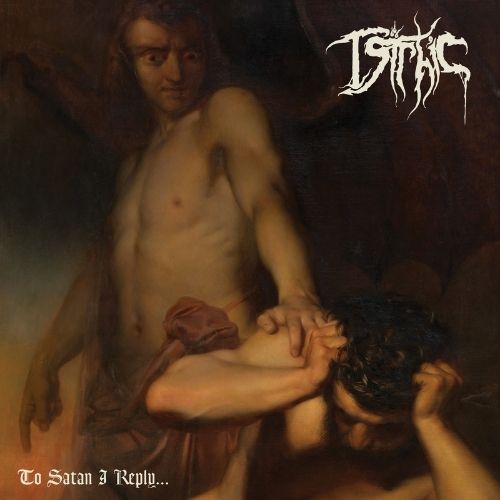
If the same consistency extends to the cover and overall visual identity, the album’s reference to old-school underground black metal aesthetics is not confined to its sound. The value of this approach lies in its refusal to polish its nostalgia. The album does not smooth out its old character in an attempt to modernize itself; instead, it consciously preserves the narrow riff structures, raw recording philosophy, and ritualistic atmosphere of that era. Yet the synths that emerge in moments such as “God Dethroned” also demonstrate that this aesthetic is not an entirely closed system.
“To Satan I Reply...” therefore occupies a more interesting position than a merely retrospective black metal release, while remaining distinct from an album that claims to be innovative. TSIRHIC’s real strength is not inventing a new language, but consciously employing the musical grammar of a specific era in detail and rebuilding it without excessively polishing it through the possibilities of contemporary production. Rather than demanding constant change from the listener, the album asks for attention to the repetition of its riffs, its subtle rhythmic shifts, and the details of its recording texture. It is effective to the extent that it operates within this narrow framework; when it pushes against those boundaries, it reveals the possibility of another TSIRHIC that has yet to be fully explored.

ironbonehead.de
ironboneheadproductions.bandcamp.com
facebook.com/ironboneheadproductions