
ALBUM REVIEW
VANDEN PLAS – AcCult II
Acoustic Reinvention Beyond Progressive Metal Conventions
One of the most consistent and distinctive acts to emerge from the German progressive metal scene, VANDEN PLAS have spent more than three decades forging an identity that balances technical sophistication with melodic storytelling. While the band's discography has largely been shaped by works that combine the theatrical and dramatic dimensions of progressive metal with strong songwriting, its interest in acoustic arrangements has remained a constant since the early stages of its career. Arriving thirty years after the original AcCult, AcCult II stands out not as a nostalgic repetition of that concept, but as an attempt to re-examine the band's own songwriting from a different perspective.
I still remember watching VANDEN PLAS at the Ankara Rock Station festival years ago. The band is still creating, and writing a few words about this album is every bit as enjoyable as seeing them live for the first time all those years ago.
When VANDEN PLAS released the first AcCult three decades ago, it demonstrated that a progressive metal band could approach its own repertoire from a different angle through acoustic arrangements. AcCult II goes beyond merely updating that idea; it reopens the band's songwriting philosophy to scrutiny by removing it from the framework of electric guitars and dense production layers that have shaped it over the years. The goal here is not to present "acoustic versions" of familiar songs, but to reconstruct them through a different structural logic.
The album's most striking achievement is how clearly it reveals that VANDEN PLAS defines its progressive metal identity not primarily through riff density, but through compositional architecture. If these songs remain compelling after the electric guitars have been pushed into the background, it is because their melodic foundations and dramatic developmental arcs were already strong to begin with. This becomes particularly evident on opener "Far Off Grace." While retaining the dynamic ascents of the original metal version, the song reshapes them within a more fragile sonic environment. The spacious interplay between Stephan Lill's guitar work and Alessandro Del Vecchio's piano becomes the driving force behind the piece's progression. Rather than increasing volume to generate intensity, VANDEN PLAS gradually brings its layers closer together.
A similar approach can be heard on "Holes In The Sky." As the hardness of the original version recedes, the melodic framework becomes more visible. This is also where the album's broader success reveals itself: the arrangements do not diminish the songs; they illuminate their structural details. The sense of listening to a "stripped-down version," a common pitfall of many acoustic projects by metal bands, never materializes here because the arrangements do not function as superficial filters applied to existing material.
Andy Kuntz's performance also sits at the heart of the album. While his vocal approach retains its dramatic character, it avoids slipping into theatrical excess. On lyrically driven pieces such as "The Ghost Xperiment" and "Postcard To God," Kuntz's qualities as a storyteller come to the forefront. This choice distances the material from the overly flamboyant forms of expression that progressive metal can occasionally fall into. As a result, the relationship between the lyrics and the music feels more direct and immediate.
The role of the rhythm section has also changed noticeably. The drums no longer act as a dominant force pushing the songs forward; instead, they serve a supporting role, shaping transitions and shifts in atmosphere. This approach allows the longer compositions, in particular, to breathe. A significant portion of the melancholic tone that permeates the album stems from this simplified rhythmic framework.
The piano, meanwhile, becomes almost a second lead character throughout the record. Rather than competing with the guitars, it fills harmonic spaces and defines the dramatic axis of the songs. This is especially apparent in the band's interpretation of "Nothing Else Matters." Given how many times the METALLICA classic has been covered and reimagined over the years, justifying yet another version is no easy task. VANDEN PLAS succeeds not by trying to make the song bigger, but by shifting its center of gravity. The piano-driven arrangement and Kuntz's restrained delivery pull the song into the band's own aesthetic universe. It remains instantly recognizable, yet no longer sounds like a cover alone.
Likewise, the band's take on STYX's "Boat On The River" never feels out of place within the album's overall flow. Deliberately avoiding technical showmanship, the performance functions as a reflective pause that complements the record's more introspective character. Neither cover feels like unnecessary padding alongside the VANDEN PLAS compositions that form the album's backbone, although it remains fair to say that the record's strongest moments emerge from the band's own material.
The album's most intriguing textural addition arrives in the closing track, "You Fly." Former SUPERTRAMP member John Helliwell's saxophone contribution may initially seem like a guest appearance intended simply to add color. However, the arrangement places the instrument at the center of the song's sense of expansion during its final section. While the saxophone is far from a radical element that transforms progressive metal conventions, it functions as an effective tool that reinforces the song's dramatic point of release. As such, its contribution extends well beyond mere ornamentation.
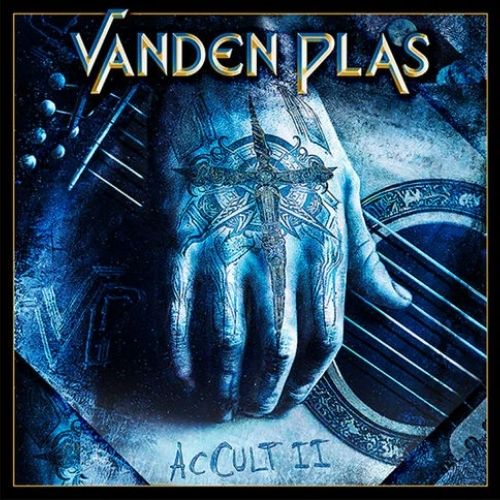
The album's visual presentation also complements its musical approach. The cover artwork by Stan W. Decker, unlike the more modest presentation of the original AcCult era, suggests that VANDEN PLAS views this project not as a nostalgic side venture, but as a contemporary addition to its catalogue. There is a clear alignment between the maturity of the visual language and the music's controlled melancholy.
AcCult II occupies a different space from the "unplugged album" concept that has become increasingly common in recent years. Its purpose is not to simplify these songs in pursuit of nostalgia, but to reveal the elements upon which VANDEN PLAS's compositions are actually built. This approach does not revolutionize progressive metal or redraw the genre's boundaries. What it does accomplish, however, is to demonstrate convincingly that the melodic and dramatic structures defining the band's identity are not dependent on the power of metal production. For that reason, AcCult II deserves recognition as a measured yet meaningful creative statement from a veteran band revisiting and reinterpreting its own repertoire.
OZAN