ALBUM REVIEW
WATCHER - Mistress of Our Time
Melodic reconstruction of Swedish heavy metal.
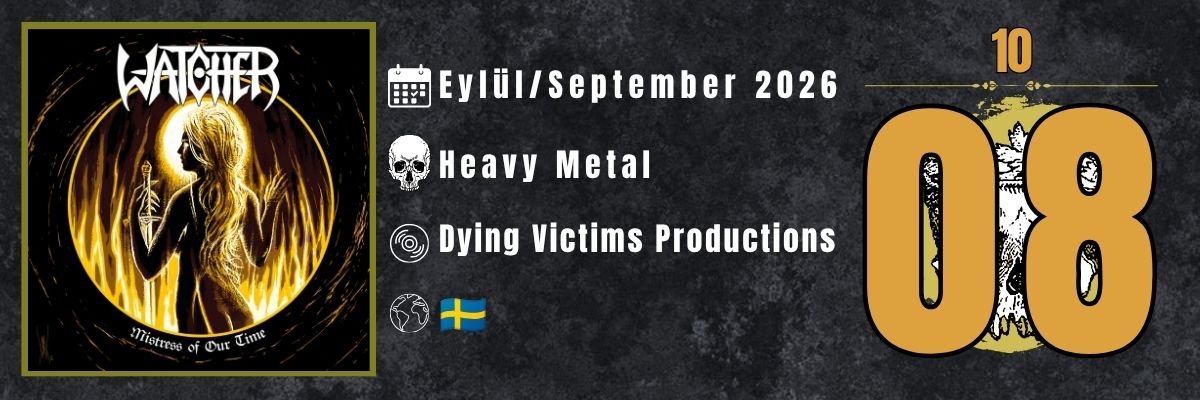
The second full-length album from Sweden's WATCHER, "Mistress of Our Time", will be released on September 25. It was a great pleasure to hear it ahead of time, so let's take a closer look at the album together. While the riffs often sharpen to the point of approaching thrash metal's racing instincts, the real strength of these songs lies not in constantly pushing the tempo higher, but in alternating rhythmic weight with melodic momentum. This shows that the band's compositional foundation is not built around an obsession with speed, but around embedding melodies in the listener's mind. Big chords, twin-guitar harmonies, pronounced drum hits, and vocal melodies establish an approach that, from the very first seconds, does more than simply reference the aesthetics of 1980s heavy metal: it attempts to reconstruct its compositional language directly. What pleased me most while listening to the album, however, is that WATCHER's chosen path is not a simple repetition of nostalgia. Quite the opposite: "Mistress of Our Time" reshapes the raw energy of early Swedish heavy metal through a cleaner, broader, and more controlled production approach.
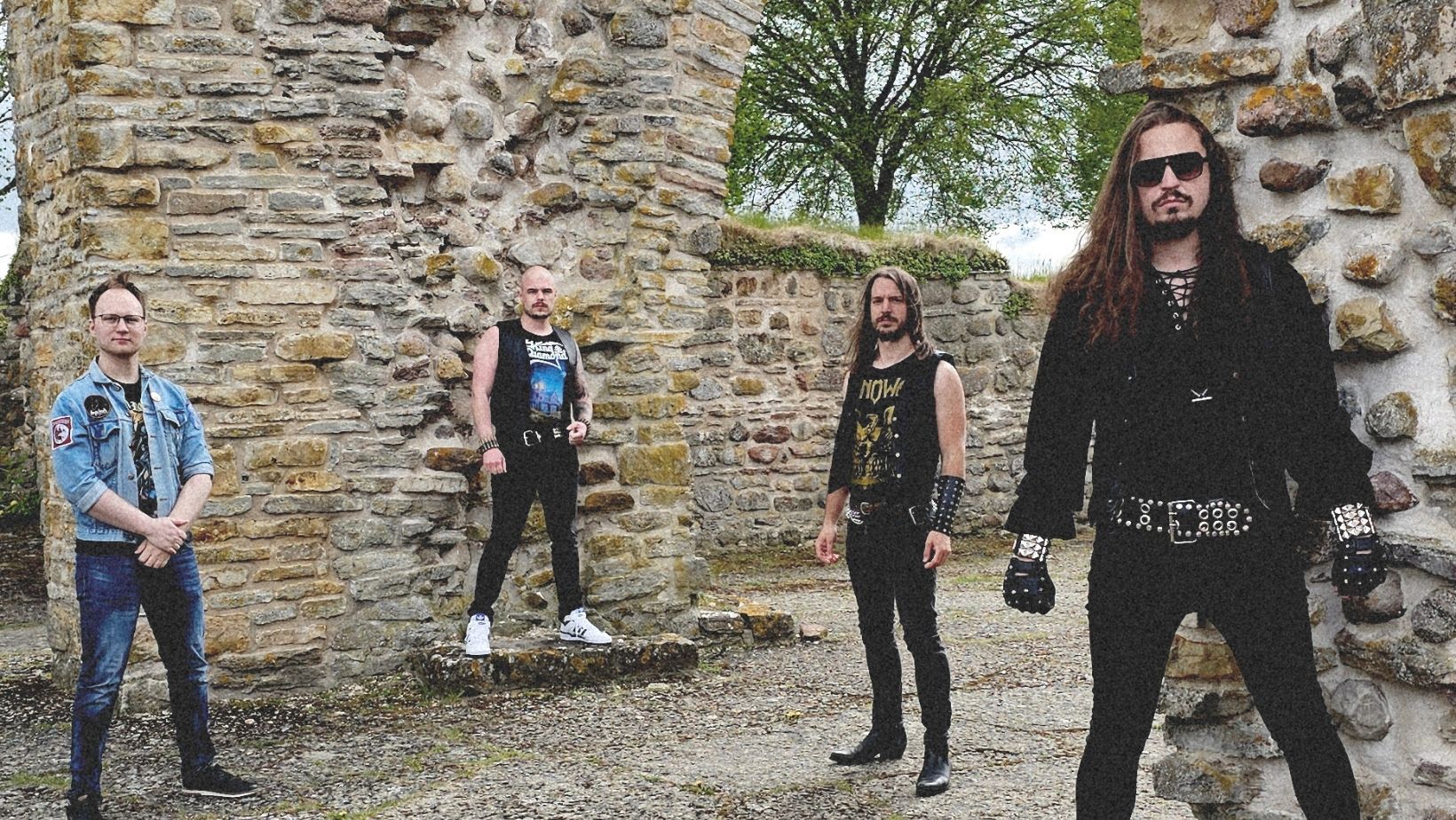
" Sorceress" is an illuminating opener in this respect. The ringing cymbal hits, group vocals, and forward-driving rhythm guitars that follow the big, open chords give the song one of those ceremonial entrances associated with classic heavy metal. Yet the song's real character comes from the harmonic structure created by the two guitars. Max Warnby and Timmy Lindgren's guitars are not merely used to thicken the same riff; their melodic lines and solo sections create a second layer that determines the song's dramatic movement. Viktor Gustafsson's vocals do not feel like something added from outside this structure, either. The vocal melody moves along the same axis as the rhythmic energy carried by the riffs, allowing the choruses to come naturally to the forefront.
This melodic approach remains consistent throughout the album. "Utvalda Svärdets Natt" combines fast picking and twin-guitar harmonies with tempo changes, demonstrating why WATCHER cannot be adequately described simply as "old-school heavy metal." The basic ingredients are unmistakably traditional: a galloping feel, high-energy rhythms, twin guitars, solo sections, and instantly memorable choruses. Yet there is a more deliberate sense of arrangement in the way the songs unfold. Transitions from faster passages into heavier sections continually recalibrate the music's energy rather than keeping it at a single level. The rhythmic backbone created by Max Warnby and Jakob Nilsson carries these transitions, while the guitars' melodic layers determine the direction of the songs.
One of the key distinctions in WATCHER's approach to the traditional heavy metal legacy is the way the band uses melody not as decoration, but as a structural tool. "Out of Your Sight" is a more direct example. Rather than opening with an acoustic or atmospheric passage, crying guitar lines and broad rhythms create a more melodic space in the song's opening section; then kick-and-snare-driven drums and harder guitars enter, quickly closing that space down. The bass guitar's weight, sitting somewhat further back in the mix but remaining consistently perceptible, supports the guitars' movement in the upper frequencies from below. The solo section, meanwhile, is not simply inserted to add virtuosity; it redistributes the intensity created by the main riff through a different melodic line.
This is where the production becomes particularly important. The sonic world of "Mistress of Our Time" does not attempt to imitate the rough, low-budget character of early Swedish heavy metal. Instead, it uses a broad stereo field in which the individual instruments remain distinguishable. The guitars have enough body without getting in the way of the drums and vocals. The stereo movement in the solo sections is also part of this approach. The guitar solo in "Down from the Skies Divine" moving from one channel to the other introduces a modern mixing touch into a traditional heavy metal arrangement. Details like these do not pull the album away from its retro aesthetic; on the contrary, they present the compositional language of the past through contemporary recording standards.
"Down from the Skies Divine" also demonstrates how directly WATCHER works when creating atmosphere. Beginning with acoustic guitar, the sound of waves, and reverberant vocals, the song leaves room instead of immediately launching into a heavy riff attack. The rhythm guitars and drums then enter and shift the song's center of gravity, before it returns to the atmosphere established at the beginning. This slow-fast-slow movement is also an important part of the album's overall arrangement logic. WATCHER rarely commits to a single tempo or a single level of riff density. As a result, the band builds its claim to being "epic" not merely through extended solos, but through contrast.
The lyrical world is no less connected to this musical structure. "Mistress of Our Time" draws extensively from heavy metal's fantastical and mythological repertoire, moving from a sorceress walking beneath city lights to Viking gods, from an interstellar disaster scenario to cursed rituals. What matters here is that the lyrics make no claim to realism. The pagan priestess and ancient bloodline imagery of "Sorceress", the star-oriented ritual and ancient evil of "Cult of Andromeda", and the Norse mythology built around Odin, Heimdall, and Thor in "The Raven" function as different parts of the same aesthetic world.
"2084", meanwhile, introduces a distinct science-fiction layer into this world. Rubble scanned by lasers, people hiding in subway tunnels, drones in the sky, and mysterious beings show that the album is not limited to swords and sorceresses. Musically, despite opening up a different thematic territory, the song does not abandon WATCHER's core formula. Rather than supporting its dystopian narrative with electronic or industrial textures, rumbling toms and bright guitar harmonies carry it directly within the language of heavy metal. This choice is significant: instead of leaving the genre to alter the atmosphere, the band trusts the narrative capacity of the genre's own tools.
On "Chalice of Light", meanwhile, thrash-influenced drumming is embedded within a more traditional heavy metal form. The structure begins with arpeggios before quickly developing into denser rhythms. Jakob Nilsson's drumming determines the song's sense of speed here, while the guitars retain their melodic hooks. The song's lyrical world of horror, paranoia, and death also fits the musical structure; particularly, the recurring chorus and guitar melodies reinforce the direct and theatrical character of the narrative. Although WATCHER's songwriting occasionally approaches cliché, those expressions deliberately overlap with the music's generic framework. The band does not opt for the ironic or detached approach found in some modern heavy metal; it embraces its own fantastical language with complete seriousness.
The difference between "2084" and "Cult of Andromeda" is noteworthy in this respect. The former leans into dystopian science fiction, while the latter draws on a cosmic and occult narrative. Despite this, both songs are tied to the same musical backbone through fast rhythms, heavy mid-tempo sections, and melodic guitar lines. "Cult of Andromeda" is particularly effective in moving from its high-speed opening into a heavier, more mid-tempo section, bringing out the darker character carried by the guitars. The melodic phrases that emerge at the ends of sections do not soften the riffs' heaviness; instead, they make the weight of the song more pronounced.
The album's darker side emerges with "Glömskans Sjö". The opening, built from acoustic guitars and a calmer vocal line, gradually intensifies through double-kick patterns and heavier guitars. The song's Swedish lyrics also demonstrate that "Mistress of Our Time" is not linguistically uniform. In contrast to the direct, slogan-like delivery of the English-language songs, the phonetic character of the lyrics here merges with the music's colder nature. Lindgren and Warnby's alternating solo sections further expand the melodic space in the second half of the track. Here, the slower pace is not used merely to reduce the tempo, but to interrupt the album's otherwise constant forward motion.
"Chosen by Fate" is the reverse side of that contrast. Its heroic opening quickly develops into a rhythmic intensity approaching thrash. Yet WATCHER is not trying to establish superiority through speed here. The song's velocity serves the martial and anthemic character of classic heavy metal more than the technical competitive mindset of thrash metal. For that reason, the album's energy remains closer to the galloping, riff-centered approach of earlier heavy metal than to the speed-driven transformation of the latter half of the 1980s. This is precisely where the connection to early Swedish examples such as Heavy Load, Gotham City, Axewitch, and Torch, as identified by Dying Victims Productions, becomes meaningful; WATCHER approaches this legacy not merely as a sonic texture, but as the fundamental logic of its songwriting.
The most comprehensive example of this approach is "The Raven". Running for more than eight minutes, the track demonstrates how the tools used throughout the rest of the album can function within a broader composition. The section beginning with acoustic guitar establishes a spacious setting through atmospheric textures and vocals. The lead and rhythm guitars that follow gradually add weight to the song rather than immediately pushing it into a high-tempo passage. As a result, the track's length does not feel artificially extended. The contrast between sections keeps the listener's attention alive not through a new riff or constant tempo changes, but by shifting the arrangement's center of gravity.
The lyrical side of "The Raven" also reveals WATCHER's aesthetic ambitions most clearly. Odin's raven, Thor, Heimdall, ancient swords, and warrior figures merge directly with the music's theatrical, melodic heavy metal character. The fantastical narrative does not feel like a concept imposed after the fact; it exists within the same aesthetic system as the guitars' heroic harmonies and the song's expanding structure. The extended solo sections therefore largely avoid becoming decorative displays of virtuosity. Lindgren and Warnby's guitars become tools for defining the song's dramatic peaks.
This is where "Mistress of Our Time" achieves its most distinctive success. Almost none of the elements WATCHER employs are inherently new: twin-guitar harmonies, high-register vocals, galloping rhythms, big choruses, classic heavy metal solos, fantastical lyrics, and an aesthetic evoking the analog era are all established tools of the genre. Yet the band positions them as a deliberate alternative to the contemporary extreme metal pressure to become constantly heavier, darker, or more technical. They demonstrate that intensity can be created without placing thrash's speed, doom's weight, or black metal's atmospheric extremity at the center.
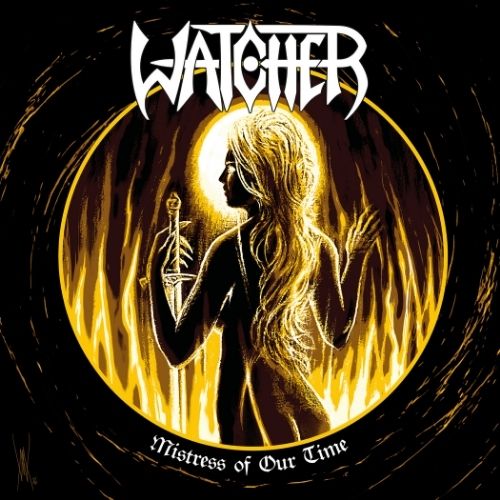
For this reason, the album's retro character is not merely a production trick. Rather than wearing 1980s heavy metal as a costume, "Mistress of Our Time" reactivates that era's riff writing, melodic arrangements, and song architecture within today's cleaner recording approach. Considering that the visual identity is also consistent with this attitude, it becomes clear that WATCHER has constructed a cohesive aesthetic. Max Warnby's artwork provides a framework that supports the band's fantastical and ancient narrative world without allowing it to overshadow the music.
In return, the album asks the listener to have a certain openness toward the fundamental codes of the genre. The pleasure here comes less from discovering a new sound than from following how effectively these old tools can be arranged. WATCHER's distinction lies in making these elements collide at the right moments rather than simply making them heavier: the transitions between acoustic and electric guitars, fast and mid-tempo passages, heavy rhythms and melodic leads, direct choruses and extended forms constitute the album's real field of movement.
This is why "Mistress of Our Time" occupies its place in contemporary heavy metal not as a passive form of nostalgia, but as a selective process of reconstruction. WATCHER looks to the past, but does not merely copy the sound of the era; it carries the relationships between riffs, melody, and arrangement that made that music effective into today's production environment. The album's identity becomes clearest at precisely this point: rather than attempting to invent a new genre, it tests how effective a heavy metal language it considers forgotten can still be, doing so without separating energy from melody.

https://www.facebook.com/watcherswe/