EP REVIEW
ZVINDIYAR - Six Rites
Atmospheric Death Metal meets ancient mythology.
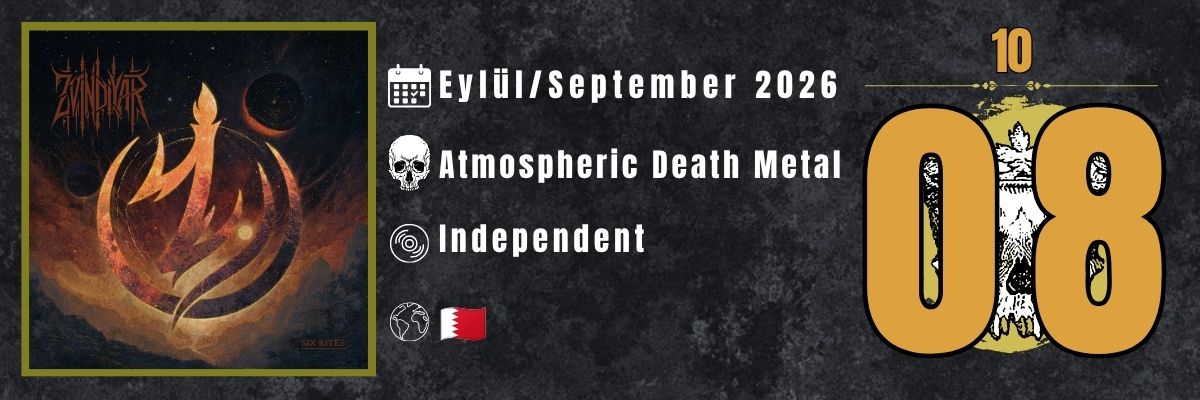
The album we are looking at in this review comes from a part of the world we are not accustomed to seeing represented in metal—not Europe or the Americas, but ZVINDIYAR, hailing from Bahrain in the Arabian Peninsula. Few bands from this region have the courage to break out onto the global stage, and doing so requires tremendous effort. Frankly, no band from this part of the world had caught my attention since NERVECELL. In that sense, “Six Rites” was a recording I had wanted to review for a long time, and its turn has finally come.
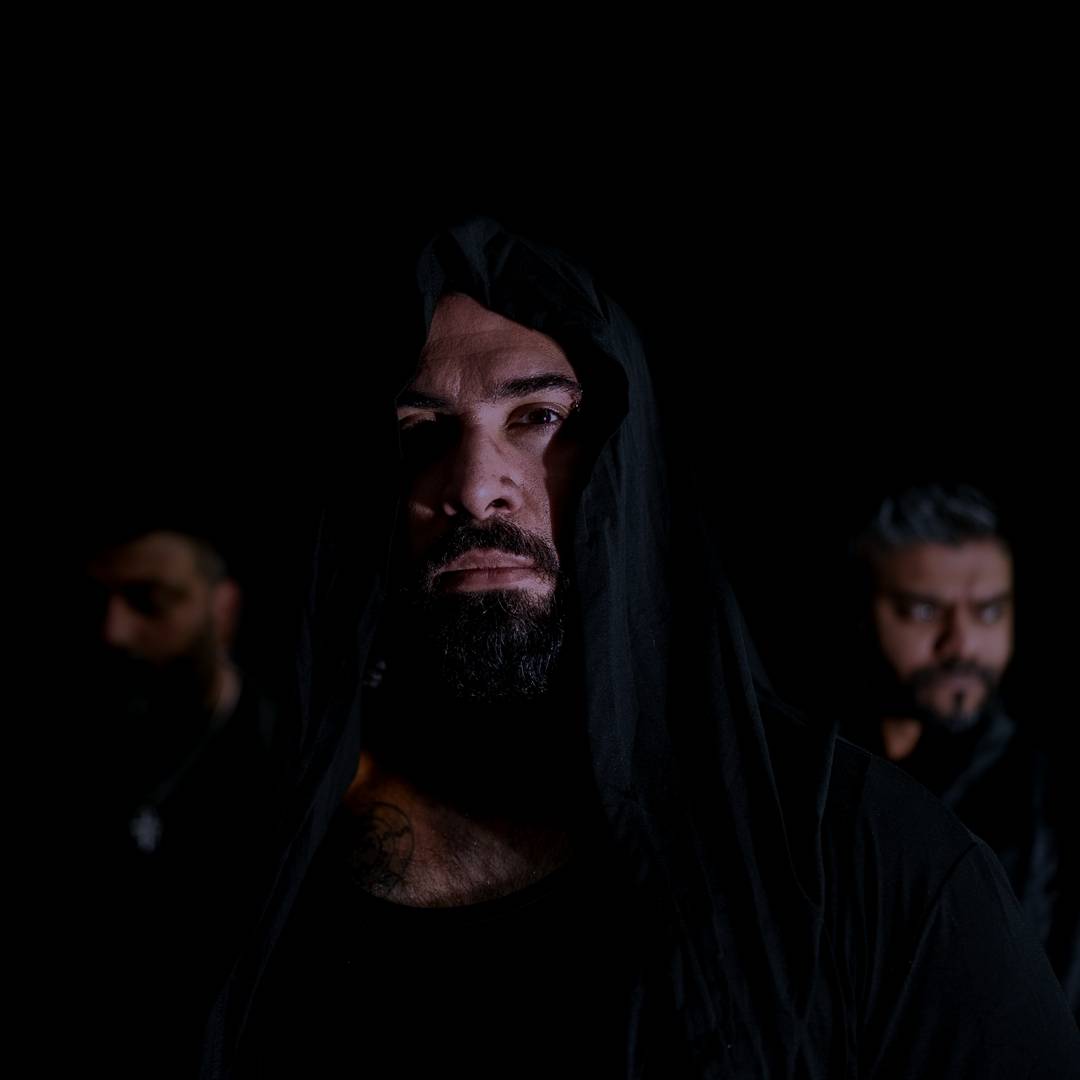
Beyond its take on classic death metal, the first impression created by the EP is the way it uses the weight of its riffs and the space left around them as components of the same compositional tool. On this debut full-length, with Mohammed AlMeshkhas handling all vocals and instrumentation, the guitars often carry the aggression at the forefront, while dark layers of sound and controlled arrangements create a second space around the songs. This approach keeps ZVINDIYAR’s music firmly within the boundaries of atmospheric death metal while also freeing it from relying solely on the genre’s familiar formula of sheer intensity.
The opening track, “Anqa”, is one of the clearest examples of this method. The low-end weight of the riffs combines with the dark, anguished character of the vocals, yet the arrangement does not fill every available space with guitars and drums. That choice matters, because atmosphere here is not an effect added afterward; it becomes a fundamental arranging element that determines how the riffs are perceived. The track’s reference to Anqa, the legendary bird figure from pre-Islamic Arabian mythology after which it is named, also corresponds with this musical approach: rather than turning its mythological reference into a straightforward piece of folkloric decoration, ZVINDIYAR works through the ambiguity of its sonic space.
With “Hex Of The Frenzied Decay”, the rhythmic structure takes on a more pronounced aggression. The harder, sharper movement of the drums brings the Death Metal backbone further to the foreground, while AlMeshkhas’ vocals push that momentum into more extreme territory. Here, Black Metal-influenced sharpness and the physical weight of Death Metal operate within the same structure. More importantly, the atmospheric layers do not soften this heaviness; instead, they preserve the track’s dark character by leaving a wider space around the riffs. This is precisely where ZVINDIYAR’s movement between genres succeeds: rather than presenting different influences one after another, they complement one another within the same arrangement.
“The Soaring Enigmatic” makes the EP’s technical side more apparent. Its inclination toward Technical Death Metal disrupts the more direct riffing approach of the preceding tracks, while the use of Deathcore-leaning breakdowns shifts the rhythmic weight onto a different axis. Yet the value of this section does not lie simply in adding another genre label to the repertoire. The breakdown works insofar as it finds a physical counterpart within the track’s atmospheric structure; otherwise, it could easily have become a modern extreme-metal cliché tacked onto the EP’s overall aesthetic. ZVINDIYAR does not completely cross that line here, but it can be argued that this experiment expands the EP’s rhythmic contrast within its existing Death Metal core more than it genuinely broadens its sonic palette.
With “Fell”, the weight moves back to the center. The guitar riffs and drum hits here serve a more traditional Death Metal function, aimed directly at the physical impact of headbanging. The track reminds us that beneath the EP’s atmospheric and conceptual layers, there is still a solid extreme-metal mechanism at work. AlMeshkhas’ vocals also emerge as the constant force carrying that mechanism. Concentrating the multi-instrumentation around a single creative center preserves aesthetic consistency between the performances while ensuring that, particularly within the rhythm section, the transitions between the heaviness demanded by the songs and their atmospheric passages remain controlled.
“الهمس الأول”, or “The First Whisper”, takes on a different role within the EP’s composition. Rather than presenting a new set of riffs in the conventional sense, the track functions as an ethereal interlude that opens up space after the preceding intensity. While such an intervention is hardly unusual in atmospheric metal, what matters here is the track’s position within the EP’s narrative flow. This withdrawal following the physical weight of “Fell” creates the contrast necessary for “Shadhavar” to build its intensity again in the finale. The ambient approach therefore does not function as filler here, but as a tool for regulating the album’s dynamic architecture.
“Shadhavar” is the track that brings ZVINDIYAR’s conceptual and musical sides together most explicitly. Its references to medieval Muslim bestiaries and Persian cosmography form part of a broader world-building approach that prevents the music from being built around decorative exoticism alone. The dark harmonies of the guitars and the veiled, aggressive character of the vocals keep the track rooted in a heavy Death Metal foundation, while the atmospheric layers expand the boundaries of that foundation. The closing arrangement brings together the elements of heaviness, technicality, and atmosphere that appeared separately across the EP’s preceding tracks within a single form.
At this point, the Persian and Arabic mythological concept underpinning “Six Rites” becomes particularly important. ZVINDIYAR’s approach is more coherent than the superficial use of “exotic” aesthetics that occasionally appears in contemporary extreme metal. Figures such as Anqa and Shadhavar, directly connected to specific mythological and cosmographical sources, are positioned within the same dark vocabulary as the visual identity and musical atmosphere. As a result, the concept does not feel like a marketing layer added on top of the music. Still, it would be difficult to claim that these references completely transform the musical language. ZVINDIYAR’s fundamental approach to riffing, vocals, and rhythm remains within the familiar boundaries of contemporary Atmospheric Death Metal; the cultural context primarily gives that framework a distinct identity.
The production maintains the same balance. The fact that the EP was recorded by Hani Taqi at Studio 77 and mixed and mastered by Ronnie Björnström means the sound has not simply been left to retain a raw underground character. The space between the weight of the guitars and the atmospheric layers remains intact, while the vocals retain their central position within the Death Metal framework. In this respect, the production keeps the atmospheric architecture of the tracks intelligible without fully surrendering to the clean, highly separated approach of modern extreme-metal production.
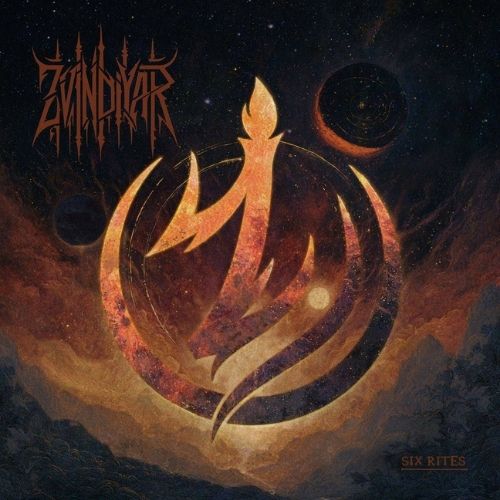
On the visual side, the work by Ani Artworks also establishes a framework that aligns with the world constructed by the music. Rather than turning the mythological dimension of the concept into an independent aesthetic spectacle, the visual identity functions as a complement to ZVINDIYAR’s musical ambiguity. The project’s conception as an entity and conceptual world shaped around Mohammed AlMeshkhas, with PJ and Ryan also credited among its creative foundations, is one of the elements that explains this coherence. “Six Rites” is therefore more than a six-track EP; it functions as a project statement in which music, visual identity, and mythological references are held within the same framework.
Yet the EP’s real strength lies in not allowing all these conceptual layers to overshadow the music. ZVINDIYAR moves at times toward Technical Death Metal, at others toward the sharper tones of Black Metal and even Deathcore breakdowns, but none of these elements completely takes over the core identity. On one hand, this preserves the album’s cohesion; on the other, it leaves the impression that some ideas could have been pushed further for listeners expecting a more radical transformation of genre. For the most part, the experimental elements expand the atmospheric and rhythmic boundaries of the existing compositional language rather than rewriting it.
“Six Rites” therefore demands attention not simply to how heavy its riffs are, but to how much space is left around that heaviness. ZVINDIYAR combine the contemporary production language of Atmospheric Death Metal with a distinctive conceptual framework rooted in Persian and Arabic mythology, but they do so not by abandoning the genre’s fundamental mechanics, rather by reorganizing their functions. The resulting identity is based less on a radical break with genre than on a controlled expansion of the existing extreme-metal vocabulary. That is where the real point of “Six Rites” emerges: rather than transforming Death Metal in order to tell the story of their mythological universe, ZVINDIYAR expand Death Metal’s atmospheric capacity enough to carry that universe.
