ALBUM REVIEW
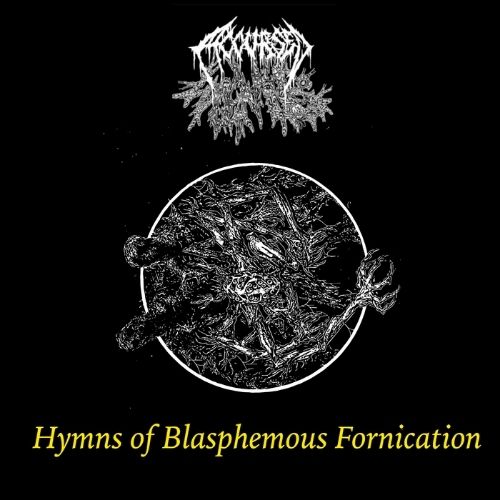
ACCURSED WOMB - Hymns of Blasphemous Fornication
CCURSED WOMB grows increasingly sharper in death metal.
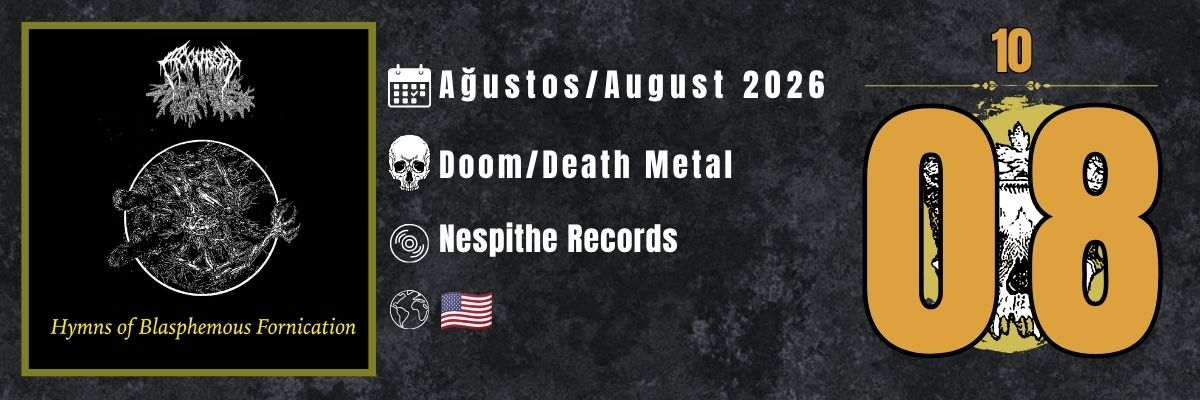
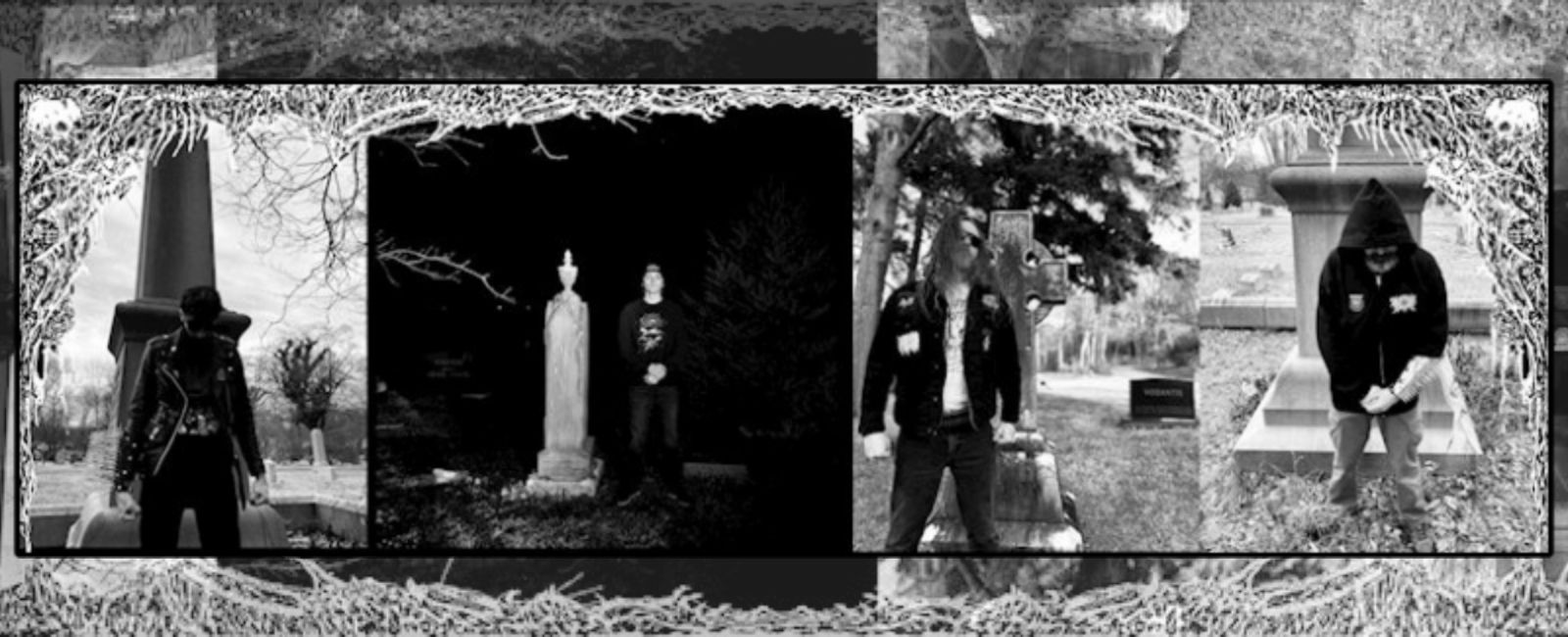
Philadelphia-based ACCURSED WOMB are a band reshaping death metal’s rotten roots through angular riffs, dissonant transitions, and blackened textures. Formed in 2019, the quartet have gradually transformed their doom-heavy experimental beginnings into a denser, more structured approach to death metal across their short-form EP and demo releases. “Hymns of Blasphemous Fornication” brings this evolution, spanning 2022 to 2026, together in a single compilation while laying out the aesthetic groundwork for their forthcoming debut album.
“Hymns of Blasphemous Fornication” is less a snapshot of a single period than a fragmented body of recordings that reveals the stages through which the band’s approach to death metal has evolved into its current form. Its 12 tracks, drawn from four separate releases spanning 2022 to 2026 and running for nearly 50 minutes, make the contrast between the band’s early experimental death/doom direction and their denser, more direct, and sharper death metal approach particularly apparent. The central issue here is not simply becoming faster or heavier; it is the way the riffs gradually acquire a more clearly defined structural logic.
Rather than directly recycling traditional death metal formulas, ACCURSED WOMB’s guitar writing relies on angular, restless sequences of riffs. The dark, weighty death metal legacy of Incantation and the more convoluted riff logic of Morbid Angel are both discernible, while the influence of Timeghoul becomes particularly apparent in the stranger and more unpredictable transitions. Yet the band does not use these references merely as nostalgic recreation. The intersecting directions of the riffs continually defer expected resolutions, pushing the material toward more experimental territory. On the later recordings, however, this complexity is paired with a more controlled aggression; the structures are no longer there simply to create an unsettling atmosphere, but to construct a death metal body with tangible physical weight.
One of the compilation’s most interesting aspects is its deliberately disrupted chronological sequencing. Opening with “Invocation of the Necrovat” from the 2026 period prevents the listener from following the band’s development along a straight timeline. Instead, approaches from different periods continually collide with one another. This choice makes the production and compositional differences between the recordings more pronounced while also announcing, from the outset, where ACCURSED WOMB have arrived today. The inclusion of “Invocation of the Necrovat” also serves as a preview of the direction their forthcoming debut album is likely to take.
The rhythm section is one of the clearest indicators of this transformation. The more crawling structures in which doom exerted its gravitational pull on the early material gradually give way to tighter death metal tempos and sharper rhythmic breaks on the later recordings. This shift also makes the angular character of the guitars more effective, because the complex riffs are no longer stretched merely to create atmosphere; working in tandem with the drum arrangements, they acquire a clearer sense of forward motion. As a result, ACCURSED WOMB’s pursuit of “weirdness” develops into an increasingly controlled compositional tool rather than remaining an amorphous form of experimentation.
The vocal approach develops in step with this aesthetic. The death metal weight of the material keeps the vocals from becoming a separate showcase, instead embedding them within the dense texture created by the guitars. The vocal lines therefore function as another layer supporting the rhythmic character of the riffs. This is also where the band’s blackened death metal direction comes into play: the music is not content with being merely heavy and technical, but takes on a colder, more unsettling tonal and atmospheric character.
Blood Incantation is another notable reference point within the compilation. However, rather than directly copying the cosmic and progressive tendencies that have become increasingly prevalent in contemporary death metal, ACCURSED WOMB engage more with their stranger and more dissonant side. Likewise, Mike Stevens’ appearance on “Womb of the Ibex” turns the Timeghoul connection into something more substantial than a mere namecheck. Even so, the real strength of “Hymns of Blasphemous Fornication” does not lie in the sum of these influences, but in the way the band combines them within a more rotten, more blackened, and more unruly death metal language.
This is where another important function of the compilation becomes apparent. “Hymns of Blasphemous Fornication” is not a work designed with the cohesion of a new studio album in mind; it functions as an archive bringing recordings from different periods together under one roof. Consequently, the differences in production and composition between the tracks occasionally disrupt its overall cohesion. Yet that same quality also forms part of the compilation’s conceptual value. Hearing ACCURSED WOMB’s progression from more experimental death/doom roots toward a sturdier death metal framework within a single release communicates the band’s current direction more effectively than simply describing it.
The visual and aesthetic framework also corresponds with the directness of the band’s musical approach. The grotesque, sacrilegious language of the title draws from death metal’s traditional provocative iconography, but the angular riffs and blackened tone of the music carry that aesthetic beyond a straightforward gore image. Here, the visual language does not exist to overshadow the music; instead, it functions as an extension of the rotten, rhythmically unstable world the band has already constructed through sound.
The real significance of “Hymns of Blasphemous Fornication” lies less in what ACCURSED WOMB are doing today than in making audible how they arrived there. When the doom-heavy early material, experimental impulses, and increasingly disciplined death metal compositions are placed side by side on the same release, it becomes easier to see which elements the band may eventually leave behind and which they are likely to bring further to the forefront. For that reason, the compilation functions less as a simple repackaging of past material than as a document measuring the band’s aesthetic boundaries ahead of their debut album. What the listener encounters here is not a finished final form, but the working method of a band increasingly tipping the balance between strangeness and structural discipline in its own favor.

accursedwomb.bandcamp.com
nespitherecords.com
nespitherecords.bandcamp.com
facebook.com/nespitherecords