
ALBUM REVIEW
ARKTHEOS - Cosmolith
Black metal meets death metal tension.
Some albums choose not to break genre boundaries, but instead establish a different center of gravity within them. On "Cosmolith", ARKTHEOS brings together the atmospheric ambiguity of black metal and the physical density of death metal within the same compositional space, using primitive rhythmic patterns and riffs in constant motion. The musical world created by this Canadian duo shapes its violence not merely through intensity, but through the tension between rhythm, space, and atmosphere.
The fundamental structure ARKTHEOS builds on "Cosmolith" is best understood not simply through its riffing, which combines the sharpness of black metal with the physical weight of death metal, but through how it manages the rhythmic tension between these two genres. The guitars generally move through brief chromatic passages, primitive rhythmic patterns, and directly attacking repetitions, while the melodic side of the songs never emerges as an independent embellishment. Instead, melodic lines that partially appear and disappear within the riffs become integrated into the music's constantly shifting structure. This approach brings the brittle, lashing primitivism of SARCOFAGO onto the same ground as the darker melodic instincts of early DEMIGOD.
What stands out about "Cosmolith" is that its heavy and fast riffs are not the sole determining factor. The proportions and contrasts established between the rhythms are what truly shape the album's tension. While the pounding character of the drums constantly drives the weight of the guitars forward, shifts in tempo and intensity between riffs prevent the music from becoming a linear assault. For that reason, the blackened death metal label here does not merely describe two genres placed side by side; the physical mass of death metal and the atmospheric and tonal ambiguity of black metal transform one another within the same compositional framework.
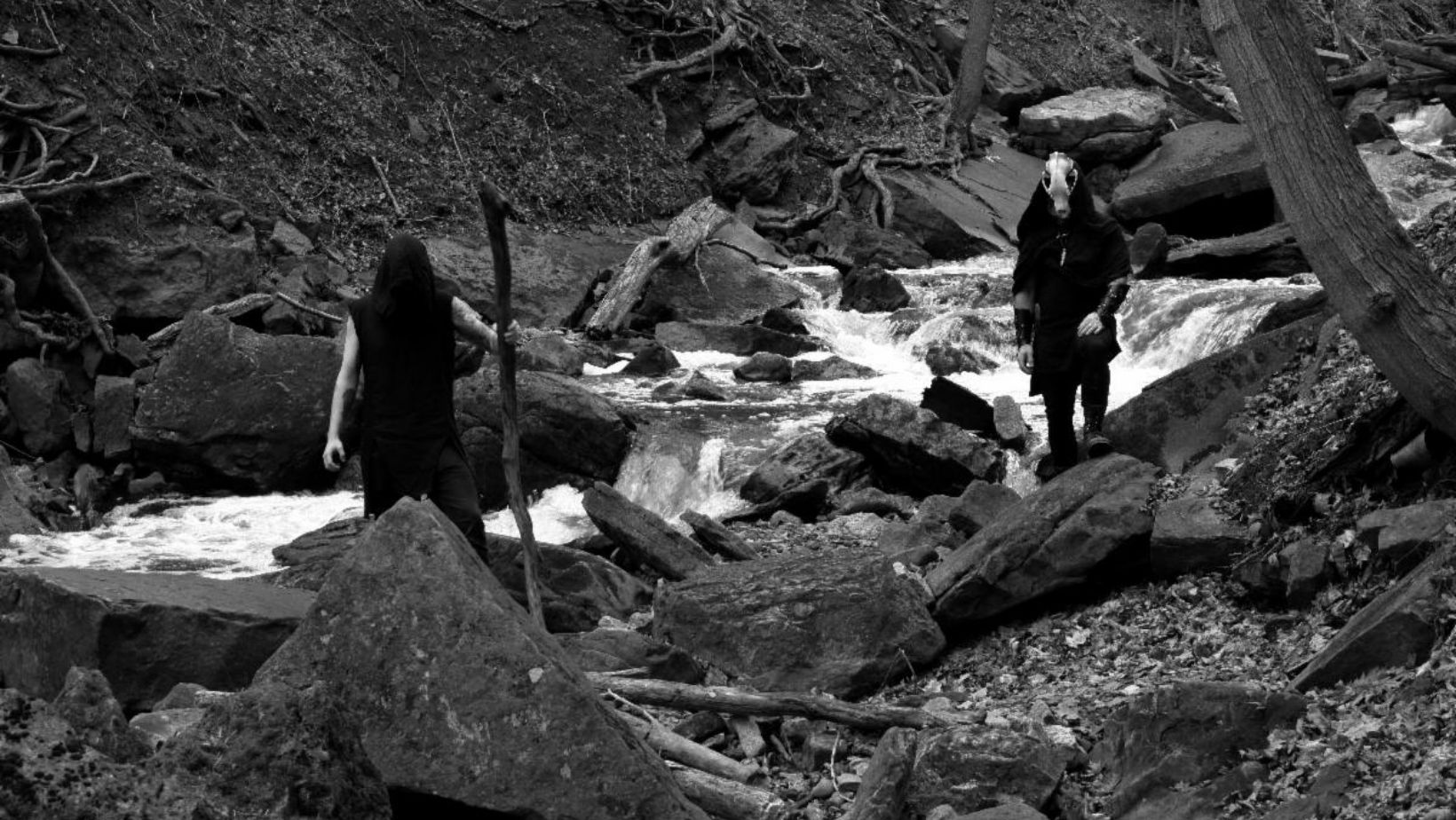
D. Ibson's guitars and vocals sit at the center of this structure. The muscular character of the riffs suggests a conscious move away from the band's melodic black metal roots in search of a more physical form of expression. Yet it is important that the guitars never surrender completely to death metal's weight. Brief chromatic movements and unfinished melodic ideas prevent the songs from settling into a defined tonal point. As a result, despite having a solid riff-based backbone, the music constantly behaves as though it could open up in another direction. Much of the album's shifting atmosphere emerges from this compositional logic.
T. Pill's drumming, meanwhile, does more than simply provide a rhythmic counterpart to the guitars. While increasing the physical weight of the songs during their denser passages, it also allows space to emerge in the sparser sections. This contrast makes the atmospheric moments on "Cosmolith" particularly important. The quieter sections are not randomly inserted breathing spaces between dense riffs; they are complementary components of the album's dynamic structure. T. Pill's use of synths further expands this space. The synth layers do not move in front of the guitars to create a separate compositional field; rather, they establish a sense of greater, more cosmic scale behind the hard surface of the extreme metal. The electronic element therefore remains a secondary tool supporting the album's spatial dimension rather than a decorative addition.
This choice also directly corresponds with the band's aesthetic, which is built around nature, cosmic vastness, and spiritual experience. Rather than turning these themes into a lyrical narrative, the atmosphere of "Cosmolith" attempts to convey them through the scale of the music itself. On one side is the drum-and-guitar intensity suggestive of the movement of wild animals; on the other are synths and melodic passages opening into broader spaces. The transitions between these two extremes turn the album's images of nature and the cosmos into a musical contrast rather than depicting them directly: physical weight and boundlessness, density and space.
The album's psychedelic side also finds its meaning here. ARKTHEOS's psychedelic approach, however, does not completely dissolve the riff structures and surrender them to improvisation, as happens with some examples within the genre. The fundamental compositions remain tied to the rhythmic discipline of death/black metal. As a result, the psychedelic elements function less as a method that takes control of the composition and more as a layer that expands the perceptual scale of the existing structure. This choice strengthens the album's atmosphere, but it also defines the limits of its experimental side. Rather than rewriting the fundamental grammar of extreme metal, "Cosmolith" searches for a different sense of density and scale within it.
At this point, the album's position within the contemporary scene also becomes clearer. The comparison to URFAUST is particularly relevant in terms of the mystical and atmospheric layers, although ARKTHEOS's music is neither as loose nor as trance-oriented. The BOLT THROWER reference, meanwhile, is more useful for explaining the physical weight of the riffs than for suggesting any melodic or aesthetic similarity. ARKTHEOS's own territory takes shape somewhere between these two approaches, compressing the atmospheric ambiguity of black metal against the mechanical force of death metal. The key distinction is that rather than continually increasing intensity, the band makes the differences between levels of intensity one of the fundamental tools of its composition.
The production also needs to support this approach, and the recording character of "Cosmolith" aims to keep the music's two sides within the same framework without allowing one to overwhelm the other. Recorded by the band themselves at Black Hall and mastered by Roland Rodas at Cavern of Echoes, the album does not lean toward an excessively sterile modern metal aesthetic. This matters because the riff-centered nature of the guitars could easily have had its primitive character smoothed out by an overly bright or heavily layered production. Here, the goal is not technical display, but preserving the material's physical structure and atmospheric breadth at the same time.
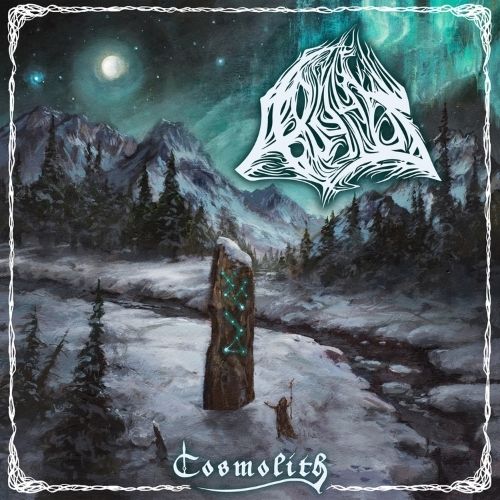
Adam Burke's cover artwork also strengthens the visual counterpart to the music when considered within this framework. Although the aesthetic built around the cosmic and natural imagery of "Cosmolith" draws on the familiar dark iconography of extreme metal, it foregrounds the sense of scale at the heart of the album's central idea. The visual identity does not overshadow the music; instead, it functions as a complementary element supporting the band's conception of nature and cosmology beyond the human scale. In this respect, the cover is not decoration detached from the musical content, but part of the world ARKTHEOS has constructed.
The physical reissue, meanwhile, turns "Cosmolith" from a debut album merely being returned to circulation into a more lasting object within the band's aesthetic identity. The material, first released digitally in the summer of 2025, is now being presented on LP and CD, which is particularly meaningful for a work that places importance on visual identity and album cohesion. The strength of "Cosmolith" lies less in the impact of individual riffs than in the way those riffs are held within the same compositional world through rhythmic contrasts, atmospheric spaces, and synth layers. The physical format allows that cohesion to be re-established as an album object.
"Cosmolith" is therefore not an easily consumed blackened death metal album. Although the physical force of its riffs is immediately apparent on the surface, its deeper structure emerges through shifts in rhythmic intensity, melodic ideas that retreat before reaching completion, and synth-supported atmospheric passages that expand the scale of the music. What ARKTHEOS does is not radically dismantle genre boundaries, but transform the tension between black metal and death metal into a compositional space flexible enough to carry ideas of nature and cosmic vastness. This approach does not push the album toward the experimental extremes of contemporary extreme metal, but it gives ARKTHEOS a distinct identity within its own riff language and controlled approach to atmosphere. What it demands from the listener is not simply the consumption of its surface aggression, but an attention to the ways in which these rhythmic and atmospheric layers transform one another.

https://www.instagram.com/arktheos_band/
https://linktr.ee/hypaethralrecords
https://instagram.com/hypaethralrecords
https://www.facebook.com/hypaethralrecords
https://x.com/hypaethralrecs
https://www.threads.net/@hypaethralrecords
https://bsky.app/profile/hypaethralrecords.com