
ALBUM REVIEW
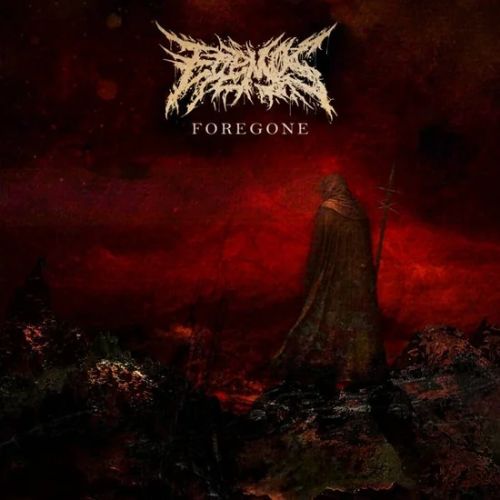
EREMOS-IX - Foregone
Dissonance meets melody in darkness.
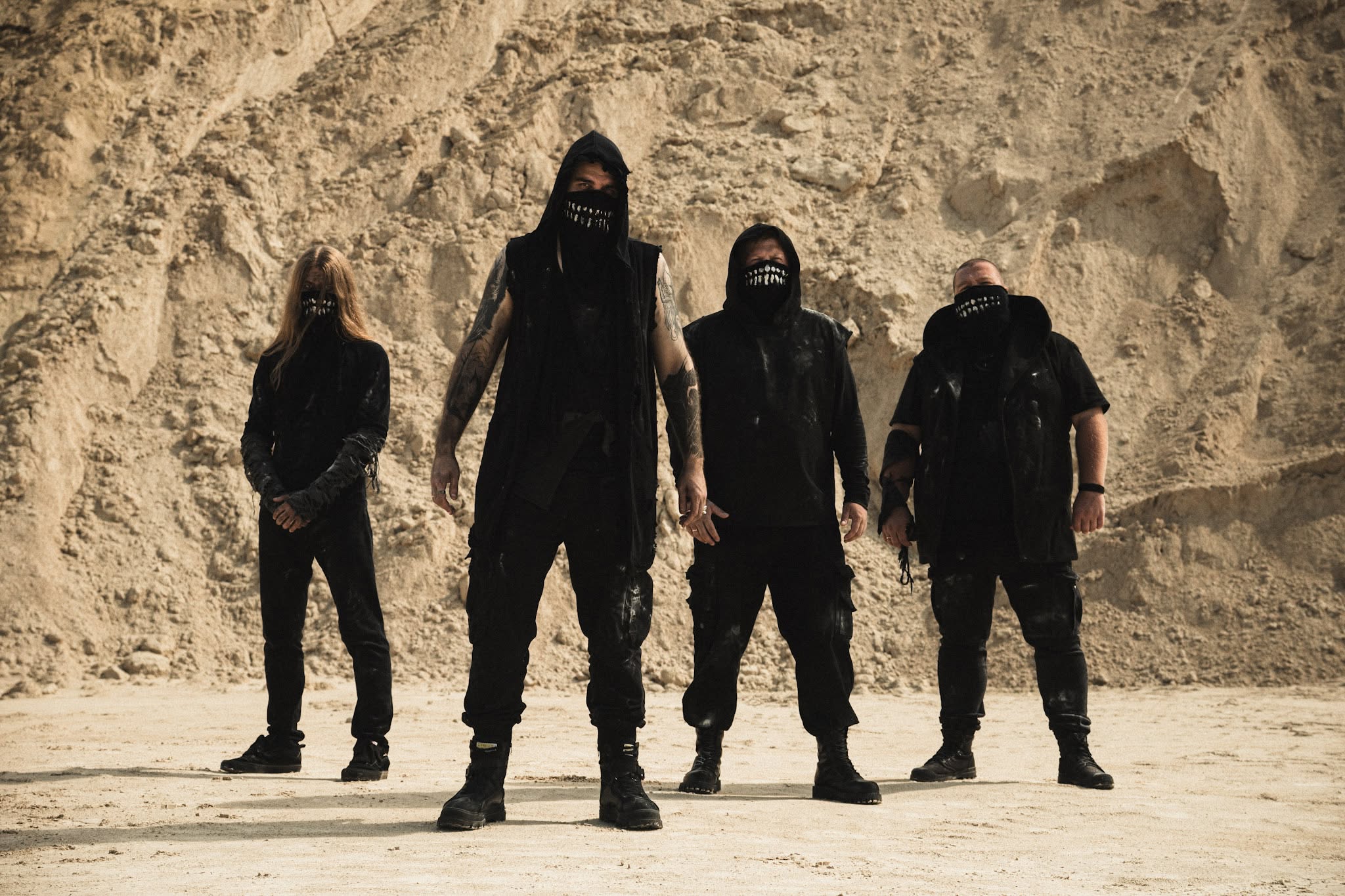
EREMOS-IX have been making a name for themselves on the Latvian extreme metal scene in recent years, particularly through their live performances. What began as Dāvis Kots' solo project in 2018 is now a four-piece band. The transition to a full-time lineup appears to have changed not only the group's live activities but also its approach to songwriting. A substantial portion of the material originally prepared for "Foregone" was discarded because it was considered too safe and monotonous, with the remaining compositions subsequently reshaped into something heavier, more aggressive and more firmly rooted in death metal. This is perhaps the clearest indication of how far the project has evolved. Positioned somewhere between blackened death metal and doom metal, the band's new album also revolves around a conceptual framework exploring the uncertain boundary between human free will and inevitability.
Across its six tracks, "Foregone" examines the contradiction between the tendency to place individual experience at the centre of the world and the far-reaching consequences of events unfolding on a much larger scale. Small decisions, coincidences and external circumstances accumulate, gradually creating a chain of events from which escape becomes increasingly difficult. This forms the album's central conceptual thread. Drawing on an eclectic range of references, including history, literature, religion, politics, folklore and modern warfare, EREMOS-IX avoids confining this idea to a single narrative. The fact that each song takes its starting point from a specific event or concept also allows the album's thematic coherence to emerge through the individual artistic identity of its compositions, rather than relying solely on lyrical content.
Opening track 'Silicate Heart' addresses the cold, impersonal nature of warfare conducted through unmanned aerial vehicles, while musically revealing the album's most straightforwardly aggressive side. Its motoric guitar patterns and forceful rhythmic framework lend the composition a distinctly mechanical character. Nevertheless, EREMOS-IX's songwriting is not simply a matter of stringing together fast, abrasive riffs. The melodic shifts and unconventional transitions that emerge as the track moves into more restrained passages give the band's death metal-oriented approach a broader compositional dimension. This interplay between sheer aggression and musical fluidity remains evident throughout the rest of the album.
'Rottweiler' offers the clearest indication of the band's willingness to expand its musical boundaries. Approaching authoritarianism from the perspective of an unquestioningly obedient follower, the track introduces saxophone into the arrangement, taking EREMOS-IX beyond the conventional instrumentation of extreme metal. Eva Beatrise Auzenberga's saxophone performance and Gundega Māra Grūtupa's additional vocals prevent this from becoming merely an experimental detour built around an unusual instrument. The contrast between the saxophone's unconventional timbre and the ferocity of the main guitars reinforces the track's unsettling character. Rather than softening the music, this combination takes the underlying sense of unease in another direction. This is one of the album's most compelling compositional decisions: incorporating unconventional elements not to abandon the genre, but to make the existing musical framework more expressive.
'The Mariner' draws inspiration from Samuel Taylor Coleridge's poem The Rime of the Ancient Mariner and the idea of living with the consequences of a single action for the rest of one's life. Its melodic guitar work reveals a more intricate compositional approach beneath the band's aggression-driven exterior. Dissonant guitar passages, the weight of the death metal vocals and the dense rhythmic foundation prevent the melodic sections from becoming overly comforting. On the contrary, the melodies develop the track's tension in a different direction. What stands out is that melody is not employed as a counterbalance to aggression; instead, it becomes an independent expressive element that feeds into the composition's unsettling atmosphere.
The remaining tracks reveal other facets of this approach. 'The Anchorite', inspired by a painting by Polish-Armenian artist Teodor Axentowicz, explores religious isolation and doubt, while 'Nensha' draws on a concept from Japanese folklore involving the psychic imprinting of images onto physical media or other minds. Through an idea also associated with The Ring, the latter opens up questions about the boundaries between reality and mental perception. The diversity of these references enriches the album's conceptual framework. Nevertheless, it would be misguided to attribute the success of "Foregone" solely to its literary and cultural allusions. What matters more is how EREMOS-IX use these ideas as starting points for music that accommodates both considerable heaviness and compositional variety.
Closing track 'A River Of Iron' occupies a particularly significant place in the project's history. The first composition ever written for EREMOS-IX, its original 2018 version has been completely re-recorded and adapted to reflect the musical approach of the current lineup. Its historical background, connected to Latvia's Šķirotava railway and the deportations to Siberia carried out from the area, directly complements the album's exploration of events that unfold beyond human control and the lasting consequences they leave behind. Its placement at the end of the record, therefore, cannot be regarded simply as an attempt to revive an older composition. It also represents the evolution of EREMOS-IX from a one-man project founded in 2018 into the collective entity it has become today.
On the production front, Artūrs Mačevskis's mixing and mastering provide a result that supports the album's abrasive character. The density of the guitars, the commanding presence of the death metal vocals and the rhythmic weight of the drums are central to the music's physical impact. Particularly important is the way this heaviness leaves room for different forms of expression in the more melodic and unconventional passages. By bringing together black metal, doom and melodic elements within a death metal-oriented framework, EREMOS-IX make it difficult to define the album exclusively through the boundaries of a single subgenre. The band's own blackened death/doom description captures its general character, but does not fully encompass the diversity of "Foregone".
The effects of EREMOS-IX's transition into a full-time band are clearly audible in the songwriting on "Foregone". 'Rottweiler' and 'The Mariner' in particular demonstrate that the group is not content with simply playing heavier, but can also incorporate different musical ideas as natural components of its compositions. That said, not every idea presented across the album's six tracks leaves an equally strong impression. In certain passages, the dissonant approach and dense instrumentation can overshadow the melodic and atmospheric details. At times, this also means that some of the elements that reveal themselves through repeated listening remain overshadowed by the record's immediate aggression.
"Foregone" marks a meaningful stage in the development of a band seeking to expand the traditional vocabulary of extreme metal through different means of expression. Perhaps the most valuable aspect of EREMOS-IX at this point is their refusal to treat heaviness as an end in itself, instead attempting to establish their own relationship between dissonance, melody, unconventional instrumentation and literary references. Although the album does not yet translate all of its ideas into equally compelling compositions, it clearly demonstrates the band's potential to broaden its musical identity. It is a noteworthy release, particularly for listeners drawn to more experimental, doom-inflected interpretations of blackened death metal. EREMOS-IX's real challenge now lies not so much in demonstrating these differences as in bringing them together under a stronger and more enduring songwriting identity.
