ALBUM REVIEW
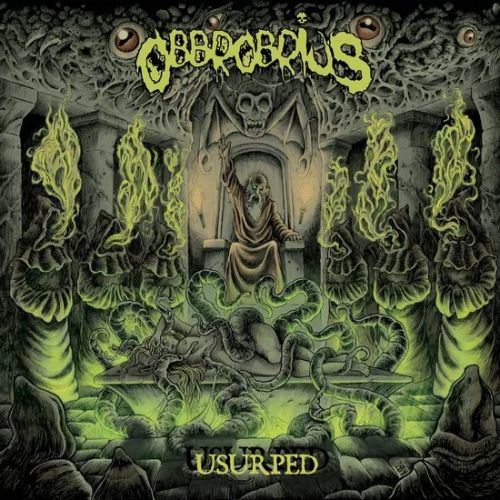
OBBROBRIUS - Usurped
Groove shapes traditional death metal.
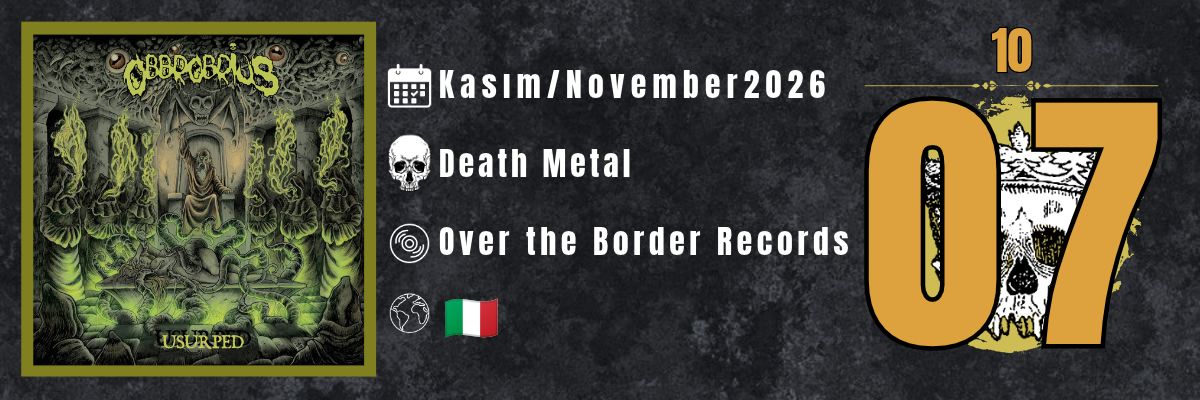
Following their 2024 debut album, "Daisy's Creepy Tales", Italian band OBBROBRIUS return with "Usurped", placing the relationship between groove-driven death metal and traditional death metal aggression at the heart of its nine-track repertoire. Beyond presenting a narrative steeped in horror and violence, the album explores the disintegration of the human mind through different manifestations of illness, paranoia, anger and supernatural terror. Its lyrical foundations draw on true crime, horror literature, post-apocalyptic cinema and the social consequences of the Covid-19 pandemic. In OBBROBRIUS' lyrical universe, human helplessness stems not only from the conditions created by humanity itself, but also from dark, divine forces governing existence. Rather than following the conventional concept-album format of presenting a collection of unrelated horror stories, "Usurped" brings together different nightmares in which humanity loses control, placing them within a shared framework.
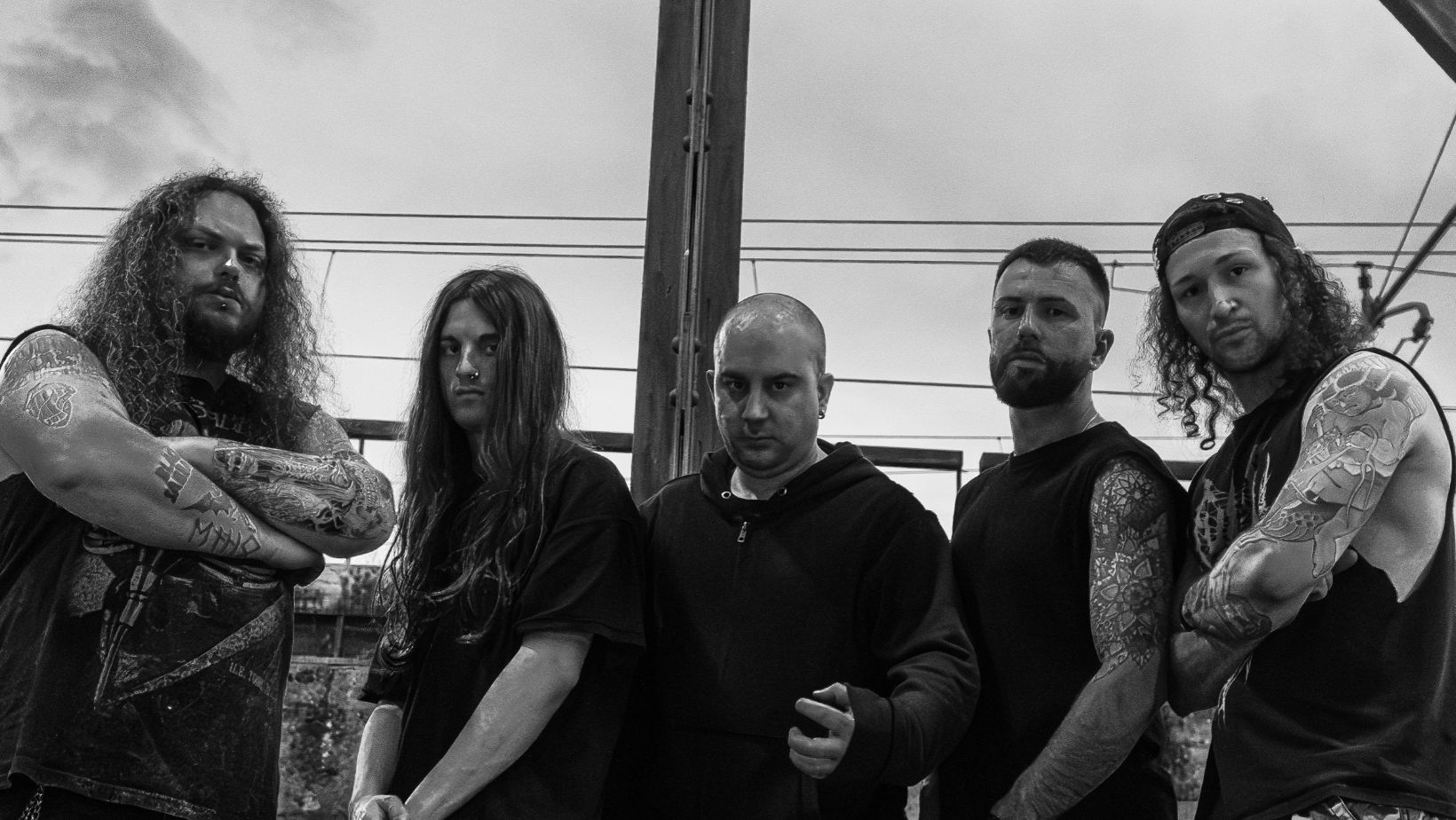
Musically, the riffing recalls traditional death metal stalwarts such as BENEDICTION and BOLT THROWER, while offering a rhythmic dynamism that differs from the groove-oriented approaches associated with PANTERA and LAMB OF GOD. OBBROBRIUS attempt to avoid monotony by interrupting the heavy, emphatic rhythms underpinning their compositions with occasional bursts of faster death metal. This approach is particularly evident in the interplay between guitars and drums. Johnny Hell and Hellkymic Frenk's guitars move between crushing mid-tempo riffs and faster, sharper passages, with Metfrey's drumming supporting these shifts. Dave Filth's bass, meanwhile, does more than simply reinforce the rhythmic foundation; its distinctive tone gives it a presence of its own beneath the guitars. Nevertheless, the different dynamics within the compositions do not always feel sufficiently distinct. The reliance on similar riff patterns makes it increasingly difficult for individual tracks to maintain their own identities as the album progresses.
'Leviathan's Cage' launches straight into heavily distorted guitars and rapid-fire drumming. Its lyrics describe a colossal creature encountered in the dark depths of a quarry, while the music reinforces the threatening atmosphere of this encounter with an appropriately ferocious approach. Shouter's deep growls sit prominently in the mix, although the use of reverb and delay occasionally compromises the clarity of an otherwise powerful performance. In particular, the sibilant sounds becoming uncomfortably prominent in the mix disrupt the tighter cohesion established by the guitars and drums. The guitar solo towards the end introduces a melodic opening, but fails to match the sheer physical weight of the surrounding riffs. The subsequent heavy passage largely makes up for this shortcoming.
'Demoniac Illusion' takes a more controlled approach, opening with cymbal-driven drumming and melodic guitar lines. As the tempo picks up, the vocalist's aggressive outbursts help define the track's character, while the more memorable guitar riffs reveal the band's songwriting potential. What stands out here is the way the melodic guitar passages work alongside the accelerating drums without sacrificing the underlying groove. The lyrics depict a world consumed by red and black, transforming into a mental hell filled with images of death and deformity, which fits neatly with the music's darker character. However, the vocal production issues persist. The muddiness introduced by the effects occasionally pushes the vocals too far to the forefront rather than enhancing their aggressive character.
With its opening doom metal feel, 'As Angels Fall' introduces a different dimension to the album's rhythmic character. The bass soon comes into sharper focus, adding depth to the heavy interplay between the guitar riffs and drums. Shouter adopts a more narrative vocal approach here, while the lyrics depict dark armies rising against the divine order and an impending celestial war. As a result, the track's ponderous movement becomes more than a means of establishing groove; it also reinforces the threatening scale of the narrative. The particularly prominent bass presence in the mix demonstrates just how effective the band can be in passages of this kind.
'Chronic Sickness' is one of the tracks that connects the album's lyrical framework most directly to the real world. Its lyrics revolve around illness, sleeplessness, medication and physical deterioration, placing individual suffering at the centre of the narrative. Rather than sustaining the same sense of confinement at a constant intensity, the composition develops through a brief build-up followed by a forceful return. The tension accumulated during the bridge provides an effective foundation for the instrumentation to erupt once again. Here, OBBROBRIUS' approach to combining groove with death metal aggression delivers exactly what it promises; the shifts inserted between the heavier passages prevent the music from becoming confined to a single tempo.
One of the album's shorter and more direct compositions, 'Infecting The Holy Ground' stands out through its sharp riffing. Its lyrics address the Covid-19 pandemic through mass fear, misinformation and expectations of divine salvation, extending "Usurped"'s exploration of psychological vulnerability into the social sphere. The track is among the clearest examples of the band's ability to write more distinctive and memorable material, conveying its ideas without unnecessary prolongation. Considering how closely some of the album's other compositions resemble one another, these concise, characteristic riffing approaches point towards an aspect of OBBROBRIUS' songwriting that deserves further development.
'My Dismembered Soul', meanwhile, distinguishes itself through its melodic approach. Sharp staccato riffs, stop-start rhythms and more crushing groove sections bring variety to the composition, while the vocals' raw, abrasive character fits naturally into these transitions. The rhythmic accents of the guitars, combined with the movement of the drums, produce more than just a fast and aggressive death metal performance; they give the track a distinct compositional dynamism. The lyrics' imagery of physical dismemberment and the consumption of the soul also finds a meaningful counterpart in these rhythmic interruptions. What makes this one of the album's most memorable tracks is its ability to incorporate melody directly into the riffs and rhythms rather than setting it against the music's aggression.
The introduction of Yog-Sothoth, one of the prominent figures in Lovecraftian mythology, through 'All In One And One In All' expands the album's supernatural horror dimension. Its lyrics revolve around space-time, cosmic gateways and an amorphous dark entity, shifting the focus from human-centred horror towards a more cosmic threat. The track plays an important role in connecting the different sources of horror explored throughout the album. By bringing this threat, which transcends the limits of the human mind and body, into the same dark universe as the themes of illness and psychological collapse found elsewhere on the record, the band strengthens the lyrical cohesion of "Usurped".
The closing track, 'Usurped', presents one of the album's most disturbing narratives. Its lyrics describe the physical and sexual violence inflicted upon a character named Daisy, her loss of free will and her transformation into part of a dark new order. Consequently, the track's atmosphere extends beyond a supernatural monster story, touching on more troubling themes of control, domination and the reduction of the human body to an object. The claustrophobic sensation created by the guitars is reinforced by dark melodies and explosive solos. Even the melodic openings provided by these solos fail to dispel the track's unsettling character. Instead, this underlying musical tension brings the album's overarching narrative to an unsettling conclusion.
"Usurped" demonstrates that OBBROBRIUS possess a solid instrumental foundation for navigating the territory between groove and traditional death metal. The prominent bass, the occasional melodic expansion of the guitar work and the interruptions of rhythmic passages by faster death metal sections all contribute to the band's musical identity. On the other hand, the repetition of similar riff patterns and the vocal effects that occasionally obscure the natural harshness of the performance undermine the album's overall cohesion. The different forms of horror and psychological collapse explored across its nine tracks do not always translate into an equally diverse musical experience. Drawing on the legacy of bands such as BENEDICTION and BOLT THROWER provides OBBROBRIUS with a useful starting point, but turning those influences into a more individual songwriting approach remains a challenge. "Usurped" clearly reveals the band's potential, yet still needs greater musical differentiation to establish a distinctive and lasting riff identity of its own.
