
ALBUM REVIEW
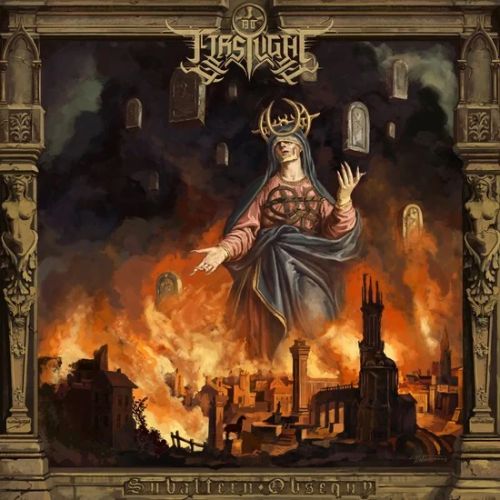
AT FIRST LIGHT – Subaltern Obsequy
Melodic death metal meets progressive expression.
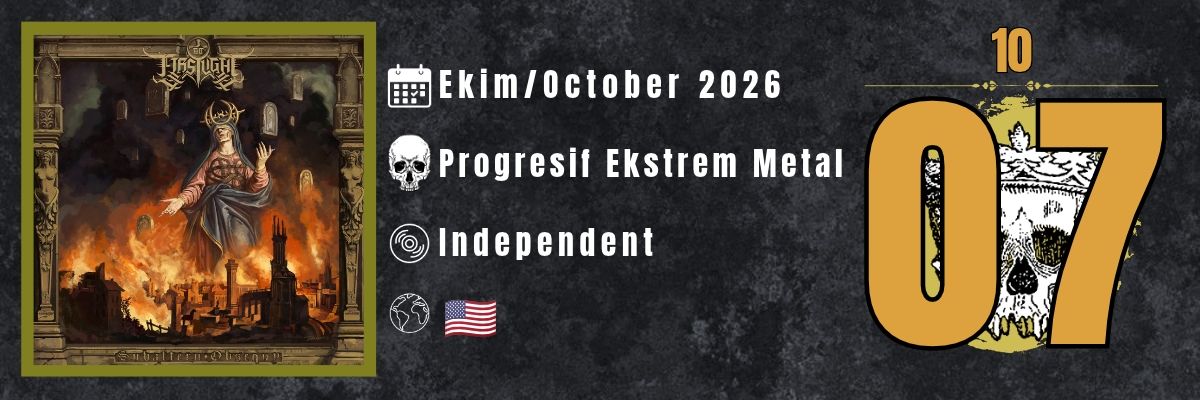
Emerging from the American underground scene after six years of writing and collective creative work, "Subaltern Obsequy" finds AT FIRST LIGHT exploring the boundaries of melodic death metal while drawing on the broader expressive possibilities of progressive extreme metal. The band's artistic approach appears to be driven by individual and collective musical preferences rather than adherence to established genre conventions. Its nine-track structure reflects this pursuit of creative freedom through a range of intensities and emotional registers.
The opening track, 'A World Unworthy', introduces the album's aggressive side with full-bodied guitar tones, a dark atmosphere and forceful rhythmic structures following a brief intro. The inclusion of clean female vocals adds another dimension to the track, steering it away from a one-dimensional death metal approach. The shifts between Mother War's harsh and clean vocals are particularly effective, ensuring that the album's melodic character is not left solely to the guitar riffs. 'Distant Revelry', meanwhile, eases the tension established by its predecessor through clean guitar tones and a pronounced melodic sensibility. That melodic foundation remains intact even when the heavier passages kick in, providing continuity between the track's contrasting dynamics. Here, AT FIRST LIGHT demonstrates an understanding of aggression and melody not as opposing approaches, but as complementary elements capable of coexisting within the same composition.

Maintaining this balance across every track proves more challenging. With its straightforward structure and aggressive character, 'The Death Bloom' remains closer to the album's more traditional death metal side. Its relatively simple and predictable riffs prevent the track from developing a distinct identity. Given AT FIRST LIGHT's broader melodic and dynamic range, the songwriting here feels considerably more limited than elsewhere on the record.
With 'Drowning', the tempo slows and the music's darker emotional dimension comes further into focus. The heavier pacing allows the melodic elements and the track's emotional character to develop more fully. This sense of helplessness, which can also be connected to the album's historical narrative, takes on a more forceful expression in the subsequent 'The Silent Weeping of Our Demise'. Running for over six minutes, the track brings aggression and sorrow together within a single composition. The tension created by the harsh vocals and instrumentation gains another dimension through the emotional expression carried by the clean vocals. Vocal diversity here moves beyond simply adding musical colour, becoming an integral part of the album's dramatic narrative.
Despite its brief runtime, 'Terminal Lucidity' offers a contemplative breathing space after this intensity. With the arrival of 'Once Human', the album returns to a harsher character, while the prominence of the bass guitar in the mix also deserves attention. In extreme metal production, bass often gets pushed into the background by the dominance of guitars and drums. Its audible presence here contributes positively to the overall instrumental balance. Particularly in the denser guitar passages, the bass remains sufficiently distinct, preventing the music from relying solely on upper frequencies and rhythmic aggression.
The album's conceptual framework revolves around the Great Filter theory, which suggests that humanity's technological and destructive capabilities may eventually outpace its ability to cooperate and unite, leading to an ultimate catastrophe. Its historical horror narratives, set before and during World War II, revolve around mysterious Entities guiding humanity towards its own destruction, led by Mother War. By exploring this narrative through fictional characters rather than a straightforward historical chronology, the band adds another dimension to the album's dramatic world. The dark and occasionally despairing character of the songs also fits this thematic framework. Nevertheless, the connection between the concept and the musical narrative is not equally apparent throughout the record. While some passages emphasise emotional expression and atmosphere, others function more as straightforward extreme metal compositions.
The closing track, a rendition of THE BEATLES' 'Eleanor Rigby', offers an opportunity to consider the album's melodic approach in a different context. Featuring orchestration by Karl Sanders, the track revisits the relationship between aggressive instrumentation and melodic expression. This choice allows the contrasts frequently explored in the album's original compositions to be examined through a different piece in the closing stretch. The balanced use of melody and heaviness gives the song room to establish its own expressive character without feeling detached from the album as a whole.
"Subaltern Obsequy" is an attempt to expand upon the familiar riffing and vocal conventions of melodic death metal through progressive arrangements, clean vocals and contrasting atmospheric passages. Produced, engineered and mixed by Mark Lewis, with mastering handled by Justin Shturtz at Sterling Sound, the album benefits from a full-bodied instrumental sound and a bass guitar that remains clearly audible in the mix. On the other hand, the inability of certain riffs to move sufficiently beyond established genre conventions indicates that AT FIRST LIGHT still have room to develop a more distinctive musical identity. The product of six years of collective work, "Subaltern Obsequy" offers a noteworthy starting point for listeners drawn to the combination of melodic death metal's aggression and emotional, dramatic storytelling. AT FIRST LIGHT's real challenge will be to transform these diverse musical elements into a more recognisable and distinctive songwriting language in future releases.

https://www.atfirstlight.shop/
https://atfirstlight.bandcamp.com/album/subaltern-obsequy