ALBUM REVIEW
ATOMIC AGGRESSOR - The Occult Forces
Solid old-school death metal-
Emerging from the roots of Chile’s late-1980s death metal underground, ATOMIC AGGRESSOR bring their time-defying old-school death metal approach back to the forefront with "The Occult Forces". The band combines razor-sharp riffs in the vein of Morbid Angel, Sadistic Intent, and Possessed with thrash-inflected rhythmic structures and restrained guitar solos, building a formula that remains tied to the past while still functioning effectively. But has a twelve-year gap between albums allowed this musical language to mature, or is ATOMIC AGGRESSOR simply reproducing the sound of its own history?
Although ATOMIC AGGRESSOR have been part of the metal scene since 1985, they now return with only their second full-length album. The first thing that stands out about "The Occult Forces" is the band's decision to preserve the death metal formula as intact as possible rather than update it. Across eight tracks and roughly 40 minutes, the album moves through fast tremolo riffs, sharp transitions, high-tempo drumming, prominent guitar solos, and aggressive rhythmic structures that occasionally approach thrash metal territory. The production likewise aims less at modernizing this approach than at conveying the old-school character of the compositions as directly as possible. The result is a record rooted not in the polished, weight-focused production aesthetic of contemporary death metal, but particularly in the South American and Florida-centered traditions of the late 1980s and early 1990s.
This approach is most apparent in the way the guitars function. ATOMIC AGGRESSOR do not use riffs simply to generate speed; they create momentum by chaining together short, sharply defined motifs. The transitions between tremolo-picked guitars and heavier, more staccato rhythmic figures establish the deathrash character of the compositions. The connection to names such as Sadistic Intent, Morbid Angel, and Possessed is therefore more than an aesthetic resemblance. The melodic movement of the riffs, the cutting guitar tones, and the relentlessly forward-driving tempos all emerge from the same musical lineage.
One of the album's most striking references, meanwhile, is the bass solo on the opening track. Alejandro Díaz's prominent bass work here is an overt nod to Morbid Angel's "Altars of Madness" era. Yet the value of such references lies in more than simply reproducing a detail familiar to the listener. Briefly placing the bass at the center of the mix alters the traditional hierarchy of death metal instrumentation and gives the song's opening a different point of emphasis. Within the album's broader approach, this feels less like a flashy experiment than a deliberate way of embedding the band's musical memory directly into the composition.
The guitar solos further reinforce the album's old-school identity. ATOMIC AGGRESSOR are not merely chasing technical speed; without completely breaking away from the rhythmic flow of the songs, they bring chaotic and melodic elements together within the same passages. As the label specifically emphasizes, the manic solo approach heard on their earlier recordings is somewhat more restrained this time around. The change may seem minor, but it matters: the solos remain energetic and cutting, yet instead of functioning like showcases added on top of the compositions, they assume a more structured role within the song architecture.
Alejandro Díaz's vocal and bass performances also support this sense of cohesion. The vocals remain rooted in the guttural, aggressive delivery of early death metal, while the bass does not completely disappear beneath the guitars, particularly in the denser sections. The rhythm section's primary function, meanwhile, is not to push the songs toward the massive breakdowns or production-driven shifts in weight so common in modern death metal, but to keep the high tempos and riff transitions in constant motion. This choice deliberately distances "The Occult Forces" from some of the dominant tendencies of contemporary death metal.
The real question here, then, is how original the album actually is. Much of what ATOMIC AGGRESSOR do already exists within the genre's historical vocabulary. The references to Sadistic Intent, Morbid Angel, and Possessed are not details scattered across a handful of tracks; they are fundamental components of the album's compositional logic. In one sense, this defines the limits of "The Occult Forces". While the album is remarkably consistent in recreating the sound of its chosen era, it does not transform that sound into a distinctly new aesthetic proposition within contemporary death metal. Looking for experimental instrumentation, radical production choices, or passages that break apart conventional song structures would be futile.
Yet this conservatism also explains much of the album's value. ATOMIC AGGRESSOR's aim is less to expand the boundaries of the genre than to reuse the language that shaped their musical identity in a natural and convincing way. Moreover, the compositions are not merely mechanical repetitions of patterns taken from the past. The fluidity with which the riffs connect, the placement of melodic guitar passages within dense streams of riffing, and the more controlled use of solos all demonstrate that the band still understands this language from the inside. There is therefore an important distinction between the album being old-school and simply being a nostalgic copy.
This is also where the character of South American death metal comes into play. Although "The Occult Forces" clearly carries the influence of the Florida sound, it does not come across as a US-centered death metal retrospective. The harsher, rawer, and more thrash-oriented character of the South American scene can be heard in the aggression of the riffs and the directness of the compositions. This is an important factor in defining ATOMIC AGGRESSOR's position within the genre, because the band combines the international language of early death metal with the musical history of their own region.
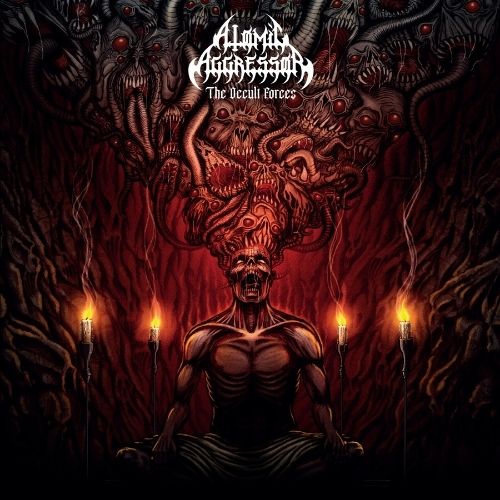
There is likewise no apparent attempt on the visual or production side of the album to break with this approach. That choice reinforces the music's claim to timelessness: "The Occult Forces" uses a death metal language that could have been released in 1989, 1999, 2009, or 2019. While this gives the album a clearly defined identity, it also limits its distinctiveness within the contemporary scene. ATOMIC AGGRESSOR's achievement does not lie in creating a new language, but in proving that the old language they have chosen can still be used through compositions that work.
"The Occult Forces" therefore does not present itself to listeners looking for innovation. Its listening approach is based on following the origins of the riffs, the early death metal lineage embedded in the guitar solos, and the rhythm section's constant high-tempo movement. Rather than repackaging the genre's past, ATOMIC AGGRESSOR speak from within it, and that is precisely where the album's place in the contemporary scene takes shape. Time moves slowly in this music, but the real question is not why the band refuses to move it forward; it is how convincingly they can still use the language they left behind. "The Occult Forces" answers that question through execution and compositional discipline rather than originality.

hellsheadbangers.com
facebook.com/hellsheadbangers
hellsheadbangers.bandcamp.com
instagram.com/hellsheadbangers
twitter.com/hellshead666
youtube.com/user/hellsheadbangers666