
ALBUM REVIEW
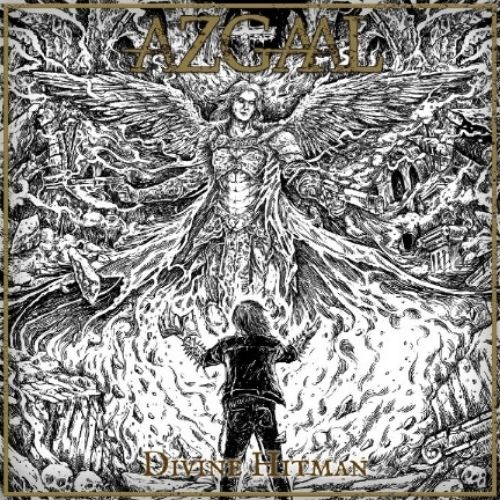
AZGAAL - Divine Hitman
A cold, esoteric and melodic take on black metal.

AZGAAL, founded in France by Naïwyn in 2000, is one of those projects that has refused to confine its musical identity to a single black metal template over the course of its nearly quarter-century existence. The esoteric and occult orientation that has become increasingly pronounced over the years is not merely a lyrical framework on "Divine Hitman"; the music's coldness, melodic structures, and constantly shifting intensities have also become part of this world. The notion of divine judgment and punishment built around Daovith and the "Sefer Ha-Razim" creates a darkness that feels far more detached and ceremonial than one rooted in satanic rebellion.
The musical embodiment of that darkness, however, is not narrow enough to remain within the boundaries of traditional black metal. Opening with 'Versipellis', the album generates a strong sense of speed through razor-sharp tremolo guitars and blast beats, while the vocals occasionally opening up into deeper growls and clean delivery prevent the track from becoming one-dimensional. The particularly melodic passage leading into the solo establishes a clear contrast between the aggressive framework and a more accessible guitar approach. What AZGAAL does here is not simply to be harsh and atmospheric; it demonstrates how different modes of expression can transform one another within the same composition.
The alternating use of French and English is another important part of this diversity. 'Dans les flammes du purgatoire' brings the album's ceremonial side to the forefront through its mid-tempo movement, atmospheric layers, and melodic guitars, while 'The Reaper Comes to You' leans more directly into a black/thrash vein. Carrying compact riffs and a distinctly old-school energy, the track feels particularly lively alongside the atmospheric density found elsewhere on the album. AZGAAL's transitions between genres are not decorative here; they function as compositional tools that alter the character of the songs.
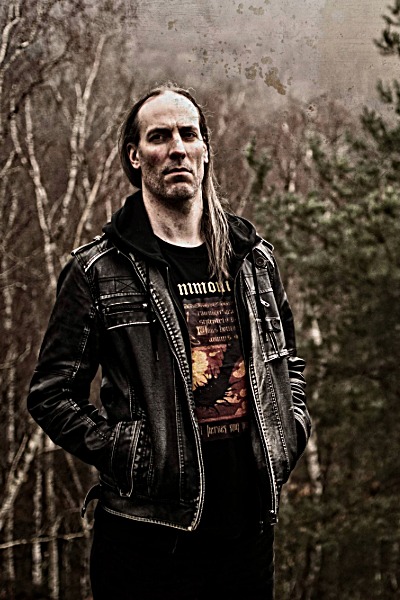
One of the strongest results of this approach emerges on 'To the Ice Palace'. As the track's cold atmosphere moves alongside its fast guitar lines, the clean vocals are positioned against the harsher sections not merely to create contrast, but to heighten the impact of the melody. Guest guitarist Diman's contribution further strengthens this theatrical and melodic dimension. Similarly, 'Breaker of the Tides' places dissonant, intoxicating melodies alongside brighter clean vocals, demonstrating how AZGAAL intersects black metal's harshness with heavy metal and more accessible melodic ideas. The more rock-oriented character that emerges at certain points makes it clear that the album has little interest in genre purity.
The defining feature of Naïwyn's instrumental approach is dynamic control rather than sheer speed. Blast beats certainly carry much of the album's aggression, but the drums do not operate at the same intensity throughout. When the guitars open up space for melodic or atmospheric passages, the rhythm pulls back; when the tempo drops, the weight of the songs does not disappear but takes on another form. The faster sections therefore function not merely as counterparts to the slower passages, but as elements that heighten their impact. The audible presence of the bass in the mix further reinforces this structure; rather than disappearing beneath the heavy distortion, it supports the rhythmic foundation and occasionally follows the guitars' melodic movement.
The album's seven-minute instrumental, 'In the Bowels of the Sunken City', is the clearest example of this deliberate approach to dynamics. Its progression from an open, tranquil beginning toward increasingly dense distortion and heavier textures serves a purpose beyond that of a simple interlude in the album's flow. It gives the listener room to breathe after the preceding intensity, making the return of vocals and aggression on 'The Bewitched Souls' all the more effective. A structural breathing point like this is important in managing an album that runs for roughly 55 minutes; the tracks on "Divine Hitman" are not simply placed one after another, but prepare the ground for one another's impact.
Vocal delivery is also central to this diversity. Naïwyn's ability to move between screams, snarls, and deeper growls allows clean vocals and brief spoken-word passages to be set against the harsher sections. The French-language vocals create a particularly distinctive character, while the English-language tracks carry a more direct and cutting expression. At their most effective, the clean vocals are not there to soften the harshness; quite the opposite, they make the surrounding harsh vocals and guitars sound more threatening.
The production also clears the way for this multilayered approach. While preserving the raw texture of the guitars, the clarity of the bass, drums, and restrained synth layers allows the album to retain both its underground character and its atmospheric breadth. The synths are never dominant enough to overshadow the music; instead, they create a barely perceptible ritual atmosphere behind the cold space formed by the guitars. This restraint matters, because the occult character of "Divine Hitman" is not built through an excess of effects, but through the tensions inherent in the music itself.
In the closing stretch, 'The Occultist Error' brings the album's different facets together within a single composition. Its shift from sharp riffing and aggressive vocals toward a more melodic, dark, and occasionally gothic character feels like a natural culmination of the diversity AZGAAL establishes across its roughly 55-minute runtime. The melodic passages here are not merely embellishments added to make the finale feel grander; they represent a final intensification of the relationship between harshness and melody sustained throughout the album.
What makes AZGAAL interesting on "Divine Hitman" is its willingness to place the atmospheric and progressive possibilities of modern black metal alongside heavy metal, thrash, and occasionally more accessible melodic approaches. The album consequently stands out less as a work intent on preserving the genre's traditional boundaries and more as a recording that rearranges different eras and strains of black metal within the same framework. Although the progression of the songs occasionally becomes deliberately intricate, that complexity is largely employed to develop the dynamics of the compositions.
Ultimately, "Divine Hitman" treats its occult theme not as a concept imposed upon the music after the fact, but as an integrated whole alongside the coldness of its songwriting, its melodic contrasts, and its ceremonial atmosphere. That is where AZGAAL's real achievement lies: rather than constantly increasing the intensity, it knows how to alter it, never separating atmosphere from melody while keeping black metal's raw edge within a broader musical language. It may feel too hybrid for those approaching it with purist black metal expectations; for listeners seeking atmosphere, melodic diversity, and songwriting that naturally stretches the boundaries of the genre, however, "Divine Hitman" is a work that brings AZGAAL's underground individuality into deserved focus.
