
ALBUM REVIEW
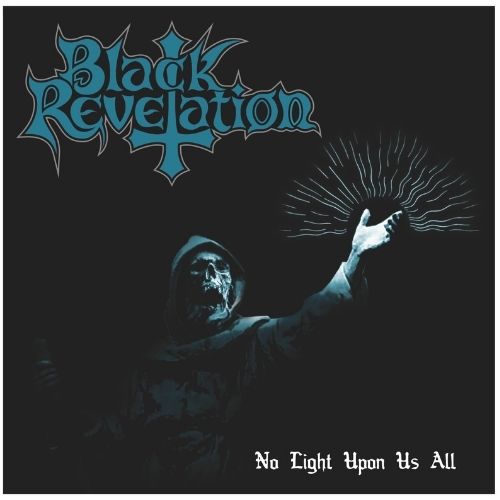
Black Revelation – No Light Upon Us All
German Doom Metal Aesthetics
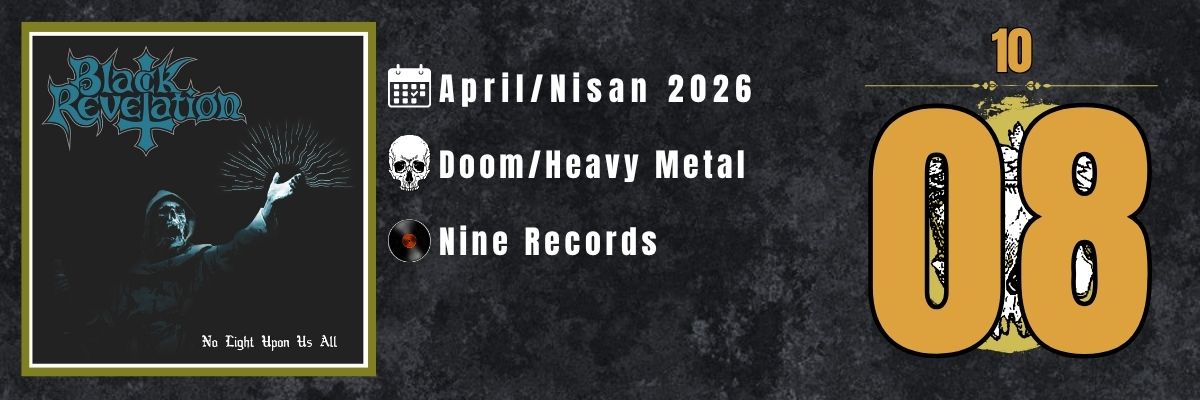
Black Revelation stands out as a band rooted in Germany’s traditional doom metal vein, yet one that actively reworks this language through long-form compositional structures. With “No Light Upon Us All,” they reconstruct the classic doom riff aesthetic within a 70-minute framework, shaped around patience and density as guiding principles. The band firmly positions itself within the genre by merging 70s and 80s doom/epic heavy metal references with a modern production approach.
The album is built on a compositional philosophy that does not merely reproduce the most traditional strand of doom metal, but stretches it patiently across a 70-minute long-form structure. The defining character of the record emerges from riffs functioning less as “events” and more as units of weight that generate continuity. The guitars are largely concentrated in the low-mid frequencies, with extended sustain and a distinct sense of “amp warmth” in the mix, which forces the dramatic peaks of the songs to emerge through slow accumulation rather than isolated moments. The bass movement and heavy chord blocks heard in the opening track “Siyah Vahiy” establish a framework reminiscent of Candlemass and Reverend Bizarre’s classic doom lineage, yet what stands out here is not the riffs themselves, but the delayed manner in which they are allowed to resolve.
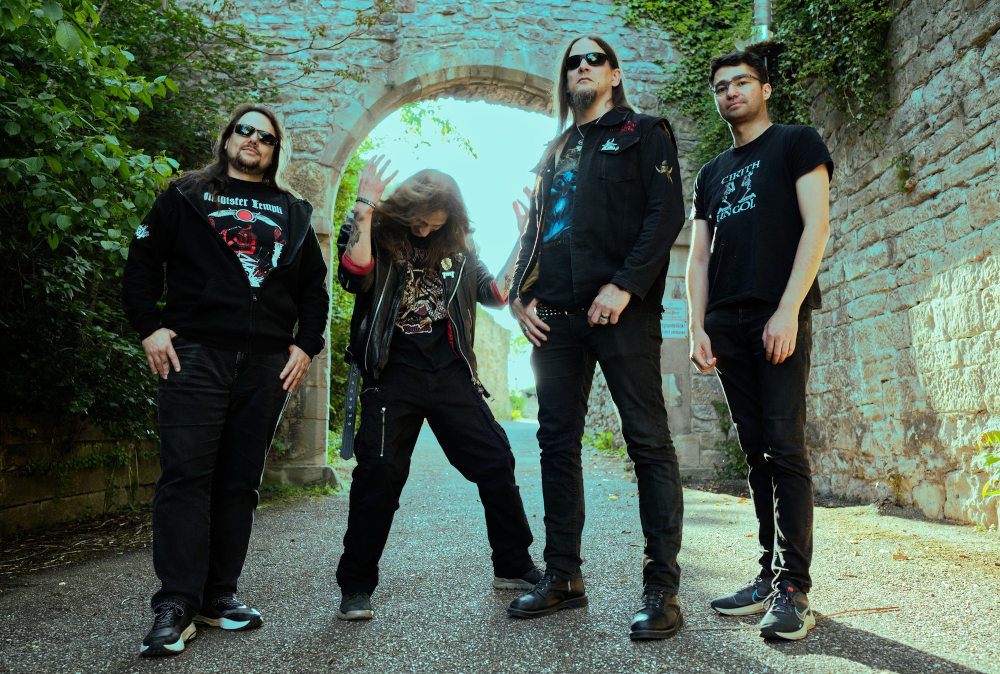
The drum performance operates within this delay rather than breaking it. Instead of fragmenting the structure with double snare accents or abrupt tempo shifts, it moves through small variations within a consistent cycle; the use of ride and toms in particular creates micro-movements in transitions. This approach prevents the tracks from feeling static while maintaining a linear sense of dramatic intensity. In pieces such as “Thoughts of Ruination,” the subtle groove oscillations do not abandon doom’s Sabbath-rooted sense of procession, but instead transform it into a heavier and more controlled march.
The vocal performance is one of the album’s most defining traits. M.K.’s approach is built on a technique that oscillates between fragile vibrato and a semi-ritualistic form of delivery, shaped within a lineage associated with Scott Reagers and Albert Witchfinder. However, what matters here is not “emotional impact,” but the tension the vocals establish with the riff structures. Rather than sitting on top of the guitars, the vocals often function as a kind of echo layer behind them, shifting the center of the tracks from melodic precedence toward a sense of rhythmic and harmonic weight.
The production choices move this classic doom approach into a space that feels dense yet not sterile. The Temple of Disharmony mix avoids polishing the guitars too heavily, leaving a subtle rawness intact; this becomes a key factor in reducing repetition fatigue across the longer compositions. The audibility of the bass guitar reveals the actual movement beneath the riffs, often creating a separate current underneath the harmonic blocks formed by the guitars. This is one of the fundamental elements that allows the structures to remain intact across songs exceeding the 10-minute mark.
The structural approach of the album is based on positioning each track as an independent “long-form narrative.” “A Burning Life” is one of the clearest examples of this method; its opening slow-descending riff structure gradually evolves into a more rhythmic, almost walking groove, while the guitar leads remain on the surface as an accompanying layer rather than dramatizing the transition. At this point, the role of the lead guitars becomes particularly notable: while solos in most modern doom recordings often act as structural ruptures, here the leads are embedded within the composition, functioning almost as continuity rather than ornamentation.
The final section of the album, featuring “Veil of Eternal Nightfall” and the Saint Vitus cover “One Mind,” clearly exposes Black Revelation’s aesthetic references. “Veil of Eternal Nightfall” carries a more pronounced rock swing; its riff structure leans toward the groove-oriented branch of post-Sabbath doom, while the vocals once again avoid turning this into a dramatic break, instead maintaining a steady sense of weight. The cover track represents a critical threshold: rather than reinterpreting the original, the band opts for a near-faithful execution. This choice can be read in two ways: on one hand, as loyalty to the genre’s canon; on the other, as a temporary withdrawal from compositional authorship. Given the confidence shown throughout the album’s original material, this literal approach in the closing moment shifts the ending toward a referential gesture rather than a strong interpretive statement.
Overall, Black Revelation does not attempt to alter the fundamental compositional language of doom metal; instead, it focuses on making that language more durable and sustainable within a dense, extended flow. This places the album not in the realm of innovation, but as a disciplined execution of the genre’s classical form. The long compositions are not mere duration-fillers; they function as controlled spaces where riffs, micro-variations in drumming, and vocal layers are pushed through varying levels of intensity within a single cycle.
For the listener, the album offers neither rapid payoff nor abrupt shifts. Its structure is based on a continuous forward motion that rarely changes direction. As such, “No Light Upon Us All” operates for listeners who accept doom metal’s traditional patience-based aesthetics, while simultaneously remaining firmly positioned as a strong representative of the style rather than an expansion of its language. Black Revelation ultimately tests not the boundaries of the genre, but how intensely and consistently those boundaries can be inhabited.
OZAN
https://blackrevelation.bandcamp.com/
https://www.facebook.com/BlackRevelationBand/
https://www.instagram.com/black_revelation/