ALBUM REVIEW
HKSPK - Heimkehr
A dark collision of Black, Death, Punk and Doom.
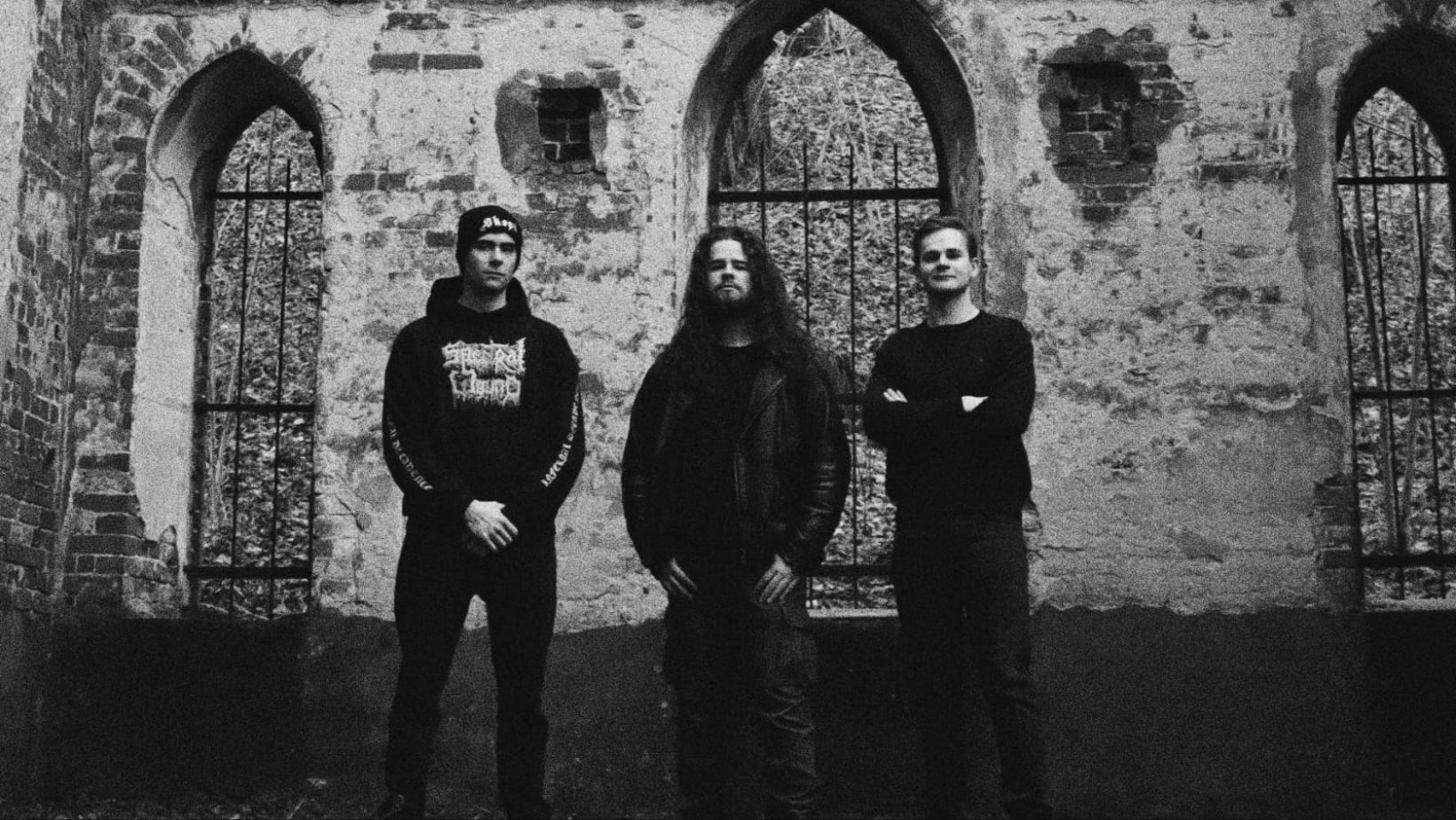
HKSPK are a band from Brandenburg, Germany, who bring together a sound that expands the hard backbone of Black and Death Metal with Punk, Hardcore and, at times, Doom and atmospheric layers within a compositional framework. Between 2023 and 2026, the band operated under the name Hello Kitti Scum Porn Killer, but now continues under the abbreviated name HKSPK. On “Heimkehr”, HKSPK presents this approach in particularly clear terms. Across eight tracks, the album places short bursts of high-tempo aggression against heavier, melodic and atmospheric passages, bringing personal experiences, historical motifs and dark humor into the same narrative space. But if we were to sum up the album’s identity very briefly at the beginning of this review, the most striking aspect of “Heimkehr” is the way it uses these different elements not merely to create variety, but to define the individual musical and narrative function of each track.
Rather than turning its movement between genres into a search for identity, “Heimkehr” attempts to keep different extreme metal impulses under the same roof through short, concentrated tracks. The cold riff character of Black Metal, the physical weight of Death Metal, the directness of Punk and Hardcore, and occasional slowdowns approaching Doom form the album’s basic framework, but what ultimately defines it is not the presence of these elements individually, but the fact that the songs behave differently on a compositional level. Its running time of just over 25 minutes reinforces this approach; instead of stretching its ideas beyond necessity, “Heimkehr” builds a tight structure in which every track is given a clear function.
The opening “Prelude” makes it clear from the first minute that it is not simply an atmospheric introduction. Its use of the same key and tempo as “Torture” makes the two pieces function less as separate compositions than as one continuous opening sequence. The spoken passage leading directly into the first song also turns the transition into a structural device rather than a purely dramatic flourish. “Torture” then moves from a melodic Black Metal opening into faster riffs and high-pitched screams, providing the album’s first real example of how it intends to connect its different genres. The song’s narrative, built around two opposing voices, also runs parallel to its musical structure: a calm observation quickly spirals out of control through a misread perception of danger. In this way, the paranoia in the lyrics finds a corresponding sudden shift in the arrangement.
“White Secretions II”, meanwhile, establishes a deliberate connection with the previous album “Holy Scum”, showing that HKSPK is not merely referencing its own past but actively carrying it forward. The song is based on an extremely mundane tour story that has no problem making fun of itself; despite this, it does not come across as an unnecessary skit within the album’s broader context. On the contrary, this crude humor, placed among “Heimkehr”’s heavier themes of war, revenge, exhaustion and loss, deliberately breaks with the expectation of an unrelentingly dark atmosphere that is so common in extreme metal. The important point here is that the humor never spills outside the music. The track is kept short and fits the album’s overall economy of intensity.
“Sonnenjäger” shifts direction once again. The influence of classic Death Metal here is not limited to the use of heavy riffs; the track’s epic character, combined with its imagery of war, leans toward a more traditional form of extreme metal dramatism. Images of napalm, warfare and death are set against the more symbolic nature of the “Sonnenjäger” figure in the chorus. The track therefore functions as a transition from Black Metal’s ambiguous, cold atmosphere toward Death Metal’s more direct, riff-centered narrative approach. HKSPK is not using Death Metal as mere decoration here, however; the dramatic backbone of the song is built directly around its heavy riffs.
The album’s clearest break with its core genre appears on “Kill The Weak”. Combining the harshness of Black Metal with the more direct impact of Punk and Hardcore, the track also draws on a slight Thrash Metal influence to keep pushing its momentum forward. The repeated title phrase, delivered three times, works less like a traditionally developed chorus than a rhythmic mantra. This choice deliberately limits the song’s melodic development, but in return creates a structure that immediately connects with the listener and is direct enough to translate naturally to the stage. The provocative phrase itself also emerges from themes of loss of control, humiliation and anger rather than functioning as something to be read literally. HKSPK’s approach to Punk and Hardcore therefore means more than a change in sonic color; it also translates into a simplification of the songwriting.
The album’s most successful compositional move can be found on “Rot In Despair”. Built around two chords, the central idea derives its strength not from harmonic variety but from the weight created by repetition and a gradual expansion of atmosphere. Its origins in a jam session also help explain this directness. The music does not continually add new ideas to reinforce the exhaustion being described; instead, it creates space by reducing the amount of material. The impact of the “Heal me / Feel me / Release me” section therefore does not come from the meaning carried by the lyrics alone. The minimal structure established beforehand allows the track to build toward increasing atmospheric density. This is where the Doom influence becomes genuinely functional within the album: heaviness is not simply achieved by slowing the tempo, but by narrowing the compositional space in which the music can move.
“Rain In The Face” brings the Black Metal side back to the foreground while placing the vocal delivery at the center of the narrative. Although inspired by a historical figure, the song does not claim biographical accuracy; HKSPK uses its historical material not as documentary storytelling, but as a dramatic framework for exploring revenge and the idea of victory without resolution. Musically, the combination of a cold, driving Black Metal character with a narrative vocal approach sets the track apart from the album’s other short and aggressive songs. The idea expressed in the closing “Schande / Mein Opfer / War vergebens” is particularly important, as it brings the revenge narrative to a point of futility rather than ending it in triumph. Music and text therefore move in the same direction: winning does not erase the consequences of conflict.
Although the album appears to branch out in different directions up to this point, the closing title track “Heimkehr” brings these elements back onto a single axis. Its running time of more than six minutes marks a deliberate departure from the short, concentrated structures of the preceding tracks. Atmospheric Black Metal enters the picture here, allowing the album to linger longer over themes that previously passed by at a much faster pace. But this is not an attempt at a “grand finale”. The song’s central idea is already based on the fact that returning home does not constitute salvation. Even if the place one returns to remains physically familiar after war, friendship, disappointment and loss, the experience itself cannot simply be left behind.
This is why the repetition of “Dieser Klang hallt ewig nach” at the end is particularly significant. The direct, concise forms used throughout the earlier tracks are transformed here into the idea of echo and repetition. The reference to “löhnen kann” in the final section, meanwhile, places the band’s own experiences directly into the narrative and prevents “Heimkehr” from becoming an abstract album about war and death. Material drawn from the stage, touring and real situations surrounding the band meets the album’s historical and symbolic narratives on the same plane.
This diversity is both “Heimkehr”’s greatest strength and its limitation. HKSPK’s expansion of its Black/Death Metal axis through Punk, Hardcore, Doom and atmospheric approaches fits the genre permeability of contemporary extreme metal, but the album does not attempt to turn these elements into an entirely new genre language. Instead, each song foregrounds a different tool. On “Kill The Weak”, Punk/Hardcore directly alters the song structure, while on “Rot In Despair”, the Doom influence transforms the composition’s sense of time. Elsewhere, however, changes in genre largely remain tools for defining the character of individual tracks. The album’s experimental side therefore expands HKSPK’s narrative territory more than it redraws the boundaries of the genre.
The fact that the recording, mixing and mastering were handled by the band themselves at Room13 is also an important choice contributing to this overall coherence, although there is no denying that this decision noticeably lowers the album’s sound quality. Compared with the sound of more generously budgeted albums by their peers, the difference is immediately apparent, but it does not prevent the album from remaining listenable or the listener from noticing the details moving around the central framework of the songs. In a sense, it gives the sound an organic texture, although under current production standards this may prove problematic for some listeners. Given the album’s compact 25-minute structure and its varied compositional character, this approach can nevertheless be seen as an important choice in allowing the production to give space to the contrasts between the tracks rather than forcing them into a single aesthetic mold.
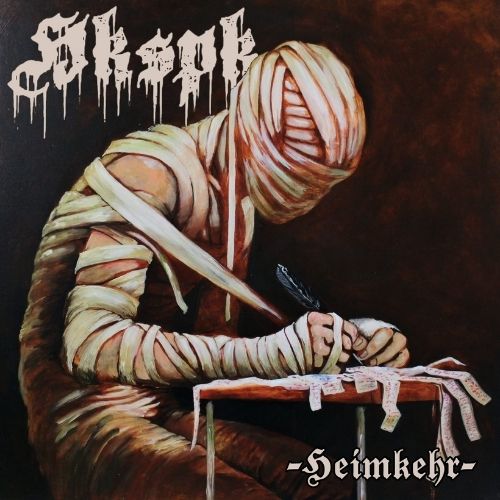
The album’s visual identity carries the same fundamental tension as its musical structure. Steffen Schmolke’s cover artwork depicts an unidentified figure whose face and body are almost entirely wrapped in bandages, seated at a desk and writing with a quill; bloody sheets of paper, physical wounds and the act of writing are brought together within the same composition. The strongest detail is that even the figure’s hands are, if not completely, largely covered in bandages: this suggests a visual representation of “Heimkehr”’s attempt to communicate memory, war, loss and personal experience through the act of recording a story while the narrator is himself wounded. The contrast between the dark brown and black background and the dirty white bandages reflects the album’s cold Black Metal aesthetic against the more physical and bloody character of Death Metal on a visual level. The band’s fluid, classic extreme metal logo at the top and the Gothic “Heimkehr” lettering at the bottom likewise place these two genre traditions side by side through typography. The cover is therefore not merely a generic genre image designed to create a dark atmosphere; it establishes a visual framework that directly supports the album’s central idea—that the person returning from the past is never truly healed and is forced to recount what has happened.
Ultimately, “Heimkehr” moves between genres without losing its identity, but does so through compositional function rather than a claim to innovation. HKSPK’s real achievement lies in distributing the influences of Black Metal, Death Metal, Punk, Hardcore and Doom across different song structures instead of presenting them as a list. The album therefore demands a listening approach that follows the different rhythmic and narrative logics established by its short tracks rather than one built around a uniform genre expectation. The six-minute “Heimkehr” does not resolve this fragmented structure so much as extend the traces left behind; the return takes place, but before the music ends, it becomes clear that the past has come back with it.
