
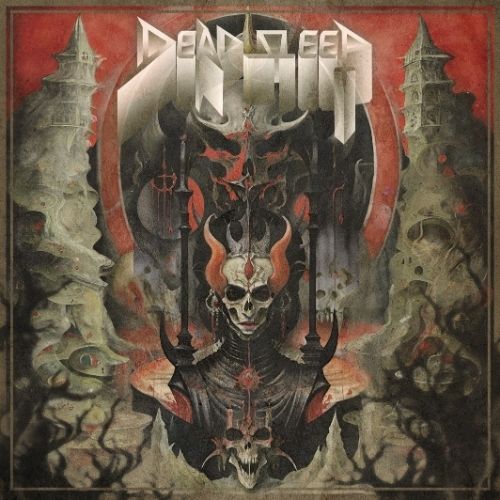
EP REVIEW
Dead Sleep – Repulsion
Raw, Direct Thrash/Death Metal with Punk-Driven Energy
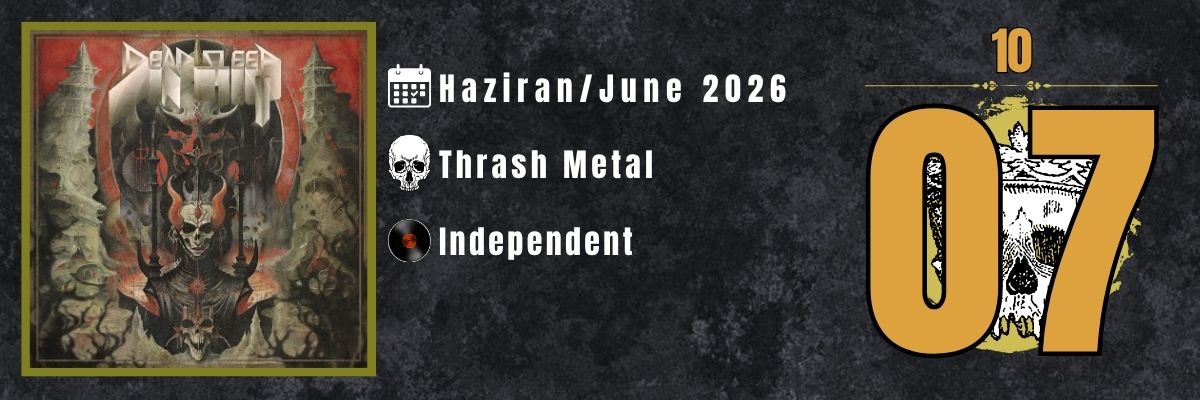
Malmö-based Dead Sleep position themselves on the scene with a trio configuration that fuses early-era reflexes of thrash and death metal with punk energy. The “Repulsion” EP marks a new phase in which the band channels this hybrid language into a tighter and more direct framework. Raw production choices and a compositional approach focused on rhythmic aggression immediately define the band’s aesthetic direction from the outset.
Rather than rewriting the vocabulary of classic thrash/death metal, the EP works by placing the most fundamental phrases of that vocabulary into a tighter rhythmic and tonal frame. The overall production leans into a deliberately unpolished mid-frequency density; the guitar tone constructs body rather than sharpness, and this foundation is balanced by positioning the bass at the center of the mix, particularly within the single-guitar–bass–drums trio format. This choice foregrounds rhythmic drive over harmonic detail in the riffs, establishing the EP’s aesthetic direction within the first minutes: a compressed, forward-pushing energy rather than melodic expansion.
The opening track “Repulsion” draws on classic thrash motifs in its riff writing; the contrast between palm-muted attacks and open-chord transitions does not generate a steady sense of tension, but instead creates a continuous cyclical drive. The drum performance here functions not only as a timekeeper; particularly the thrash-rooted crash and snare accents closely mirror the guitar’s rhythmic framework, shaping the track’s sense of groove. Rather than introducing technical variation, this alignment reinforces directness by tightening the synchronization between riffs and drums.
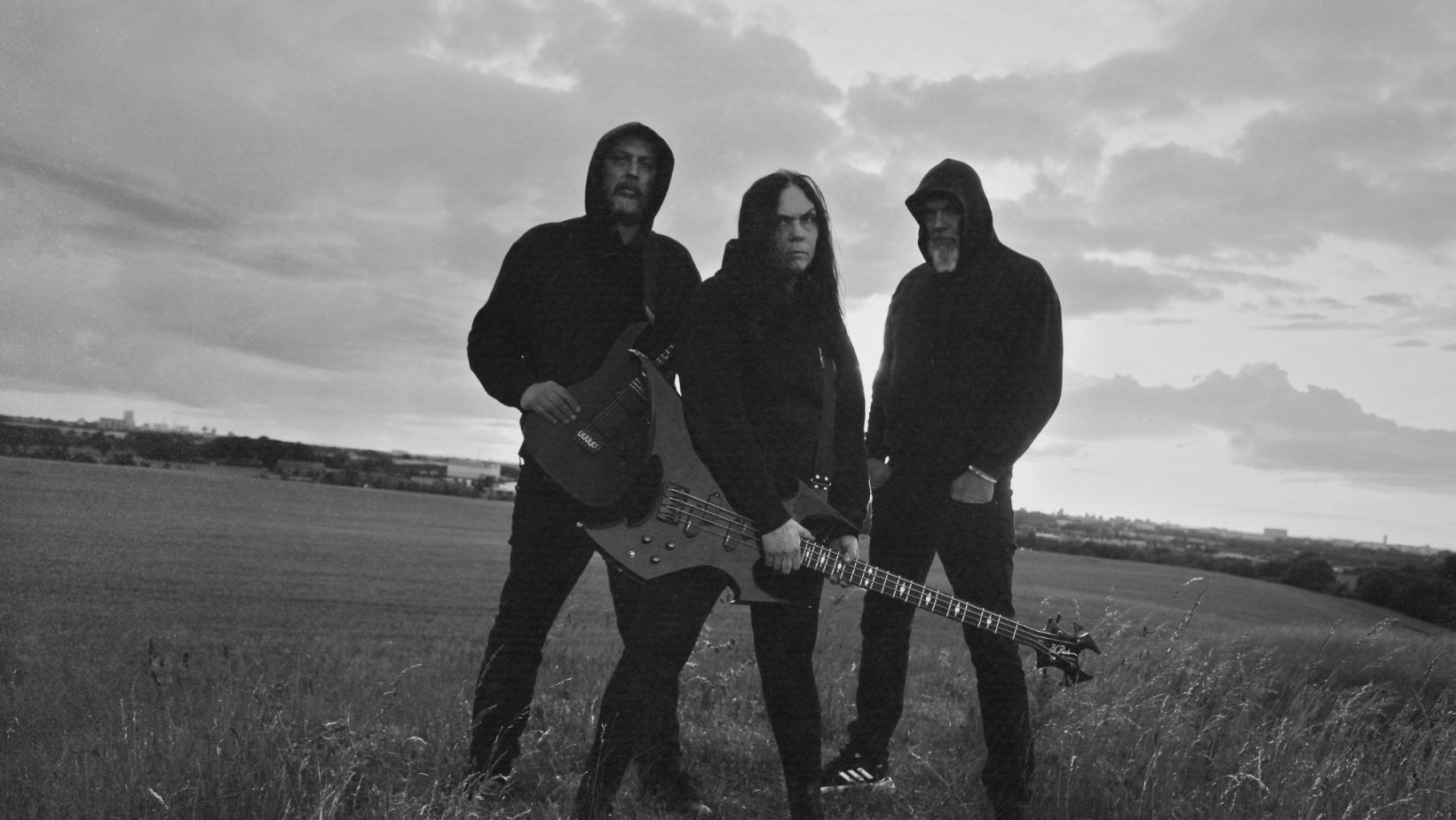
The vocal delivery combines a death metal-inflected tone with the raw aggression of thrash. Anna Wagner’s performance operates less through clarity of articulation and more through timbral fragility and pressure; in some sections, the borderline audibility of the voice is not a technical flaw but a tension layer consistent with the mix’s overall raw aesthetic. However, this choice occasionally conflicts with the rhythmic clarity of guitars and drums, creating moments where the vocal line feels strained in carrying certain phrases.
“Hell Hath No Fury” translates this formula into a faster hardcore/punk framework. The riff structure is built on shorter cycles; sustain is reduced in favor of more abrupt, block-like chord movements. This results in a segmented attack logic rather than a linear sense of development. On the drum side, fills cease to function as transitions and instead become a mechanism of continuity and drive. At this point, the track moves away from thrash’s traditional build-up logic and establishes a structure that operates on more immediate reflexes.
“Children of the Blade” presents the EP’s most controlled dynamic structure. The mid-tempo main riff carries a clearly defined heavy metal melodic core; however, this core is repeatedly fractured by dissonant transitions. The solo section is integrated into the riff architecture without fully detaching from the tonal center, indicating that it functions less as an isolated showcase and more as a layer expanding the track’s tension line. Here, the composition maintains a balanced oscillation between melodic stability and aggressive disruption.
“Leech from Cachtice” contains the EP’s most explicit stylistic fusion. The opening establishes a clearly defined classic heavy metal riff form, while the middle section introduces higher-pitched, tremolo-based structures evocative of black metal. These transitions do not remain purely aesthetic shifts; they reshape the riff logic itself and alter the track’s rhythmic perception. Particularly in moments where the bass is pushed further forward, it gains an independent movement space above the harmonic foundation, sharpening the trio’s use of sonic space. However, this multilayered approach does not always feel compositionally necessary; some transitions remain at the level of stylistic reference, adding surface variation rather than reinforcing structural inevitability.
The overall production approach deliberately avoids the sterile clarity of modern extreme metal. However, this “rawness” is not merely an aesthetic stance; it also functions as a strategy for creating controlled space between instruments within the mix. The constant presence of the bass is not just filler but serves a rhythmic guiding function. In contrast, the guitar’s retreat in certain frequency ranges occasionally reduces the defining sharpness of the riffs, shifting their impact toward groove rather than attack.
The general compositional approach operates more through density of ideas than development of ideas. While the tracks are built on strong opening motifs, their progression is largely linear; variations are mostly confined to shifts in tempo and intensity. This supports the EP’s energetic character but limits broader structural transformations. As a result, certain sections leave potentially expandable harmonic or rhythmic ideas as brief gestures rather than fully developed directions.
The thematic framework—power, motherhood, mythological female figures—establishes a strong conceptual field on a lyrical level; however, this content does not translate into a direct compositional engine within the music. Thematic density functions less as a driver of riff construction or rhythmic organization and more as a frame guiding vocal expression.
Ultimately, “Repulsion” does not seek to rewrite the core language of thrash/death metal, but instead compresses its fundamental mechanisms into a more direct and rhythmically focused surface. The EP’s position is better understood as controlled simplification rather than innovation: the function of the riffs is not expanded, but rebalanced through sharper propulsion and a more prominent bass presence. This approach produces moments of effective intensity, while at other points leaving ideas to conclude before fully realizing their internal potential.
OZAN
https://www.facebook.com/DEADSLEEPMalmo/